


introduction
Sacrifice is an act of deep devotion and commitment and is deeply rooted in the teachings of Islam. The life of Prophet Ibrahim (as) and the annual Hajj pilgrimage serve as enduring symbols of this virtue. Sacrifice can mean giving up something precious or important for another person or a cause, enduring hardship for a greater purpose, or demonstrating selflessness and devotion to a higher principle. By examining the legacy of Prophet Ibrahim and the importance of the Hajj, we can derive practical lessons for incorporating the spirit of sacrifice into our daily lives.
The Life and Legacy of Prophet Ibrahim
Is there any Muslim, Christian or Jew who does not know the name Ibrahim (as)? Revered by two-thirds of humanity, Prophet Ibrahim (as) is considered the spiritual leader of Prophets Musa, Isa and Muhammad (peace be upon them all). The guidance he provided continues to illuminate the world.
Prophet Ibrahim (as) was born over 4000 years ago in what is now Iraq. In his time, people had forgotten the One God and lived in ignorance, worshipped created beings and indulged in superstitions such as astrology and idolatry. A priestly caste ruled the temples and people believed that these priests had special powers and could intercede for them with the gods. Kings conspired with the priests to reinforce this belief and present themselves as gods and absolute rulers.
Born into a privileged priestly family, Prophet Ibrahim (as) was expected to follow in their footsteps. But he did not. As he grew up, Prophet Ibrahim (as) questioned the logic of worshiping the sun, moon, stars, stone idols and human kings. He realized that none of these were his creators, had control over his life and death, or fulfilled his needs. This realization set him apart and led him on the path of true faith and submission to the One God.
With these thoughts in mind, Prophet Ibrahim resolved that he would never worship the gods worshipped by the people and he openly declared this before them. “Behold, I have set My face towards Him Who created the heavens and the earth, and I have placed no other equal in the Divinity of Allah.” (Quran, 6:79).
No sooner had Prophet Ibrahim (as) made this declaration than the greatest hardships and calamities befell him. His father threatened to throw him out of his home and warned him that no one in his community would protect him. Though alone and abandoned by his relatives and friends, Prophet Ibrahim (as) remained firm as a rock for the truth.
The royal family decided to burn Prophet Ibrahim (as) alive and he willingly accepted this horrific punishment due to his unwavering faith in the One God. However, Allah in His Supreme Power saved him from this fate. After this miraculous rescue, Prophet Ibrahim (as) left his home, family, community and country to continue his mission.
Prophet Ibrahim (as) then travelled through the vast deserts of Palestine, Egypt and Arabia, where he lived his life as a true Muslim. As a young adult, he found God and was asked to submit completely to Him. Prophet Ibrahim (as) made a vow: “Aslamut li rabbi ra alamin.” (‘I have embraced Islam. I belong to the Lord of the worlds and am always ready to obey.” He remained true to this vow throughout his life.
For the sake of the Lord of all, he renounced the religion of his forefathers, its beliefs, its rituals, and the material benefits it brought. He faced the threat of fire, lost his home, and wandered from country to country. Despite these hardships, he spent every moment in submission to God and in spreading His teachings.
Even after all these hardships, there remained one final test to test whether Prophet Ibrahim’s love for his Lord would take precedence over all else. He was commanded to sacrifice his only child, who had been born to him in his old age, before the birth of his second son. Upon being commanded, Prophet Ibrahim obeyed without hesitation. He did not force his son but gently conveyed God’s command. His son Ismail responded obediently, saying: “O my father, do as you command me; if Allah wills, He will find me among the patient.” (Quran 37:102). This shows their mutual faith in Allah.
Prophet Ibrahim (as) prepared to offer the sacrifice and laid his son face down so that he would not see his suffering. However, the knife did not cut and Allah intervened and declared that Prophet Ibrahim (as) had fulfilled his vision. He proved his obedience and was willing to sacrifice his son for Allah. It is stated in the Quran: “Abraham, you have certainly achieved your dream. (Quran 37:105)
By making such a sacrifice for the Almighty and the mission entrusted to him, Allah motivated and commanded mankind to follow Prophet Ibrahim (as) as an example, because he walked the right path and fulfilled all the commands of his Lord. Allah considered him a close friend. KahlilThese words represent the height of love. Allah declares in the Quran: “And Ibrahim was a nation of obedient Allah.” (Quran 6:161).
History and Significance of Hajj
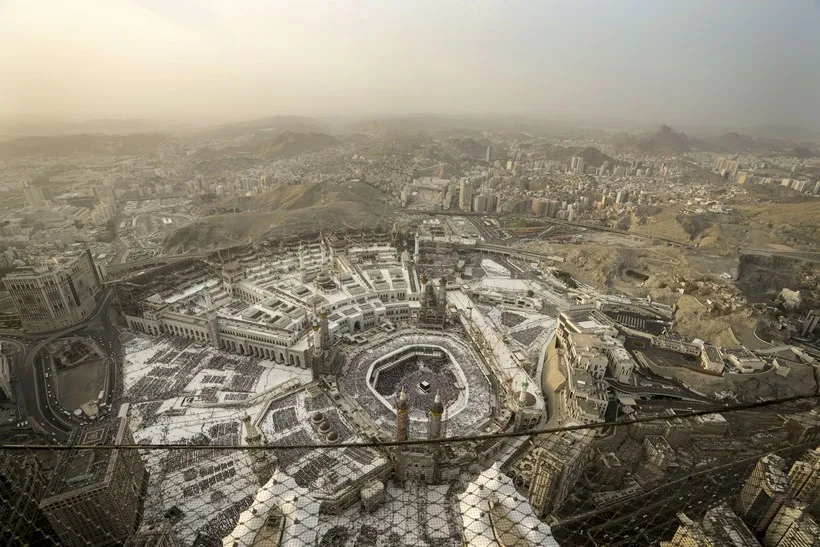
In Mecca, Prophet Ibrahim (as) and his son, Prophet Ismail (as), built the Holy Kaaba at a place chosen by Allah Himself. Unlike other mosques, the Kaaba was not intended solely for worship, but as a center for spreading the universal message of Islam. It served as a global meeting place for believers in one God to come together, worship Allah in a communal way, and then return to their respective countries bearing the message of Islam. This communal journey is known as the Hajj.
The rituals of Hajj were instituted to commemorate the deeds of Prophet Ibrahim (as), his wife Hajar (as) and their son Ismail (as). From the Sayyee walk between the hills of Safa and Marwa, reflecting Hajar’s desperate search for water, to the standing on Arafat and the symbolic stoning of the devil, every act during Hajj recalls the trials and sacrifices undertaken by Prophet Ibrahim (as) and his family.
The Hajj is not just a physical journey, but a deeply spiritual experience that promotes unity among Muslims around the world. Pilgrims wear simple white clothing, erasing distinctions of race, wealth and social status, symbolizing the equality and unity of the Muslim Ummah. The communal aspect of the Hajj enhances its spiritual benefits, creating a sense of global brotherhood and collective devotion.
The Practice of Sacrifice: Shaping Our Everyday Lives
The sacrifice of Prophet Ibrahim (as) resonates deeply in our contemporary lives and serves as an eternal guide to dedication, resilience and unwavering faith. Prophet Ibrahim (as)’s willingness to leave his homeland, family and personal comfort for the command of Allah demonstrates a level of dedication that transcends time and place. In today’s world, we can take inspiration from his example and incorporate similar acts of sacrifice and dedication into our daily lives.
For example, in the fast-paced modern life, prioritizing spiritual commitments can be a form of sacrifice. Allocating specific time for daily prayer, Quranic reading, and community service often means giving up leisure activities and personal time. In doing so, we emulate the dedication of Prophet Ibrahim (May Allah be His Name) to his faith and make a conscious effort to prioritize spiritual well-being over worldly concerns. This is consistent with our worship of Almighty God, sacrificing our time and comfort to get closer to Allah.
Encouraging good deeds and helping others also reflects the spirit of sacrifice of Prophet Ibrahim (as). In an age dominated by materialism, regularly donating a portion of your income to charity can be challenging, but deeply rewarding. Supporting orphans, funding educational activities, and helping the less fortunate are practical ways to demonstrate your commitment to the values embodied by Prophet Ibrahim (as). This act of giving not only helps those in need, but also purifies our wealth and strengthens our faith.
Emotional support and community engagement further illustrate the sacrifice of Prophet Ibrahim (as). Just as he faced loneliness and isolation for his faith, we too can offer our time and energy to support friends, family, and community members in need. Volunteering at a food bank, homeless shelter, or local mosque requires personal time and effort, but it fosters a sense of solidarity and compassion within the community, promoting good deeds and helping others.
Making ethical lifestyle choices is one of the contemporary applications of Prophet Ibrahim (as)’s sacrifices. In a world where convenience often takes precedence over value, choosing to avoid interest-based transactions, promote fairness in transactions, and engage in sustainable and ethical consumption can be seen as sacrifices that honor our commitment to Islamic principles. While these choices may involve extra effort or financial cost, they align our actions with our beliefs, just as Prophet Ibrahim (as) rejected the idolatrous practices of his time. Avoiding interest and corruption in financial transactions ensures that we follow the Islamic principles of fairness and justice.
Finally, spreading the message of Islam is another important way we honor the legacy of Prophet Ibrahim (as). By sharing the teachings of Islam, encouraging ethical behavior, and embodying the values of our faith through our actions, we continue Prophet Ibrahim’s (as) mission of spreading the message of monotheism and the righteous way of life.
Solidarity with Palestine and the oppressed
Speaking out against oppression and showing solidarity with oppressed peoples like the Palestinian people is a powerful manifestation of the spirit of sacrifice embodied by Prophet Ibrahim (as). His unwavering commitment to justice and truth in the face of severe adversity inspires us to stand up against contemporary injustices. Today, this means actively supporting the Palestinian cause by raising awareness about the Palestinian struggle and actively participating in the BDS movement against illegitimate Israel. Advocacy also plays a key role. We can amplify the calls for justice by participating in peaceful protests, signing petitions and joining campaigns that write letters to political representatives. Financial support is also an important aspect, and donating to credible charities that provide humanitarian assistance to Palestinians can help ease their suffering and demonstrate our commitment to global solidarity. Political engagement is essential, urging local and national leaders to adopt policies that support the human rights and dignity of all oppressed communities. Moreover, we must continue to say to fascist and oppressor states and leaders face to face: “You are fascists, you are oppressors, you cannot defeat the truth or bury the righteous.'” By taking these actions, we embody the principles of justice, mercy and patience that defined the life of Prophet Ibrahim, and we ensure that our efforts contribute to a more just and equal world.
Conclusion
In conclusion, the profound legacy of Prophet Ibrahim (as) and the annual Hajj pilgrimage reveal the enduring importance of sacrifice in the spiritual tapestry of Islam. Prophet Ibrahim (as)’s unwavering devotion to Allah, demonstrated by his readiness to forsake his comforts, his family, and even his beloved son, Prophet Ismail (as), serves as an eternal example of submission and faith. The ritual of Hajj, rooted in the actions of Prophet Ibrahim (as) along with Hajar (as) and Prophet Ismail (as), symbolizes the unity, equality, and collective commitment of Muslims worldwide.
Today, reflecting on the sacrifice of Prophet Ibrahim (as) reminds us that we should incorporate the spirit of sacrifice into our daily lives. By prioritizing spiritual vows, practicing ethical behavior, supporting the less fortunate, and standing in solidarity with the oppressed, we honour the legacy of Prophet Ibrahim (as) by embodying the principles of justice, compassion, and patience. In doing so, we strengthen our faith, foster unity within our ummah (community), and contribute to a more just and compassionate world in line with the teachings of Islam.
