

If you have high blood pressure or are at risk for developing it, you may want to try the Mediterranean diet. This popular diet, which emphasizes nutrient-rich fruits, vegetables, whole grains, and healthy fats, has many health benefits, including improved heart health and lower blood pressure. This 7-day Mediterranean eating plan will map out a week of meals and snacks tailored to help improve your blood pressure. It’s packed with fresh ingredients, but also loaded with protein. Eating a variety of protein sources each day will keep you full and provide sustained energy. If you have high blood pressure or simply want to boost your nutrition, this meal plan can help.
How to create a meal plan
Thoughtfully Created by a Registered Dietitian Eating Wells The meal plans are designed to be easy to follow and delicious. Each meal plan meets specific parameters depending on the targeted health and lifestyle goals and is analyzed for accuracy using the ESHA Food Processor nutrition database. Because everyone’s nutritional needs are different, we encourage you to use these plans as a guide and adjust as needed.
Why this meal plan is right for you
The American Heart Association recommends the Mediterranean diet as a nutritious way to eat that follows recommended heart-healthy eating patterns. This diet has fewer strict rules, making it easier to incorporate into your lifestyle than more strict plans. It’s high in fruits, vegetables, whole grains, and legumes, as well as poultry, fish, dairy, and nuts. It limits added sugars, refined grains, and highly processed meats.
To support healthy blood pressure, this meal plan includes at least 28 grams of heart-healthy fiber, limits sodium to 1,500 mg per day, and limits saturated fat to no more than 12 grams per day, with the saturated fat limit increased to 17 grams on days when fatty fish such as salmon is eaten. At least 80 grams of protein is consumed per day, and more on most days.
Because weight loss can help improve blood pressure in some people, the plan is set at 1,500 calories per day, a level at which most people will experience weight loss. We’ve also incorporated 1,200 and 2,000 calorie per day adjustments for those with additional calorie needs.
FAQ
-
If there is a meal I don’t like, can I combine it?Yes! This meal plan can serve as a framework for a healthy eating plan for high blood pressure. You don’t have to follow it strictly to reap the benefits. When selecting recipes, we checked the calories, saturated fat, and sodium to ensure they fit within your total daily calorie goal of 1,500 calories and within the saturated fat and sodium limits. If you are swapping recipes, it may be helpful to choose recipes with similar calorie, saturated fat, and sodium levels. For more inspiration, check out all our Mediterranean recipes, including 20+ High Protein Mediterranean Diet Dinners to Improve Heart Health.
-
Is it okay to eat the same breakfast or lunch every day?Of course, it’s fine to eat the same breakfast and lunch every day: breakfast should be between 295 and 350 calories, and lunch should be between 344 and 419 calories. These ranges are relatively close, but if you’re closely watching calories and other nutrients like protein, you might want to adjust your snack or two accordingly.
-
Does the Mediterranean diet help with high blood pressure?Yes, the Mediterranean diet can help improve high blood pressure.
Health Benefits of the Mediterranean Diet:
The Mediterranean diet has been linked to many health benefits, which is one of the reasons it remains so popular: Studies have linked it to improved heart health, a lower risk of type 2 diabetes, improved cognitive function, and even a lower risk of certain cancers. The great thing about this healthy eating style is that it’s flexible: The Mediterranean diet encourages you to fill your plate with vegetables, eat plenty of fish, nuts and legumes, and prioritize whole grains, so the occasional sweet treat, refined grains or processed meat won’t undermine your health efforts.
Mediterranean Diet Foods to Check Out
- Whole grains
- beans
- lentil
- vegetables
- fruits
- Unsaturated fats such as olive oil
- nuts
- seed
- fish
- poultry
- egg
- Dairy products
- Herbs and spices
How to Meal Prep for a Week
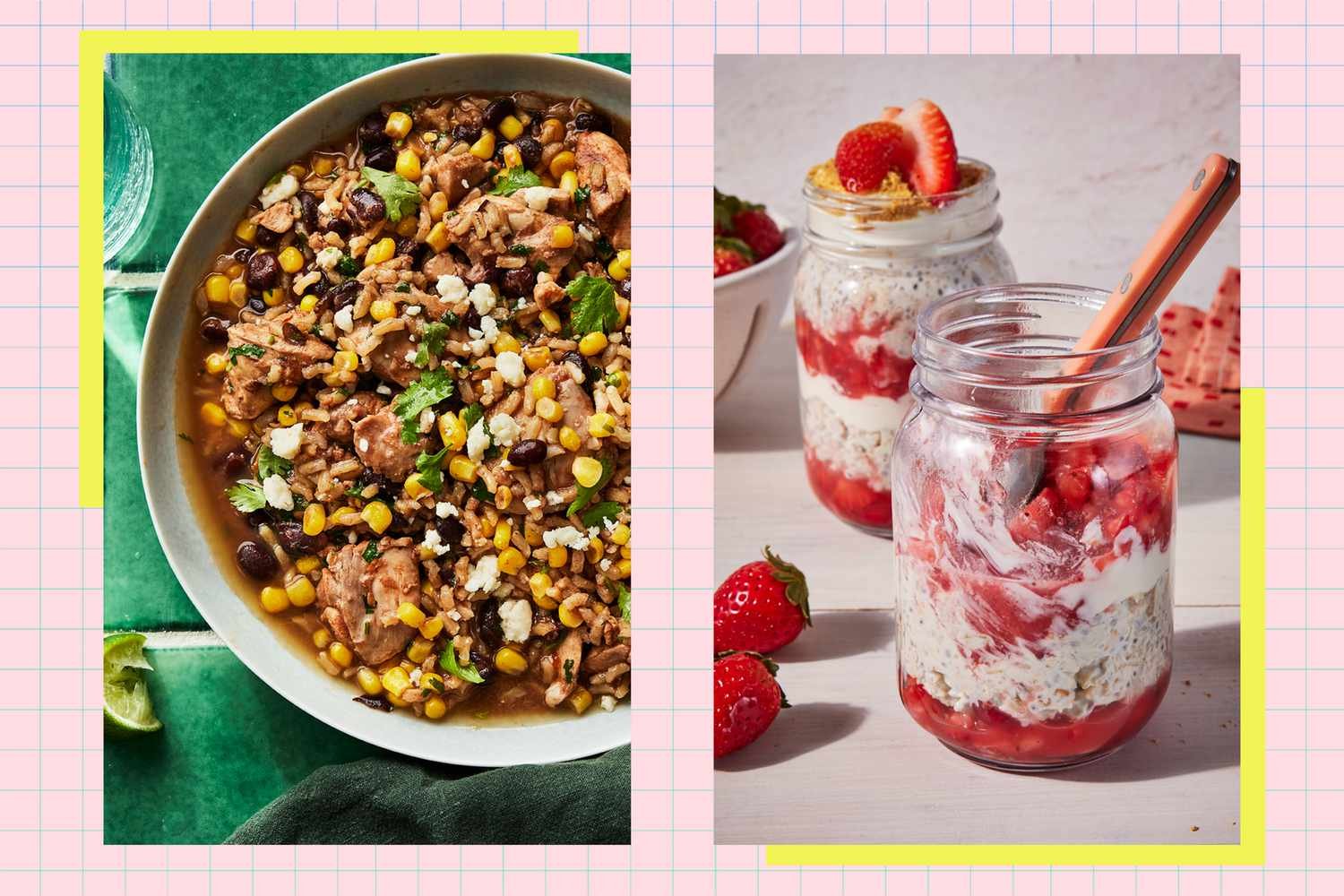
- For breakfast on days 2 through 4, make high-protein strawberry and peanut butter overnight oats.
- For lunch on days 2 through 5, prepare a sweet potato, kale, and chicken salad with peanut dressing.
- Make some whipped cottage cheese and have it as a snack throughout the week.
First day
Breakfast (295 calories)
AM Snack (206 calories)
- ¼ cup dry roasted unsalted almonds
Lunch (344 calories)
PM Snack (193 calories)
- 1 (5.3 ounce) nonfat plain (Greek) yogurt
- 1/2 cup strawberries
- 2 tablespoons sliced almonds
Dinner (450 calories)
Daily Totals: 1,488 calories, 82g fat, 14g saturated fat, 96g protein, 104g carbohydrates, 31g fiber, 1,499mg sodium
Make it 1,200 calories: Change your morning snack to one plum and omit the sliced almonds, and reduce the amount of sliced strawberries to 1/4 cup in your afternoon snack.
Make it 2,000 calories: Add in one serving of Raspberry Kefir Power Smoothie for breakfast, one medium-sized orange for lunch, and one serving of Apple with Cinnamon Almond Butter for an evening snack.
the 2nd day
Photographer: Stacey K. Allen, Props: Christina Brockman, Food Stylist: Jennifer Wendorf
Breakfast (333 calories)
AM Snack (131 calories)
Lunch (393 calories)
PM Snack (60 calories)
Dinner (473 calories)
Evening snack (95 calories)
Daily Totals: 1,485 calories, 44g fat, 8g saturated fat, 84g protein, 194g carbohydrates, 31g fiber, 1,456mg sodium
Make it 1,200 calories: Change your morning snack to a plum, skip the quinoa for dinner, and eliminate your evening snack.
Make it 2,000 calories: Add 1 cup of low-fat plain kefir for breakfast, ¼ cup of dry roasted unsalted almonds for your mid-morning snack, and 2 tablespoons of almond butter for your evening snack.
Third day
Photographer: Rachel Marek, Food Stylist: Holly Driesman, Prop Stylist: Sue Mitchell
Breakfast (333 calories)
AM Snack (264 calories)
- 1 (5.3 ounce) nonfat plain (Greek) yogurt
- 1 medium peach
- 3 tablespoons sliced almonds
Lunch (393 calories)
PM Snack (60 calories)
Dinner (453 calories)
Daily Totals: 1,502 calories, 64g fat, 9g saturated fat, 91g protein, 147g carbohydrates, 29g fiber, 1,385mg sodium
Make it 1,200 calories: Replace your morning snack with 1/4 cup of blueberries and omit the whipped cottage cheese from your afternoon snack.
Make it 2,000 calories: Add 1 cup of low-fat plain kefir for breakfast, ¼ cup of dry roasted unsalted almonds for an afternoon snack, and 1 serving of apple with cinnamon almond butter for an evening snack.
Day 4
Breakfast (333 calories)
AM Snack (131 calories)
Lunch (393 calories)
PM Snack (60 calories)
Dinner (478 calories)
Evening snack (95 calories)
Daily Totals: 1,490 calories, 50g fat, 7g saturated fat, 81g protein, 185g carbohydrates, 28g fiber, 1,062mg sodium
Make it 1,200 calories: Change your mid-morning snack to a single plum, your dinner to one serving of Creamy Pesto Shrimp with gnocchi and peas, and skip the evening snack.
Make it 2,000 calories: Add 1 cup of low-fat plain kefir for breakfast, ¼ cup of dry roasted unsalted almonds for your mid-morning snack, and 2 tablespoons of almond butter for your evening snack.
Day 5
Photo: Rachel Marek, Food Stylist: Annie Probst
Breakfast (350 calories)
- 1 cup nonfat plain yogurt (Greek style)
- 3 tablespoons sliced almonds
- 1 tablespoon chia seeds
- 1/2 cup cherries (fresh or thawed from frozen)
AM Snack (291 calories)
- 1 medium sized apple
- 2 tablespoons almond butter
Lunch (393 calories)
PM Snack (60 calories)
Dinner (419 calories)
Meal Prep Tips: Reserve two servings of slow cooker chicken and brown rice and roasted corn and black beans for lunch on days 6 and 7.
Daily Totals: 1,513 calories, 57g fat, 8g saturated fat, 104g protein, 157g carbohydrates, 31g fiber, 1,089mg sodium
Make it 1,200 calories: Avoid sliced almonds for breakfast and almond butter as a mid-morning snack.
Make it 2,000 calories: Add one English muffin with peanut butter and chia berry jam for breakfast, one medium banana for lunch, and one large pear for an evening snack.
Day 6
Breakfast (350 calories)
- 1 cup nonfat plain yogurt (Greek style)
- 3 tablespoons sliced almonds
- 1 tablespoon chia seeds
- 1/2 cup cherries (fresh or thawed from frozen)
AM Snack (95 calories)
Lunch (419 calories)
PM Snack (119 calories)
- 1 cup cucumber slices
- ¼ cup hummus
Dinner (509 calories)
Daily Totals: 1,492 calories, 57g fat, 9g saturated fat, 101g protein, 157g carbohydrates, 32g fiber, 1,259mg sodium
Make it 1,200 calories: Skip the sliced almonds at breakfast, replace your mid-morning snack with a single plum, and skip the hummus at your afternoon snack.
Make it 2,000 calories: Have one English muffin with peanut butter and chia berry jam for breakfast, two tablespoons of almond butter as a mid-morning snack, and one medium orange as an evening snack.
Day 7
Breakfast (295 calories)
AM Snack (206 calories)
- ¼ cup dry roasted unsalted almonds
Lunch (419 calories)
PM Snack (150 calories)
- 1 (5.3 ounce) nonfat plain (Greek) yogurt
- 1 cup blackberries
Dinner (432 calories)
Daily Totals: 1,503 calories, 64g fat, 10g saturated fat, 113g protein, 125g carbohydrates, 32g fiber, 1,465mg sodium
Make it 1,200 calories: Change your morning snack to 1/2 cup of blueberries and your afternoon snack to 1 clementine.
Make it 2,000 calories: Add one English muffin with peanut butter and chia berry jam for breakfast, one medium banana for a mid-morning snack, and three cups of sliced almonds for an afternoon snack.
