

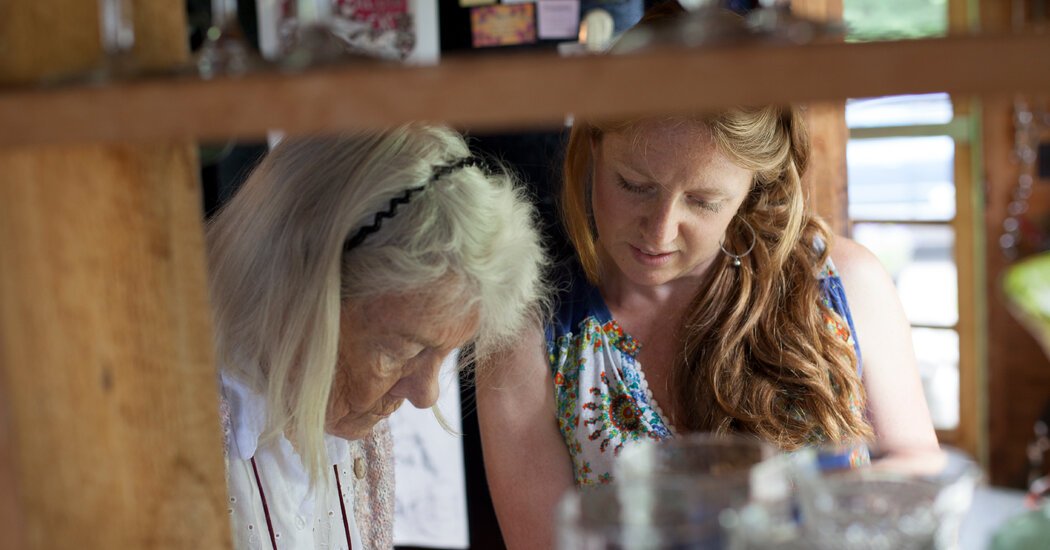
During her 54 years as an editor for the publishing house Alfred A. Knopf, Judith Jones edited the works of many literary giants, including Langston Hughes, Sylvia Plath, and John Updike. But she’s perhaps more famous for discovering an unknown cook: Julia Child. And in the process, she revolutionized the cookbook.
Sarah B. Franklin’s new biography, “The Editor: How Publishing Legend Judith Jones Shaped American Culture,” chronicles Ms. Jones’s journey from a passionate, poetry-loving Bennington College graduate to one of the most influential cookbook editors in American publishing.
A good editor brings out the best in their authors, cultivating the truest picture of their craft and personality on the page, and as Franklin shows in her meticulously researched book, Jones, who died in 2017 at the age of 93, fell into this category perfectly. She had an ear for unique voices (she rescued The Diary of Anne Frank from the manuscript pile) and a knack for turning authors’ stories into bestsellers.
But Jones did much more for cookbooks. By holding cookbook prose to the same standards she held literary writers, treating recipes as cultural touchstones and authors as experts with particular, critical perspectives, she helped define modern cookbook editing. And by publishing the work of authors as diverse as Madhur Jaffrey, Eileen Kuo, and Edna Lewis, she shone a light on cuisines and cooks routinely ignored in an era dominated by white home economists and male French chefs.
“Judith wasn’t just interested in recipes,” says Jaffrey, who co-authored her first book, “Indian Cooking,” with Jones in 1973. “She was interested in the people and culture behind the recipes, which was revolutionary for the time.”
When Jones began his publishing career in the 1950s, cookbooks and other culinary works were not generally taken seriously and were often lumped together with technical manuals and textbooks, with editorial focus on recipe explanations rather than perspective, cultural context or beauty of language.
The most popular cookbooks of the time aimed to relieve housewives of “hard work in the kitchen” by introducing them to shortcuts and ready-made meals. Franklin explains that the goal of the best-selling cookbook, “Betty Crocker’s Illustrated Cookbook,” published in 1950 by McGraw-Hill and General Mills, was not to help women become good cooks, but to “get them to do the shopping,” she says.
It was in this climate that Ms. Jones began building a slate of cookbooks at Knopf, cultivating a serious, thoughtful environment for food writing to flourish. In 1959, just two years after starting at Knopf, she convinced her reluctant bosses that American cooks were ready for the rigorous, sophisticated, and sometimes laborious cooking at the heart of Julia Child’s Art of French Cooking, co-written with Louisette Bertolle and Simone Beck.
Jones, an accomplished and adventurous cook herself – after college she studied cooking in Paris, where she created entrecote and goose cassoulet with her husband and future cookbook collaborator, Richard Evan Jones – it was her love of and knowledge of French cuisine that led her to recognise the wonder of Child’s cooking.
After her initial success, Jones trusted her own appetite and curiosity to discover new writers and cuisines that went beyond the European paradigms of the time. When she met Lewis in 1972, Jones was looking for a writer to write about the often-overlooked richness of American cuisine. Jones was immediately captivated by Lewis’ memories of the simple, seasonal meals her family cooked and ate in Freetown, Virginia, the farming town founded by former slaves where she grew up. The resulting cookbook, The Taste of Country Cooking, published in 1976, became a classic, showing Americans the richness of Southern cooking and influencing generations of chefs, including Alice Waters.
Francis Lamb, Clarkson Potter’s editor and former New York Times Magazine columnist, said “The Taste of Country Cooking” was groundbreaking because it opened the door to a more personal, hierarchical style of cookbook writing.
In describing Ms. Lewis’s life around food, he said, “She weaves together personal and complex scenes of community. She presents black rural life as beautiful, full of culture and sophistication.”
Another big win was Egyptian-born Claudia Roden, who wrote the British book “Middle Eastern Cookbook.” Jones bought the American rights to the book and continued to publish her work throughout Roden’s long career.
Ms. Jones’s interest in Chinese cuisine led her to Mr. Kuo, whose influential 1977 cookbook, “Key to Chinese Cooking,” was one of the first and most thorough explorations of regional Chinese food culture in the United States.
Jones’ editing style was hands-on: she frequently tested recipes, working side-by-side with the authors, asking questions and adding details to provide context. This was especially helpful for readers who were unfamiliar with a particular dish. Her insistence that her recipes be clearly written and work perfectly when followed was another aspect that set her apart.
Her writers became her informal cooking teachers and extended family, and she absorbed their teachings. From Ms. Jaffrey, she learned how to roast spices to bring out their flavors, a technique she used throughout her cooking. From Ms. Lewis, she learned to forage for wild mushrooms and herbs. Whenever they met, the two shared a passion for fresh, seasonal ingredients and home-grown vegetables (Ms. Jones had a large garden at her summer home in Vermont). These were rare hobbies in the 1970s, long before farm-to-table cooking became a culinary cliché.
Jones’ edited book marshals the joy of food as a way to broaden people’s minds and allow them to explore the world in more complex ways — and maybe even change it for the better. Cookbooks have come a long way since “Betty Crocker.”
“Food was our rebellion,” Jones told Franklin. “Food gave us the courage to see things, the courage to make things happen.”
