

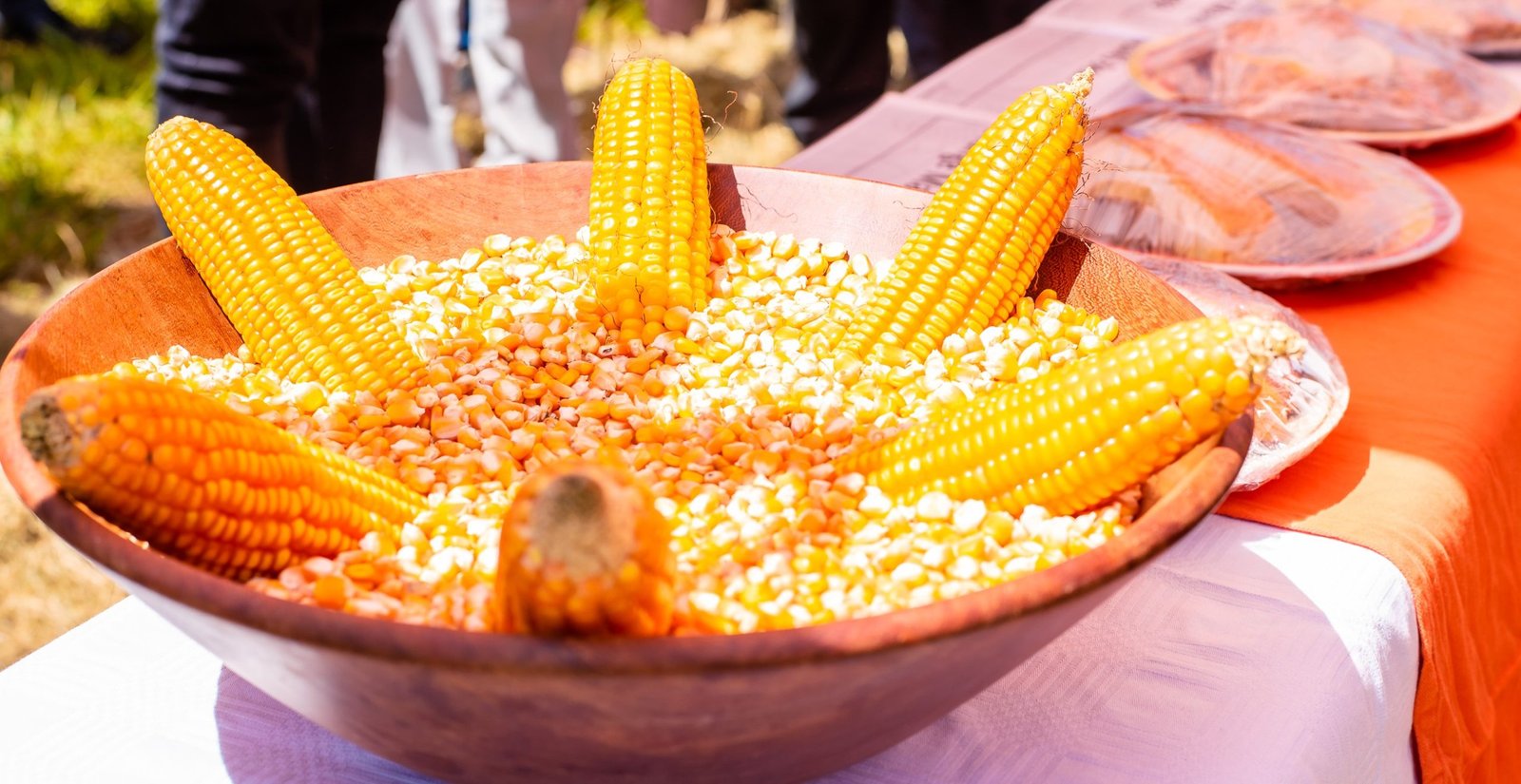
In Murewa district, located in the grain belt of eastern Zimbabwe, vitamin A deficiency is widespread among almost all households, regardless of wealth, according to a study that sought to quantify provitamin A maize nutritional yields across a range of smallholder farms in Zimbabwe and understand the potential role of improved agronomy in increasing nutritional yields. The study, published in the Journal of Nutrition, is part of a collaborative project between CIMMYT and Rothamsted Research, funded by the UK Global Challenges Research Fund and managed by the Biotechnology and Biological Sciences Research Council.
Studies have found that vitamin A deficiency is most prevalent during the rainy season when household numbers are higher. Modelling using a range of realistic provitamin A concentration levels shows that consumption of provitamin A maize could provide nearly three-quarters of households with 50% of their vitamin A requirements.
“This study highlights what a difference provitamin A maize can really make to vitamin A intakes among smallholder farmers in rural Zimbabwe,” said Frederic Baudron, lead author of the study, “and the impact is likely to be even greater with greater gains from improved varieties, supported by better agronomy, which is a key determinant of the nutrient concentration in the grain produced.”
Thirty households participated in the survey and their diets were quantified during the main (rainy) and off-season (dry) agricultural seasons, along with a market survey of locally available foods. Nearly 80% of the population in Murewa district rely on small-scale agriculture as their primary livelihood, and in contrast to other parts of Zimbabwe, the district has seen an increase in stunting rates over the past decade.
Although maize is a widely consumed staple food in Zimbabwe in various forms, Vitamin A deficiency is taking a major toll on people’s health, especially in rural areas where its effects are felt most. The impacts, ranging from preventable child blindness to increased maternal mortality and weakened immune function, highlight the urgency of sustainable interventions.
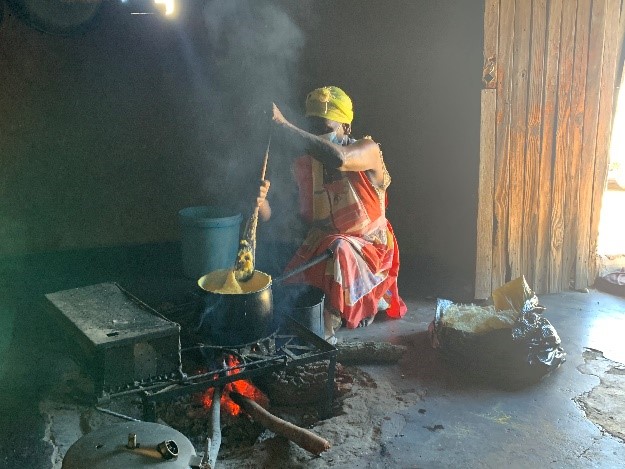
The first provitamin A maize varieties were released in Zimbabwe more than a decade ago. Subsequent breeding efforts have focused on increasing maize provitamin A concentration and yield under various stresses frequently encountered by farmers, aiming to develop varieties capable of providing 50% of the estimated average requirement for vitamin A. To date, 26 provitamin A varieties have been released in South Africa. However, several important research questions remain unanswered, such as: what is the prevalence of vitamin A deficiency in vulnerable populations and what is the cost of an affordable diet that provides sufficient vitamin A? Furthermore, can the nutrient concentration of provitamin A maize grown by smallholder farmers help to significantly reduce vitamin A deficiency in the majority of rural households?
Nutrient concentrations in biofortified crops are related to the growing environment. Biofortified maize is primarily targeted at resource-poor farmers and has the potential to address nutritional deficiencies. However, existing studies on the health effects of provitamin A intake have focused primarily on maize grown in controlled environments such as experimental research stations or commercial farms.
The CIMMYT-led study concludes that consumption of provitamin A maize alone will not fully eliminate vitamin A deficiency in the short term, and additional interventions such as dietary diversification, industrial fortification and supplements are needed. Dietary diversification is one of the viable options highlighted in the study. Modelling showed that most households could obtain enough vitamin A from foods produced on farms and available in local markets at a cost not exceeding the cost of their current diet.
In Murewa district, a CIMMYT-led survey estimated the current daily cost of the diet to be US$1.43 in the rainy season and US$0.96 in the dry season. In comparison, the optimization model suggests that a vitamin A sufficient diet could be achieved at a cost of US$0.97 and US$0.79 per day in the rainy and dry seasons, respectively. Another survey conducted in 2023 indicated that almost half of farmers in the district were aware of PVA maize and its benefits, but were not cultivating it, mainly due to limited seed availability.
