

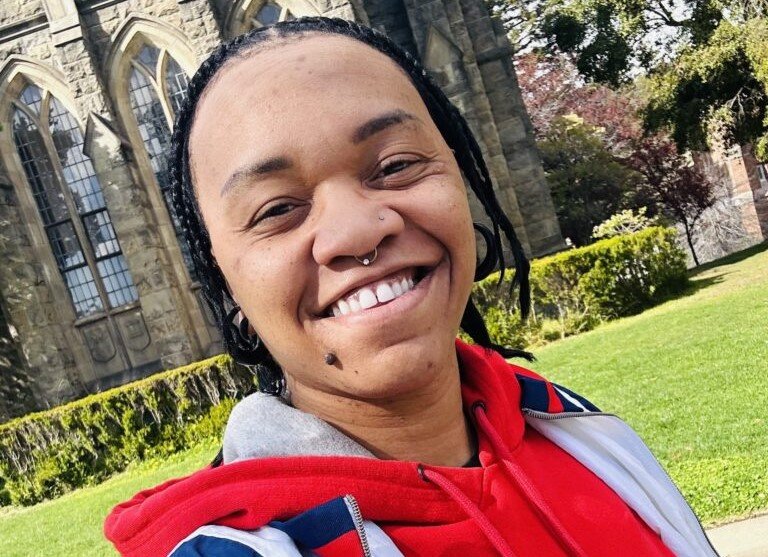
Growing up as a Black transgender, non-binary kid in Oakland, I navigated challenges in a city known for its resilience and strength. Though I was surrounded by urban landscapes, I found connection and peace with nature by participating in environmental conservation efforts. In high school, I had the opportunity to participate in a trail restoration project, a transformative experience that shaped my perspective on the world.
My most memorable experience was a six-week trip to Maui to help build stairs on an extinct volcano. The experience was truly life-changing; I was able to actively contribute to conservation while immersing myself in the natural beauty of the Hawaiian landscape. Not only did I gain practical skills while working on restoring the trails, but I also developed a deeper understanding of the interconnectedness of humans and the environment. Through this formative experience, I discovered my passion for conservation and the profound impact it can have on both individuals and ecosystems.
As a pastor in training, I bring a unique perspective to environmental stewardship that is deeply rooted in my spirituality and my identity as a person of color. To me, environmental stewardship is more than just caring for the Earth; it is a sacred duty entrusted to us by a higher power that I understand as God. I believe caring for the Earth is an expression of reverence for God.
As a person of color, I recognize the interconnectedness of environmental justice and social justice, and understand that marginalized communities disproportionately bear the brunt of environmental degradation.
While discussions around environmental protection have moved beyond traditional narratives to encompass more diverse perspectives and experiences in recent years, the intersectionality of social identities, especially in marginalized communities, remains too often overlooked. Within these communities, transgender people of color find themselves at a unique crossroads, facing intersecting forms of discrimination and marginalization. Acknowledging their experiences and perspectives can help us understand environmental issues more comprehensively and work toward inclusive solutions that address the needs of all individuals and communities.
The lived experiences of transgender people of color are intricately intertwined with systemic inequality, social discrimination, and environmental injustice, and as a result, these communities often bear a heavier burden in the face of climate change, pollution, and ecosystem degradation.
In addition to these factors, the LGBTQ+ community, which numbers over 14 million people in the United States alone, faces growing health disparities due to discrimination in healthcare, housing, and disaster relief policies, as well as the homelessness and violence that permeate their experiences. In states without anti-discrimination laws and weaker enforcement of polluters, members of marginalized communities like transgender POC are often forced to choose between unhealthy housing and homelessness.
Intersections of discrimination in health care, housing, and exposure to environmental hazards highlight the urgent need for comprehensive policy change and social transformation to create inclusive and equitable environments for transgender and other marginalized people. Yet, despite growing awareness of intersectionality, research often focuses on the heteronormative White experiences of CIS, overlooking nuanced perspectives.
Large-scale structural change is essential, but there is a lot we can do in our own neighborhood. In the summer of 2022, while attending graduate school at Pacific Religious School, I explored the intersection of environmental stewardship and mental health as a transgender youth teacher at Abundant Beginnings Summer Camp in Oakland Hills. Founded by two transgender people of color, the camp offered a unique space for children ages 3 to 11 to embrace their transgender identities and navigate various mental health diagnoses. It became clear that nature served as a healing sanctuary for these children’s well-being, fostering an unexpected connection between environmental education and mental health support.
Balancing my role as an educator guiding young minds through the wonders of Ohloni land with the challenges of providing mental health support, this experience shaped my understanding of the interconnectedness of mental health and environmentalism. The summer of 2022 marked a pivotal chapter for me, as my journeys in both fields intertwined and ignited my commitment to comprehensive environmental education and mental health advocacy.
As a transgender child, I intend to carry on my childhood legacy as an environmental activist and spread my vision to my transgender brothers and sisters and beyond. My mission is to teach transgender people about the sacredness of our environment and emphasize that it is God’s land where all are loved and accepted. I aim to foster a deep connection with nature and affirm our place within it.
In the fight for environmental justice, we must recognize that the liberation of trans people of color is intrinsically intertwined with the protection of the earth. Our struggles are interconnected, and our collective resistance has the power to create a more equitable and sustainable future for all.
