

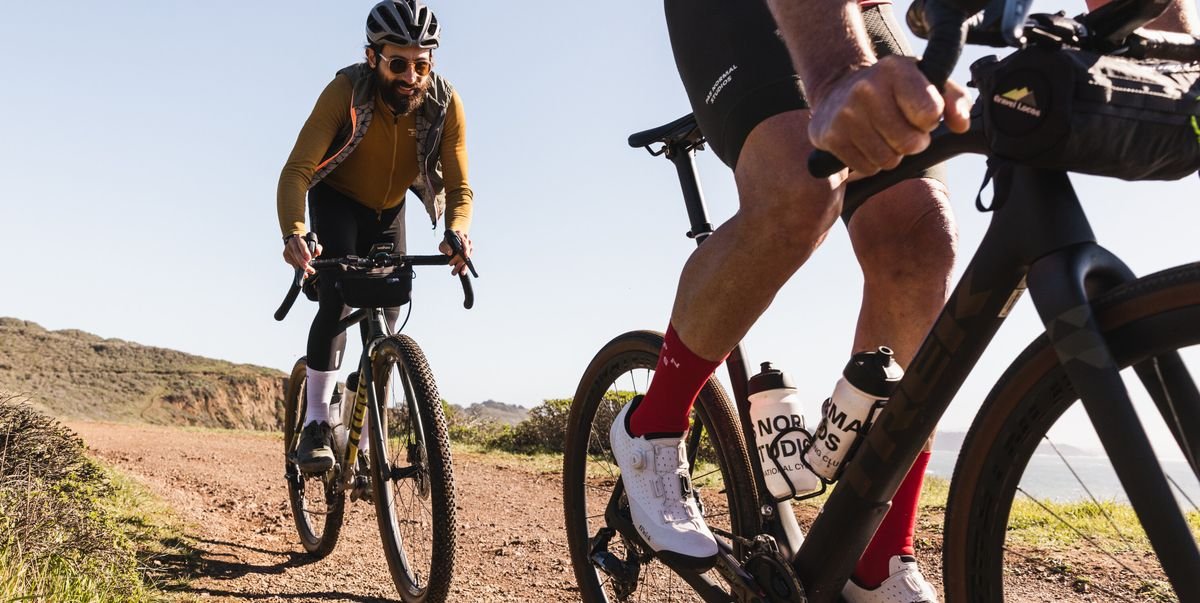
You’ve probably heard that Pilates can help strengthen your core and support your posture, balance and coordination – all essential components of healthy aging and longevity in sports. The good news is that you don’t have to attend a Pilates class to reap the benefits of Pilates exercises – you can reap the benefits at home with Wall Pilates.
“This variation of Pilates is definitely popular, and some instructors are surprised by the trend, but it’s not new,” says Beth Sandlin, founder of Trifecta Pilates in Denver, who has been teaching wall Pilates for several years. She has noticed a surge in the popularity of wall-based YouTube sessions. “Doing the same exercises you’d do on a mat or reformer, with no other equipment, just adding a wall takes it to the next level. The wall feels different; it’s very stable, supports you, and helps you get into the correct position for deeper activation.”
Read on to find out the benefits of wall pilates, how to enhance your time on the bike, and what you need to know before giving it a try – plus follow these four moves to try at home.
What is Wall Pilates?
Wall Pilates, as the name suggests, is a variation of Pilates that incorporates a wall, a form of low-impact strengthening and stretching exercise created by Joseph Pilates for rehabilitation. “Using a wall as leverage for certain movements adds a new dimension, increasing resistance to complex movements that are safe for your joints and engage your entire body,” says Adefemi Betiku, DPT, CSCS, physical therapist and instructor at Club Pilates in New Jersey. He says the added resistance of a wall is similar to the resistance you feel when using a step stool in a Pilates class.
Adding a wall can create forces that make certain exercises more difficult. Take the classic Pilates exercise, the 100, for example. Performing the move (lying in a sit-up position with legs extended and arms down to your waist) with your feet against a wall adds a whole different dimension to the workout, says Betich. Instead of focusing primarily on your abs, suddenly the move activates your hamstrings and glutes as well.
This extra activation has a powerful strengthening effect for cyclists: “When you place your feet against the wall, your legs and core automatically engage, creating a stronger connection, which, especially for cyclists, plays a big role in propulsion as you move forward,” adds Sandlin.
Plus, adding a short wall Pilates routine after your daily cycle is an efficient way to get some effective resistance training in without having to travel far to the gym or have weights on hand, making it that much easier to add into your routine on a regular basis.
What should I know before trying Wall Pilates?
Fad workouts are for the most part easy on your joints and safe to try on your own: “You’re more likely to get injured with cycling than with Pilates,” says Sandlin.
That being said, it’s important to pay close attention to how each movement feels and tone it down if necessary. While a wall for support can help you increase your range of motion during certain exercises, overdoing it a bit can increase your risk of injury.
For example, when you do a bridge with your feet on the floor, you’re likely only going to lift your hips high enough to keep your shoulder blades on the floor, says Betich. But if you do a bridge with your feet against a wall, you’ll be able to lift your body high enough to lift your shoulder blades, which puts weight on the base of your neck, which is what you want to avoid.
“When you feel pain, you need to ask yourself what’s wrong,” Betich warns. “Be aware of what each movement is targeting and listen to your body.”
Pilates has a strong core and breath element to it, so it’s important to pay attention to making sure your core muscles are working, and to breathe in and out efficiently as you perform each exercise, so you get the most out of it.
4 Wall Pilates Moves to Add to Your Routine
To get you started with wall pilates, here are 4 moves designed to strengthen your core and lower body and enhance your time in the saddle. Try them on an off-day or perform them after a ride.
1. Pelvic curl

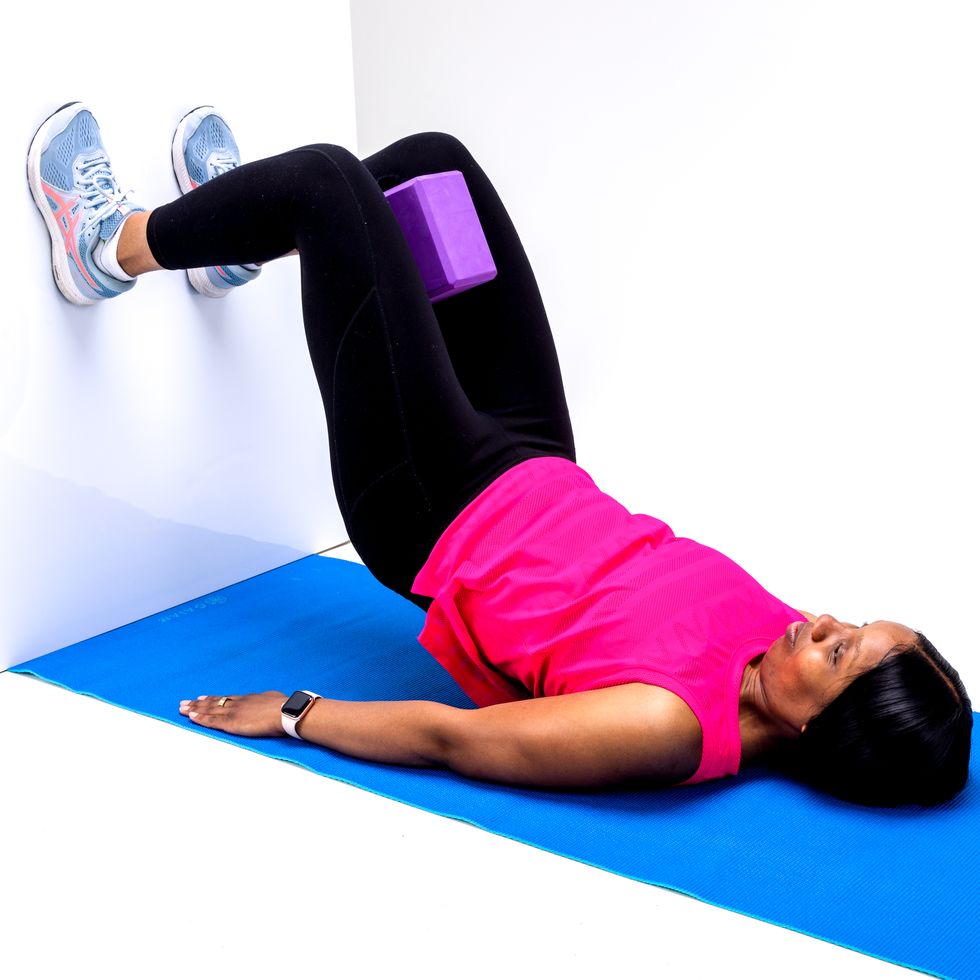
Why it works: This move is also known as a hip bridge, but Sandrine prefers to call it a pelvic curl to emphasize the range of motion and articulation of the spine as you move. This move activates not only your hamstrings, which are what power you to push off the pedals, but also your glutes. Adding a yoga block also activates your adductor (or inner thigh) and pelvic floor muscles, improving stability and knee alignment when you’re on the bike.
How to do it:
- Lie on your back with your knees bent and your feet flat against a wall.
- Place a yoga block or ball between your thighs and press against it to keep your legs parallel as you perform the movement.
- As you exhale, slowly lift your hips, moving one vertebra at a time, until only your shoulders touch the floor.
- Inhale and lower to begin.
- Repeat: 10-12 repetitions.
2. One Hundred
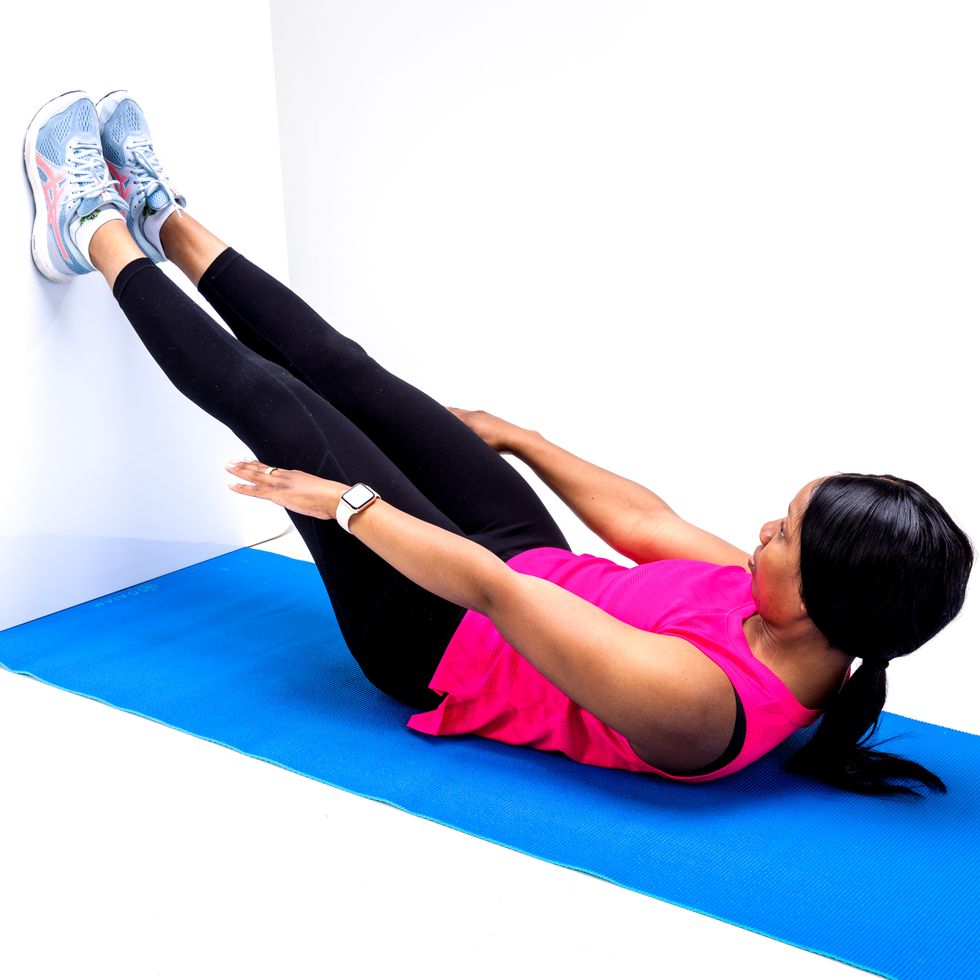
Why it works: A staple move in any Pilates class, the wall hundred works your legs as well as your core, and the spinal stability it provides will also help you ride more efficiently.
How to do it:
- Lie on your back with your feet flat against a wall and your legs straight, at about a 45-degree angle from the floor.
- Engage your core and lift your head, neck, and shoulders off the floor.
- Keeping your arms straight, lift them a few inches off the floor and move them up and down quickly.
- Inhale and move your arms five times, then exhale and move your arms five times.
- Repeat this for 10 rounds.
3. Standing Lunge

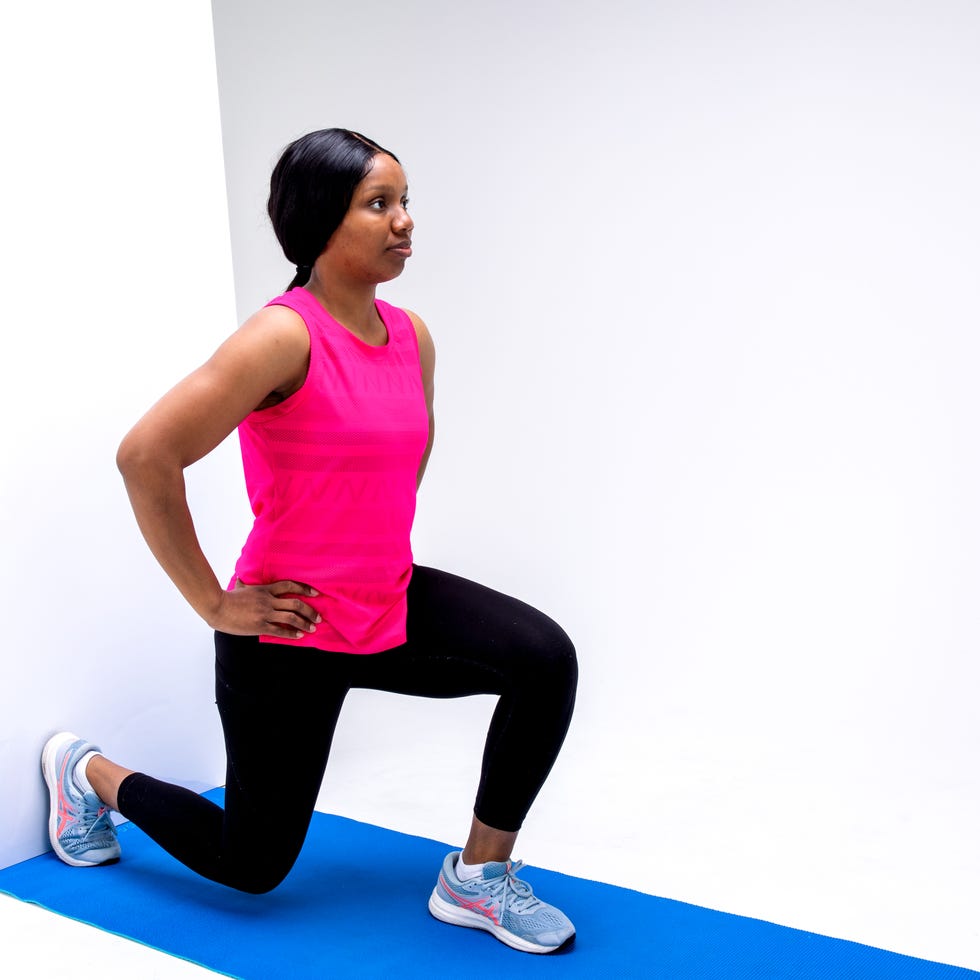
Why it works: By bracing one heel against the wall, Sandlin points out, your weight will be more evenly distributed between your feet and you can focus on keeping your pelvis forward and square, which is the position you want to maintain while riding a bike.
How to do it:
- Stand away from the wall. Place your left heel firmly against the wall and take a big step forward with your right foot. This is your starting position.
- Slowly lower your right thigh until it is parallel to the floor and your back left knee is slightly off the floor.
- Then, move your legs to stand up and return to the starting position.
- Repeat: 6-12 repetitions.
- Then move to the other side.
4. Spinal extension
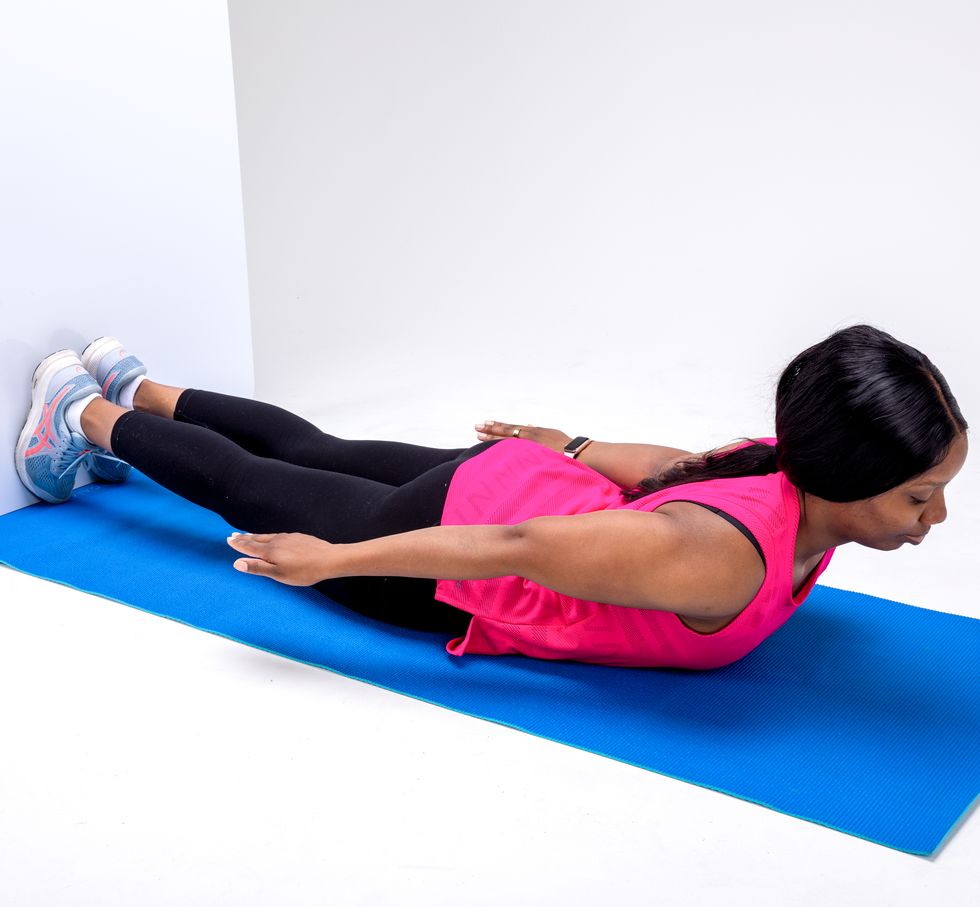
Why it works: This strength move targets your upper back and helps offset any time you spend bent over handlebars, but unlike most back extensions, it also works your legs by pressing your feet against a wall.
How to do it:
- Lie face down on the floor with your feet flat on the base of a wall.
- Inhale, engage your legs, and lift your head and shoulders (don’t lift from your hips). As you lift, reach your arms toward your feet.
- Lower it as you exhale.
- Repeat this three times.
- Then, extend your arms out to the sides in a T-shape and repeat three times.
- Finally, repeat three times with your arms extended overhead.

Laurel Leicht is a Brooklyn-based writer and editor whose work covers health, fitness, and travel for Well+Good, Glamour, O, The Oprah Magazine, and other publications.
