

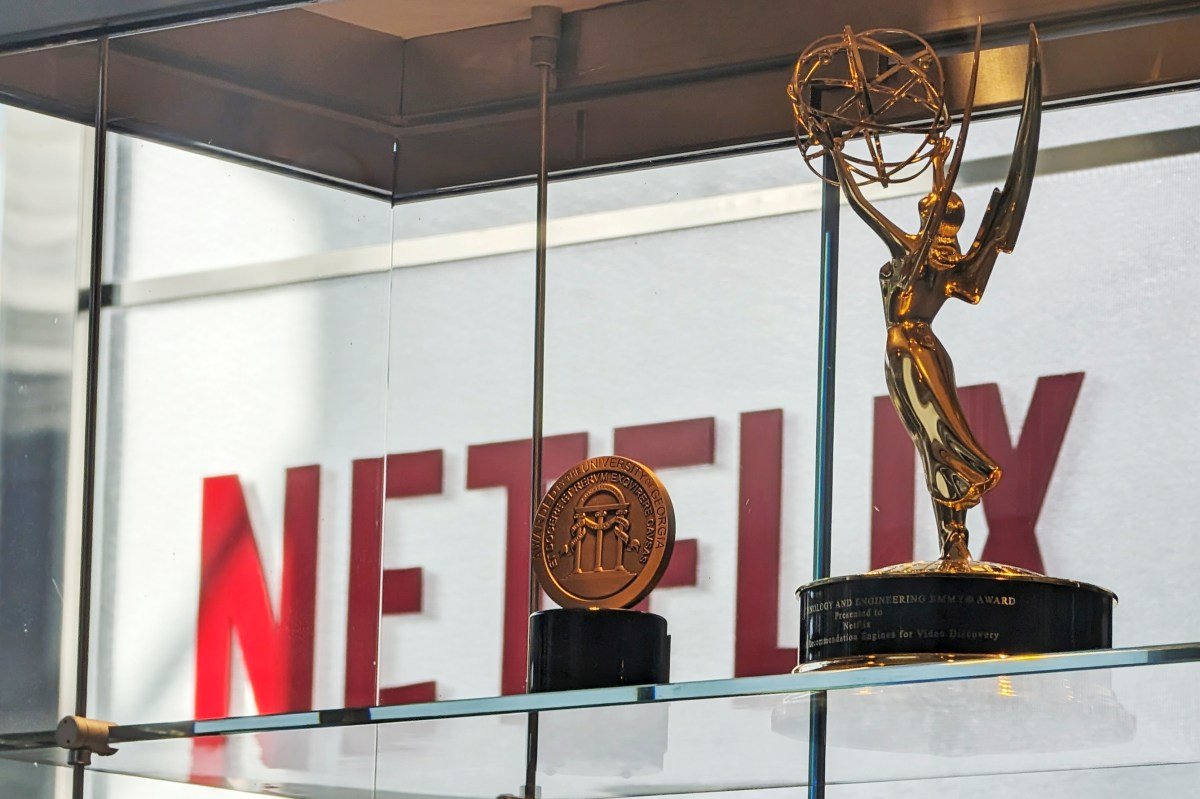

Awards, including Emmy Awards, are displayed at Netflix headquarters in Los Gatos, California, on March 7, 2024. Though Netflix wins awards for its programming like Hollywood studios, it still relies on advanced technology from Silicon Valley companies to attract viewers and subscribers. (AP Photo/Mike Liedtke)
LOS GATOS, Calif. (AP) — Video-streaming services may have the glitter of Hollywood, but Netflix remains rooted in Silicon Valley and stays one step ahead of traditional TV and movie studios.
The company, based in Los Gatos, California, more than 300 miles from Hollywood, often taps into its technology toolbox without viewers even noticing: Just tweaking the knobs on its viewer recommendations a few times is enough to keep its 270 million subscribers around the world happy at a time when most streaming rivals are facing high levels of churn from inflation-weary subscribers.
Even as hit TV series like “The Crown” and “Bridgerton” garner widespread popularity, Netflix still strives to cater to the diverse tastes of its wide audience. One of the secrets is customizing synopses and trailers for its wide variety of shows to fit each viewer’s personal interests.
So lovers of romance might see a synopsis or video trailer for “The Crown” highlighting the relationship between Princess Diana and Prince Charles, while viewers interested in political intrigue might be shown footage of a meeting between Queen Elizabeth and Margaret Thatcher.
For an Oscar contender like “Nyad,” action fans might see a trailer featuring the title character submerged in water for an epic swim, while comedy fans might see a light-hearted scene featuring a hilarious exchange between the two stars, Annette Bening and Jodie Foster.
Netflix is able to achieve these variations thanks to a deep understanding of the viewing habits it gains by analyzing data from its subscribers’ service histories, including those who joined in the late 1990s when the company launched its DVD-by-mail service, which ran until last September.
“That’s definitely the secret sauce for us,” said Eunice Kim, Netflix’s chief product officer, as she discussed the nuances of how Netflix tries to draw different viewers to different shows. “Our goal every day is to keep people engaged, but also make sure they’re very happy with their viewing experience.”
As part of that effort, Netflix is redesigning its homepage, which greets subscribers as they watch the streaming service on their TV screens. The change is intended to bring together all the information that may suit a subscriber’s preferences in a more concise format, reducing “eye strain,” according to Patrick Fleming, Netflix’s senior director of member products.
What Netflix is doing with previews may seem like a small thing, but it could make a big difference, especially now that people looking to save money are starting to pare down their streaming services.
According to figures compiled by research firm Antenna, there were about 140 million account cancellations across video-streaming services last year, up 35% from 2022 and nearly triple the number in 2020, when demand for entertainment soared among people forced to stay at home due to the COVID-19 pandemic.
Netflix doesn’t disclose cancellation or churn rates, but its streaming service gained 30 million subscribers last year, its second-largest annual gain after a surge during the pandemic lockdowns of 2020.
Part of last year’s membership growth is down to a crackdown on viewers who were free-riding on Netflix members who shared their account passwords, but the company also benefits from the technological know-how it needs to keep delivering programming to customers who like it and think the service is worth spending money on, said J. Christopher Hamilton, an assistant professor of television, radio and film at Syracuse University.
“What they’re doing is very original and very strategic,” Hamilton says, “and it certainly puts them ahead of traditional media companies that are trying to do the same thing but don’t have the level of sophistication, experience or history of the data in their archives.”
Netflix’s geeky heritage has once drawn ridicule from the entertainment industry, which has scorned the company’s geekiness.
“It’s like the Albanian army is trying to take over the world,” former Time Warner CEO Jeff Bewkes said of Netflix in a 2010 interview when asked about the threat the company posed at the time.
Shortly after the criticism, Netflix began analyzing viewing data to find ways to create original programming that would draw more subscribers. This ambitious expansion prompted established entertainment companies like Time Warner (now owned by Warner Bros. Discovery) and Walt Disney Co. to scramble to build their own streaming services.
While this expansion initially attracted many subscribers, it also led to huge losses and prompted a management shake-up and major cuts, including the abrupt shutdown of CNN’s streaming service.
Netflix’s embrace of technology to retain subscribers and grow profits — the company’s profits rose 20 percent to $5.4 billion last year — is widening the gap with rival services that are now struggling to stem losses.
Disney’s four-year-old streaming service recently turned profitable thanks to an overhaul by CEO Bob Iger, but Iger believes it needs to do more to catch up with Netflix.
“In terms of technology capabilities, we have to be at their level,” Iger said at a conference earlier this year. “We’re building and developing all the technology right now, and the gold standard is clearly Netflix.”
Netflix isn’t going to help its rivals by giving away its secrets, but in general, segmentation starts with figuring out which viewers tend to gravitate towards certain genres — broad categories include action, adventure, anime, fantasy, drama, horror, comedy, romance and documentaries — and then digging deeper from there.
In some cases, Netflix’s technology tries to guess a viewer’s mood at any given time by analyzing titles that are being viewed or clicked on, and it’s relatively easy for the technology to figure out how to make a movie or TV series as appealing as possible to a particular viewer. If Netflix’s data shows that its subscribers are watching a lot of Hindi-language titles, it’s almost a no-brainer for the company to feature a clip of Bollywood actress Alia Bhatt reprising her role in the American film “Heart of Stone” instead of leading lady Gal Gadot.
“We want to do our best to put things in front of you that you love,” Kim said. “Part of that is the content recommendations themselves, but it’s also about how we present that content to you.”
