

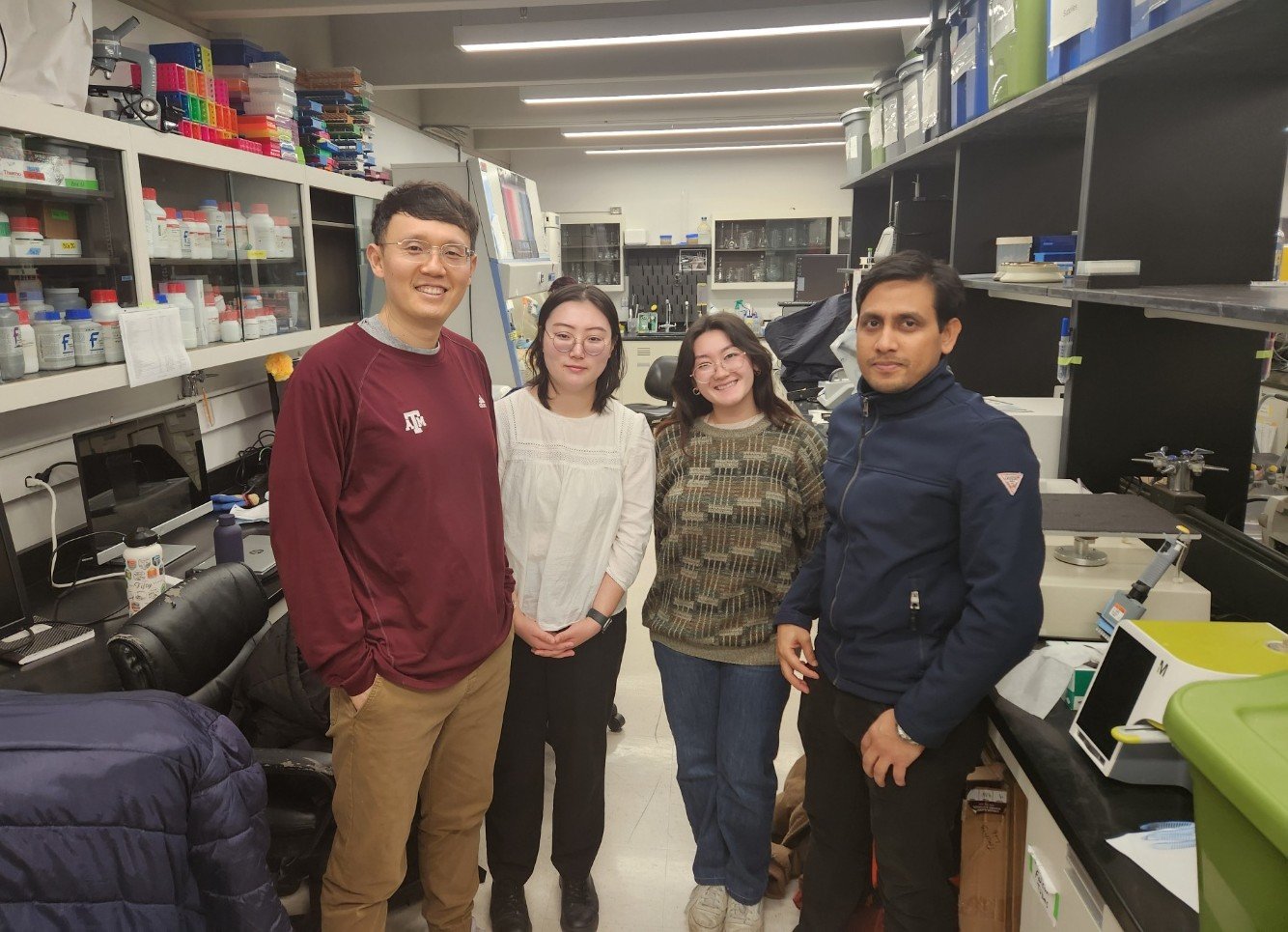
When the School of Food Science and Technology was looking for an expert in fermentation and brewing science, as well as someone knowledgeable about the microbiome and probiotics, they knew scientist and registered dietitian Dr. Seockmo Ku was the perfect fit.
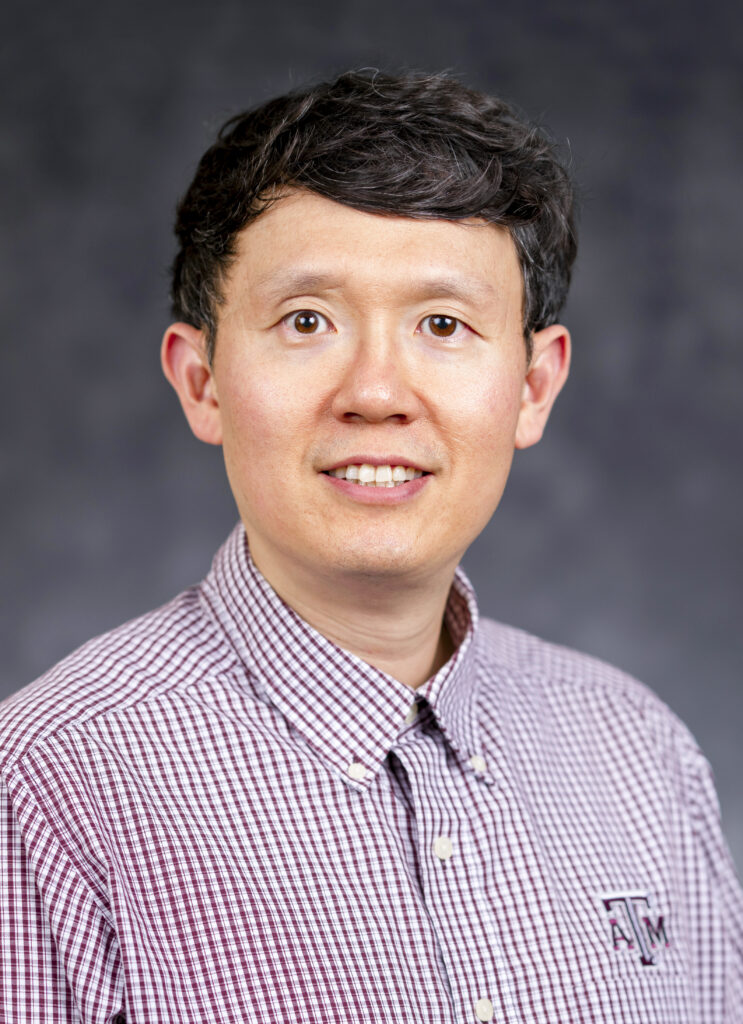
Ku, who joined the department as an assistant professor last year, was born in South Korea and grew up in a culture rich in fermented food traditions, and from an early age he watched his grandmother and mother make kimchi and the traditional Korean alcoholic beverage known as makgeolli.
“This is where my interest in microbiology and fermentation was born,” Khoo says. “This early experience not only fostered a deep appreciation for traditional cultural practices, but also intrigued me about the potential of fermentation science to improve human health.”
Combining biology and nutrition
As an undergraduate double majoring in molecular biology and food and nutrition, Ku developed an interest in food microbiology, which he further developed in his master’s program in food and nutrition.
“After I got my master’s degree, I got the opportunity to work as a food research and development scientist at CJ CheilJedang Food Research and Development Center in Korea,” he says. “There, I developed and launched various value-added foods.”
While working as an industry researcher, Ku also obtained qualifications as a registered dietitian.
“My extensive background in food science and nutrition has given me the insight to help commercialize various products that have received positive response from consumers in the Asian market,” he said.
“The intersection of pure and applied science in food science and technology is really fascinating. It addresses a wide range of scientific problems and provides solutions that can be applied in practice, which makes this field very appealing.”
Quickly
PhD
Ku now sees himself as a bridge between food science and nutrition.
“The combination of academic pursuits and practical applications in my early career merged my interest in both the scientific and nutritional aspects of the field and solidified my interest in food science and technology,” he explained.
Use of next-generation probiotics in alcohol fermentation
Ku’s academic research efforts are focused on probiotics, specifically Bifidobacteria and Lactobacillus. This area of food science is growing due to advances in microbiome analysis through next-generation sequencing. The field of next-generation probiotics, including strains such as Prevotella and Parabacteroides, has further piqued Ku’s interest as probiotics hold great academic and commercial potential for human health and nutrition.
“For the past six years, I’ve been applying my experience with probiotics to developing alcoholic beverages,” he said. “As a fermentation scientist teaching a variety of courses, I’ve noticed that my students have a great interest in producing these beverages.”
Ku and his colleagues have recently been working to characterize Lactobacillus strains that not only exhibit alcohol tolerance but also produce alcohol dehydrogenase and acetaldehyde dehydrogenase, which are primarily involved in breaking down alcohol.
“This research inspired us to apply these strains to the production of sour beers and sake, innovating the brewing process and enhancing the functional qualities of these beverages,” he said. “This ongoing research illustrates how my professional journey and personal interests have merged and are now guiding my contributions to the field of fermentation and brewing science.”
Fermentation, brewing science, food safety
In fermentation science, Ku focuses primarily on lactic acid and alcoholic fermentation. In the area of lactic acid fermentation, he focuses on identifying new probiotic strains, characterizing probiotic and prebiotic candidates, evaluating their health effects, and conducting biosafety assessments.
“I am also working on the production, isolation and commercialization of postbiotic molecules (nutrients produced by prebiotic bacteria) from lactic acid bacteria cell lines,” he says. “In brewing science, I am investigating the production of various alcoholic beverages such as beer, whiskey and sake.”
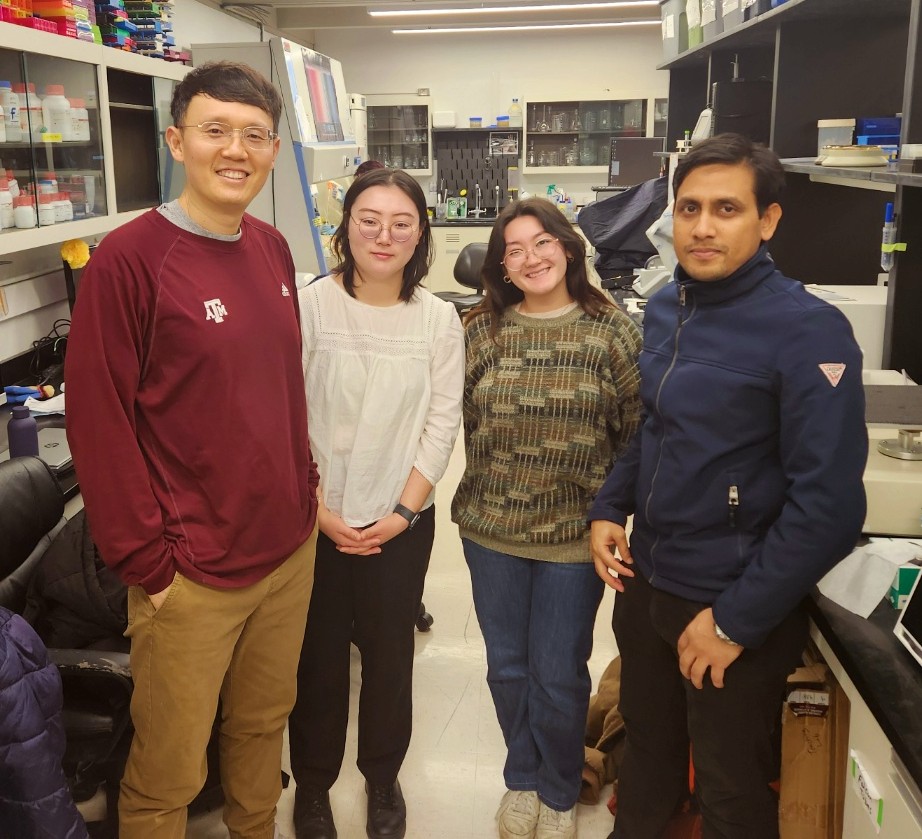
Ku’s recent research, funded by a USDA grant, is using perennial sorghum to produce koji and brew beer and traditional Korean alcoholic beverages. These beverages benefit from complex bioprocessing treatments that significantly improve their flavor profiles. He is also using microbiome analysis to understand the characteristics of the microbes that act as microbial cell factories during fermentation.
“My experience in microbiome research is fundamental to both my research in probiotics and alcoholic beverage production,” he said.
Ku is also working on using probiotic cell lines to enhance the functionality of phytochemical glycosides.
In the food safety field, Ku has been researching ways to speed up microbial identification by reducing the enrichment step, which involves modifying nutrient media to allow only favorable microorganisms to grow — a process that currently represents a major bottleneck in microbial detection. Ku’s contributions were recognized with an FDA Food Safety Challenge Award.
Next-generation food science and technology research
“The intersection of pure and applied science in food science and technology is really exciting,” says Khoo. “The field effectively integrates product production, quality control, human health, quality of life and sustainability. Addressing a wide range of scientific problems and providing solutions that can be applied in practice makes the field very appealing.”
He said the ability to translate concepts imagined as an academic into real products as a consumer is extremely rewarding, while also deriving tangible results from his research.
“With the advent of next-generation sequencing technologies, new probiotic candidates and next-generation probiotics have become even more popular,” he said, “but the lack of research represents an exciting opportunity for me to make a significant contribution to the field of fermentation science.”
Through his advanced research in fermentation science and quality advising, Qu said he hopes to be an effective mentor for food science and technology students and improve their skills in fermentation science.
He is also committed to using his research to help disadvantaged communities, and plans to develop and provide services to help students with autism, attention deficit hyperactivity disorder, and other health issues to better integrate into the academic community.

