
Close Menu
  • Home
  • Wellness
    • Women’s Health
    • Anti-Aging
    • Mental Health
  • Alternate Healing
    • Energy Healing
    • Aromatherapy
    • Acupuncture
    • Hypnotherapy
    • Ayurveda
    • Herbal Remedies
    • Flower Essences
    • Naturopathy
  • Spirituality
    • Meditation
    • Pilates & Yoga
  • Nutrition
    • Vitamins & Supplements
    • Recipes
  • Shop

Subscribe to Updates

Subscribe to our newsletter and never miss our latest news

Subscribe my Newsletter for New Posts & tips Let's stay updated!

What's Hot

4 supplements you should absolutely avoid, found at HomeGoods

July 30, 2024

This anti-aging snail slime serum is just $14 (over 40% off), so grab it!

July 30, 2024

Book Review: The subtle power of emotional abuse

July 30, 2024
Facebook X (Twitter) Instagram
  • Home
  • About us
  • Advertise with Us
  • Contact us
  • DMCA Policy
  • Privacy Policy
  • Terms and Conditions
Login
0 Shopping Cart
The Holistic Healing
  • Home
  • Wellness
    • Women’s Health
    • Anti-Aging
    • Mental Health
  • Alternate Healing
    • Energy Healing
    • Aromatherapy
    • Acupuncture
    • Hypnotherapy
    • Ayurveda
    • Herbal Remedies
    • Flower Essences
    • Naturopathy
  • Spirituality
    • Meditation
    • Pilates & Yoga
  • Nutrition
    • Vitamins & Supplements
    • Recipes
  • Shop
The Holistic Healing
Home » UNICEF speaks out on global child food poverty: change is possible
Nutrition

UNICEF speaks out on global child food poverty: change is possible

theholisticadminBy theholisticadminJune 6, 2024No Comments6 Mins Read
Facebook Twitter Pinterest Telegram LinkedIn Tumblr Email Reddit
Share
Facebook Twitter LinkedIn Pinterest Email Copy Link


Use what works to create an action plan

UNICEF has released a new report on the impact and causes of food insecurity among children around the world, calling for urgent action to end acute child food poverty, the leading cause of child malnutrition.

in Child Food Poverty: Early Childhood MalnutritionUNICEF found that inequality, conflict and the climate crisis have pushed one in four children worldwide – 181 million people – into severe food poverty, and that children experiencing this level of food poverty are up to 50 percent more likely to suffer from life-threatening malnutrition and wasting.

Children consuming up to two of the eight defined food groups It is believed that there is severe child food poverty.

Key contributing factors include food systems that fail to provide nutritious, safe and affordable options for children, families’ inability to purchase nutritious foods, and the failure of parents and caregivers to adopt and maintain good feeding habits for their children.About 64 million of the affected children are in South Asia and 59 million in sub-Saharan Africa, according to the report.

“The challenges seem insurmountable, but they are not,” UNICEF Executive Director Catherine Russell writes in the foreword. “Ending this scourge to children is a political choice, and we already know many of the solutions. Our report makes clear that child food poverty is not the failure of parents or families, but a systems failure — and change is possible.”

Indeed, progress towards ending child food poverty is already being made, despite some challenging circumstances.

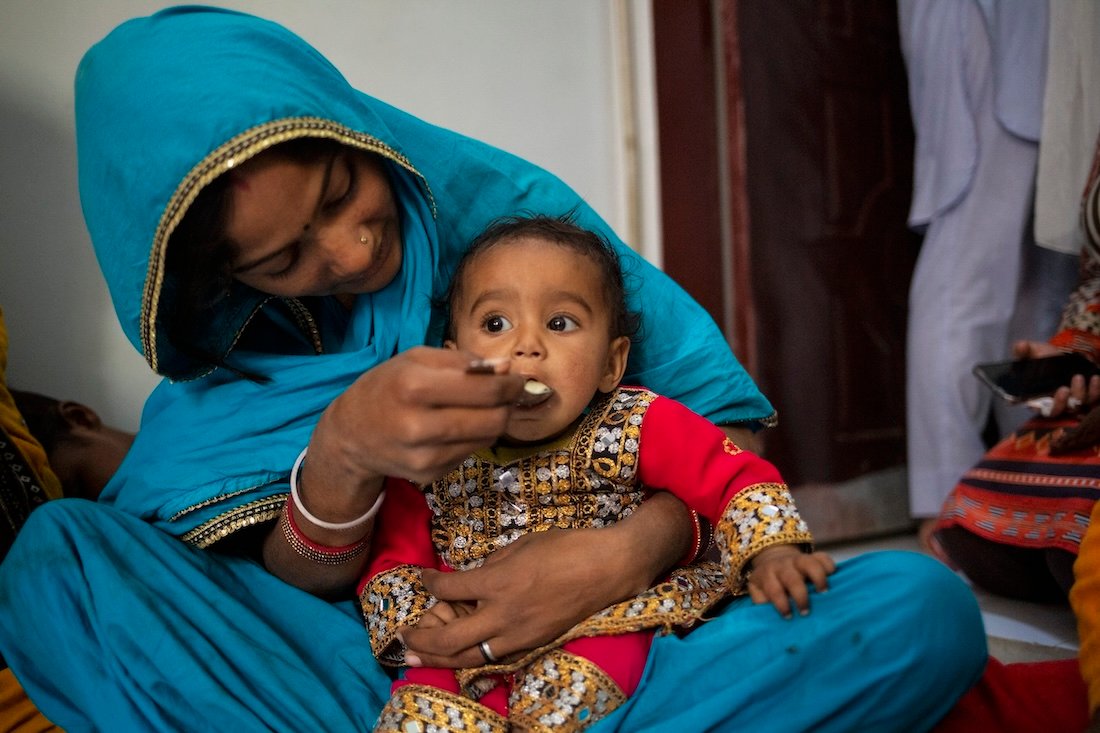
A mother feeds her child porridge containing micronutrient powder provided by UNICEF in the village of Ngoro, northern Burkina Faso.
A mother in Ngoro village, northern Burkina Faso, feeds her child porridge mixed with micronutrient powder provided by UNICEF and distributed by implementing partners during a community session on optimal feeding practices for young children. © UNICEF/UN0640863/Dejongh

Progress Against Child Food Poverty in Burkina Faso

for example: Burkina Faso Despite facing many challenges, including political and social instability, erratic rainfall, widespread poverty and food insecurity, the Government of Nepal has managed to halve the proportion of children living in severe food poverty from 67 percent in 2010 to 32 percent in 2021, and has also reduced child stunting from 35 percent to 23 percent in the same period.

The UNICEF report cited facilitating factors such as strong government leadership, effective social and behavioural change interventions and strong social safety net programmes. Government efforts to promote and support the production and consumption of nutritious foods also help.

The report says that with UNICEF support, Burkina Faso has empowered communities to improve breastfeeding practices, thanks in large part to a network of 17,000 trained community health workers and some 40,000 mother support groups that provide parents and caregivers with information and counselling on child feeding.

How Rwanda reduced extreme child food poverty

Rwanda is another success story: Between 2010 and 2020, the proportion of children living in severe food poverty in Rwanda fell by more than a third, from 20% to 12%, a lower prevalence than in many middle-income countries.

The UNICEF report details several factors, including government leadership and sound policies, and investments in crop diversification with an emphasis on fruits, vegetables and pulses.

Rwanda has also expanded community-based nutrition services through an established network of community health workers (CHWs). There are three CHWs in each village of 50-100 households, and each is trained to counsel parents and guardians on their children’s feeding habits. Rwanda’s CHWs conduct home visits and organize group sessions, and are evaluated on the quantity and quality of their services through performance-based paid incentives.

Social protection programmes that provide cash assistance to poor families are also helping to improve young children’s feeding habits.

A little girl prepares to eat an egg at the Majengo Early Childhood Development Centre in Rubavu District, Western Province, Rwanda.
A child peels a boiled egg at the Majengo Early Childhood Development Centre in Rubavu district, Western Province, Rwanda. The country’s “One Egg a Day, One Child” campaign encourages feeding eggs to young children from the age of six months. The programme has shown promising results in improving dietary diversity among young children. © UNICEF/UNI509882/Iyakaremye

A notable example from Peru

In Peru, overall child food poverty decreased from 26% to 16% and severe child food poverty from 7% to 2.7% between 2007 and 2021. UNICEF attributes this achievement to sound policy and programmatic efforts, as well as a vibrant civil society that has maintained political commitment across parties and administrations since 2006.

Other positive developments include setting clear targets, focusing resources on evidence-based interventions, prioritizing spending on the poorest communities and introducing results-based financing. Building social protection programmes around nutrition has also helped.

UNICEF highlights these and other tactics in Peru, looking at what has worked and what remains to be done.

Children who suffer from child food poverty are the world’s most deprived and disadvantaged children. They are denied good nutrition at the most critical time in their lives. — UNICEF Executive Director Catherine Russell

As Russell points out, UNICEF has outlined a blueprint for tackling this issue, drawing on country experiences, and recommending actions to transform food systems, mobilize health systems and revitalize social protection schemes, with children’s right to food and nutrition at their heart.

“Children who suffer from child food poverty are some of the most disadvantaged and underprivileged children in the world,” Russell writes. “They are denied the power of good nutrition at a critical time in their lives.”

“We must mobilize the combined resources of governments, development and humanitarian organizations, civil society, financial partners, academia and the food and beverage industry to fix the broken systems that have allowed this injustice to persist for far too long.”

In the Lisboa community in Loreto, Peru, 37-year-old Alize Tamani works harvesting beans while her 12-year-old daughter Vivian holds her 2-month-old brother Mariel, and her 5-year-old son Esteban helps out.
Alize Tamani, 37, (left), harvests beans in the Lisboa community in Loreto, Peru, while her 12-year-old daughter Vivian holds her 2-month-old brother Mariel, while her 5-year-old son Esteban helps out. In Peru, poor mothers receive monthly cash in exchange for bringing their young children to clinics for regular growth monitoring and counselling, as well as prescriptions for fortified foods, vitamin supplements and deworming medicines. It’s a form of nutrition-sensitive social protection programme that has helped Peru keep child food poverty low. © UNICEF/US CDC/UN0724438/Florence Goupil

Find out more about how other countries are tackling child food poverty and the concrete actions UNICEF is calling on governments and other partners to take. Download the full report from this overview page.

UNICEF will not stop working until every child survives and thrives. Support UNICEF. Donate now.

Please donate


Source link

Share. Facebook Twitter Pinterest LinkedIn Tumblr Email
theholisticadmin
  • Website

Related Posts

Physicians need better nutrition training

July 7, 2024

Senior Meals: Menus posted on Pine River Nutrition site, July 8-12, 2024 – Pine and Lakes Echo Journal

July 7, 2024

Bigger, bolder nutrition labelling: COS may put it back on FSSAI agenda | Economic & Policy News

July 7, 2024
Leave A Reply Cancel Reply

Products
  • Handcraft Blends Organic Castor Oil - 16 Fl Oz - 100% Pure and Natural
  • Bee's Wrap Reusable Beeswax Food Wraps
  • WeeSprout Double Zipper Reusable Food Pouch - 6 Pack - 5 fl oz
Don't Miss

8 Ayurvedic drinks and tonics to boost your immunity this monsoon season

By theholisticadminJuly 30, 2024

Cinnamon Tea Cinnamon has anti-inflammatory and antibacterial properties, making it perfect for maintaining overall health…

An Ayurvedic Roadmap for Seasonal Self-Care

July 30, 2024

Can Zydus Wellness overcome skepticism about health drinks as it enters the Ayurvedic beverage space with Complan Immuno-Gro? – Brand Wagon News

July 30, 2024

Zydus Wellness launches Ayurvedic beverage Complan Immuno-Gro with campaign featuring actress Sneha

July 30, 2024

Subscribe to Updates

Subscribe to our newsletter and never miss our latest news

Subscribe my Newsletter for New Posts & tips Let's stay updated!

About Us

Welcome to TheHolisticHealing.com!

At The Holistic Healing, we are passionate about providing comprehensive information and resources to support your journey towards holistic well-being. Our platform is dedicated to empowering individuals to take charge of their health and wellness through a holistic approach that integrates physical, mental, and spiritual aspects.

Facebook X (Twitter) Pinterest YouTube WhatsApp
Our Picks

4 supplements you should absolutely avoid, found at HomeGoods

July 30, 2024

This anti-aging snail slime serum is just $14 (over 40% off), so grab it!

July 30, 2024

Book Review: The subtle power of emotional abuse

July 30, 2024
Most Popular

Energy healed me — over the phone! Scientist explains how

October 19, 2011

Spirituality and Healing | Harvard Medical School

January 14, 2015

Healing through music – Harvard Health

November 5, 2015
  • Home
  • About us
  • Advertise with Us
  • Contact us
  • DMCA Policy
  • Privacy Policy
  • Terms and Conditions
© 2026 theholistichealing. Designed by theholistichealing.

Type above and press Enter to search. Press Esc to cancel.

Sign In or Register

Welcome Back!

Login to your account below.

Prove your humanity


Lost password?