

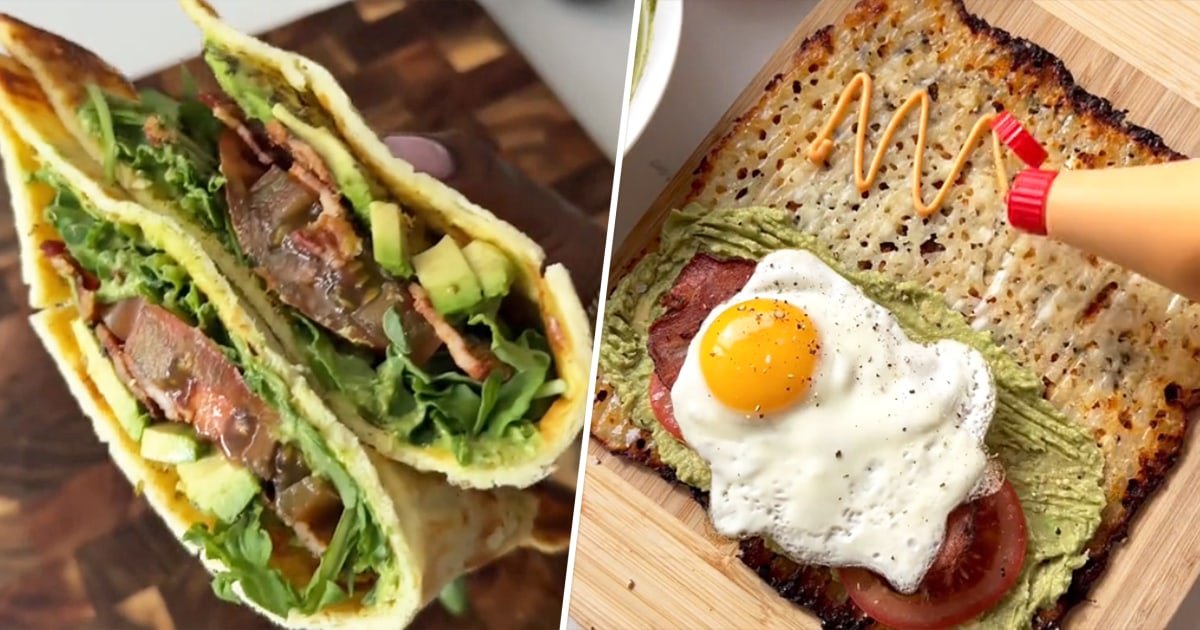
Cottage cheese is having a heyday as a weight loss secret, and it shows no signs of slowing down. I’ve tried cottage cheese ice cream (yes), cottage cheese scrambled eggs (no), and even the cottage cheese and mustard diet (yes, maybe), and that’s just the beginning. The latest TikTok favorite? Cottage cheese wraps.
I think I’ve watched all of these videos, there are thousands of them, and they couldn’t be any easier to see because they’ve been edited down to sound bites, but is that the reality?
Some recipes have just one ingredient: cottage cheese baked straight from the container into a flatbread, but most versions are more complicated and use cottage cheese mixed with eggs or egg whites. Some are air fried or quickly cooked in a skillet. Some are flash baked at temperatures over 400 degrees, but most of the best recipes are cooked at 350 degrees for 40 minutes. There are also tortilla versions.
TikTok user Capri Lilly (@goodfoodbaddie) offers some promising tips for success: use high-protein cottage cheese, blend for only 30 seconds, shape as you pour, and choose the right baking temperature. Her high-protein sandwich certainly looks delicious.
But after watching a bunch of these videos, I was left wondering: What is this modern obsession with cottage cheese? Is it actually healthy? Is it even cheese?
According to the National Center for Historical Cheesemaking, our obsession with cheese can be traced back to ancient Egypt and Greece, where storing milk in an animal’s stomach naturally produced a soupy curd (yum!). The food has been enjoyed in home kitchens for thousands of years, but it’s been produced commercially in the United States since the 1860s.
In the 1950s, cottage cheese was an appetite-suppressing staple, along with cigarettes and amphetamines. Cottage cheese was a cheap source of complete protein and became popular when meat was rationed during World War I. Check out this cottage cheese “roast” made with lima beans and bell peppers.
Now, cottage cheese wraps are growing in popularity, but the comments range from enthusiastic approval to cheery skepticism to outright disgust.
Taste tests have also produced mixed results, with many testers complaining about an awful taste, holes or rips in the wrap, and alternating burnt cracker and sticky bits.
But I did have some potential tricks I wanted to try!

Does it matter what type of cottage cheese mix I use?
I was curious to see if the type of cottage cheese would make a difference in the outcome of the wrap. Many reviewers report good results with the small curd varieties, especially a brand called Good Culture. I tested that brand along with commercial brands with 2% and 4% milk fat, and the difference was pretty clear.
Only the wrap made with Good Culture (which has the smallest curd size and highest protein content) managed to stay together and even passed the all-important sandwich-fold test, while the other two failed spectacularly.
The flavor was good, but the texture was a little tough, like the crunchy cheese on the edges of the pizza. I really needed to bake it for 40 minutes to get it anywhere near done. The good thing is that it was super easy to prepare and clean up was minimal.

The egg versions featured online suggest a softer texture that’s easier to wrap around, and most recipes call for a 2:1 ratio of cottage cheese to eggs.
I tried Lily’s tip: mix 1 cup cottage cheese with 2 eggs, garlic, and spices, then bake at 350 F for 40 minutes. It worked beautifully. The wrap came off the pan in one piece and was soft enough to fold and sturdy enough to hold. I used room temperature eggs to minimize the egg flavor.
However, I’m still annoyed that I had to run the oven for so long to make this version, plus there’s a lot more cleanup involved with this recipe since it requires blending.
Luckily, the Mediterranean vegetables and tomato-yogurt sauce made all of that worry disappear in an instant, and I ate the wrap standing up in the kitchen, not just because it was amazing, but also because the ridiculously long bake time had me starving.

Then I tried the cottage cheese-only version again, this time with a few tweaks: My goal was to improve cohesion and speed up the cook time. I also tried a blend of commercial brands, but I didn’t think the size of the curds made much of a difference.
Based on the success of past trending and tasty food hacks like pickles in a cheese blanket and fried eggs with feta, as well as inspiration from cottage cheese tortillas, I was optimistic that I could create an all-cottage cheese version in a skillet.
I knew that ground flaxseed works well as an egg substitute when baking, so I added two teaspoons of ground seeds to increase the dough’s chances of coming together. There was a surprisingly bubbly liquid stage along the way, but it worked in the end.
It took less than 10 minutes on the stove to prepare, and the cheese tortilla came together, but like other dishes made with just cottage cheese, it had a tough, plastic-like texture.
Still, it tasted good and was packed with fiber and omega-3 fatty acids from the flax.

Next, I took half the amount of Lily’s dough recipe and tried it on the stove in a skillet sprayed with oil – I couldn’t even flip it without it tearing.
Instead, I used equal parts cottage cheese and egg, plus 2 teaspoons of ground flax, and it worked really well. Store-bought cottage cheese was fine. It only took 5 minutes to flip. I chose a filling of beans, rice, and avocado. With only one serving of carbs and over 20 grams of protein, it was a really tasty, balanced, and nutritious breakfast.
What do you think of these cottage cheese wraps?
Like the comments, my opinion is mixed.
If you count the materials, it can be labor-intensive, energy-intensive, and a bit pricey.
Remember that the human diets that are most well-studied to be healthy contain moderate amounts of carbohydrates. As a nutritionist, I’m always on the lookout for whole grains and high fiber foods, so whole grain wraps are one way to get these ingredients into your diet. If you don’t always choose whole wheat, it’s perfectly fine to use tortillas, pita, lavash, or other flatbreads for your wraps and tacos.
But if you have special dietary restrictions, such as food allergies, or you’re looking to balance out a high-carb or low-protein wrap filling, it might make sense to use this gluten-free, mostly protein outer layer.
Whatever your method, set aside time to practice if you want to test it out for yourself. In my experience, warped pans and oven hot spots are recipes for disaster. Nonstick aids like parchment paper, silicone mats, and nonstick coatings are essential, and high-protein binders like cottage cheese, eggs, and ground flax will keep the contents of the wrap from spilling on the floor. Adding seasonings will enhance the flavor, but half a cup of cottage cheese has over 350 milligrams of sodium, so there’s no need to add more.
And whatever you do, don’t fold the wrap more than once — make it into a taco or folded flatbread shape — attempting a burrito roll could be a real breakfast fail.
