

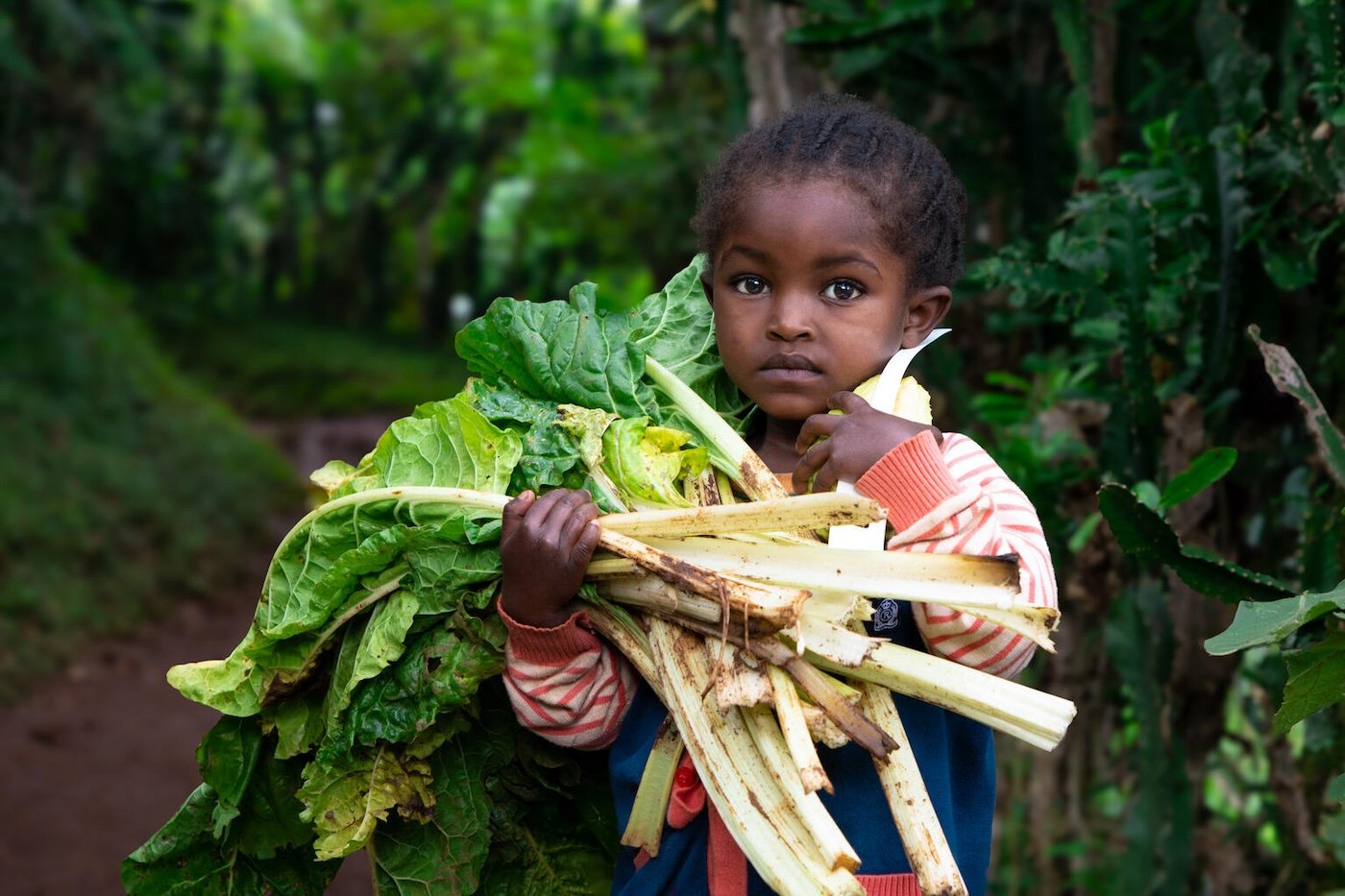
Millions of children are not getting enough nutrition for optimal growth and development.
No child should be denied the right to good food and nutrition, but rising inequalities, conflict, the climate crisis and rising food prices, combined with an excess of unhealthy foods, harmful food marketing strategies and poor child feeding practices, are pushing millions of children into severe food poverty during their childhood, says a new UNICEF report.
in Child Food Poverty: Early Childhood MalnutritionUNICEF warns that 181 million children worldwide – about one in four children – live in severe food poverty, making them more likely to suffer from life-threatening malnutrition (wasting), which threatens growth and brain development.
The report, the first to analyze the impact and causes of food insecurity among the youngest children across all income groups and in nearly 100 countries around the world, includes a call on governments and other partners to reform food, health and social protection systems to ensure children have access to a diverse and nutritious diet and can reach their full potential.
What is food poverty?
Child food poverty means consuming fewer than five of the recommended food groups. Children who consume two or fewer food groups are in severe child food poverty, and those who consume only three or four food groups are in moderate child food poverty.
Two-thirds (68%) of severely food poor children live in South Asia and sub-Saharan Africa, mostly in 20 countries: Afghanistan, Bangladesh, China, Côte d’Ivoire, Democratic Republic of the Congo (DRC), Egypt, Ethiopia, Ghana, India, Indonesia, Myanmar, Niger, Nigeria, Pakistan, Philippines, Somalia, South Africa, Uganda, Tanzania and Yemen.
The report notes that globally, progress towards ending severe child food poverty has been slow, and that conflict, climate shocks and economic crises are exacerbating the problem, especially in fragile contexts. For example, the rate of severe child food poverty in the Gaza Strip is 90 percent.
In Somalia, a country hit by conflict, drought and floods, 63 percent of children live in severe food poverty, and in the most vulnerable communities more than 80 percent of parents report that their children have not eaten a meal for a full day.
In one positive trend, severe child food poverty fell by a quarter in West and Central Africa, from 42 percent to 32 percent – a large reduction in one in three countries with trend data.
Burkina Faso and Nepal have cut prevalence by half, Rwanda by a third, and Peru has kept it below 5% since 2014.

What does child food poverty look like?
Children who suffer from severe child food poverty lack access to many nutritious foods needed for healthy growth and development, while unhealthy ultra-processed foods are integrated into their diets. Four in five children eat only breast milk and dairy products, and starchy staples such as rice, corn and wheat. Fewer than 10% of children eat fruits and vegetables, and less than 5% eat eggs, meat, poultry or fish.
The report also found that unhealthy foods and drinks are filtering more nutritious foods out of the diet: in Nepal, for example, 42 percent of severely food poor children eat foods high in sugar, salt and fat, and 17 percent consume sugary drinks.
The report finds that it is not just the poor who are affected: an estimated 97 million, or 54 percent, of severely food poor children come from middle- and upper-middle-income households.
What causes food poverty in young children?
There are three main drivers of acute child food poverty: poor food access, poor school feeding practices and household income poverty, all of which stem from shortcomings in food, health and social protection systems.
Poor food environment “The food system is failing to provide children with the diet they need for healthy growth and development, preventing them from accessing a nutritious and diverse diet. Stores and markets are filled with aggressively promoted, ultra-processed foods that are high in sugar, salt and unhealthy fats. At the same time, the food system is not providing families and young children with sufficient access to affordable, nutritious and diverse foods.”
Improper feeding and care methods Young children’s feeding habits are suffering because health systems are failing to provide families with the basic nutrition services they need, and parents, families and communities in particular lack access to timely and quality information, counselling and support on child feeding.
Household income poverty This means that social protection systems fail to protect vulnerable children and families are unable to provide them with a nutritious and diverse diet. Where social protection systems are available, they are fragmented in coverage, inadequate in coverage and benefits, inflexible to changing needs and disconnected from nutrition services, limiting their potential to prevent severe child food poverty.
50% more likely to be wasted and 34% more likely to be stunted
UNICEF maintains that ending child food poverty is key to preventing and ending child wasting, a leading cause of child death, and stunting, a condition that can be prevented if children and their mothers are provided with nutritious diets, basic nutrition services and positive nutrition and care practices.
The risks could not be greater: Children who do not get enough nutrition during childhood perform worse in school and have reduced earning capacity as adults, trapping them and their families in a vicious cycle of poverty and deprivation.

Urgent call for action to end child food poverty
The UNICEF report recommends that governments, development and humanitarian partners, donors, civil society, media, academic and research institutions:
- Alleviating child food povertyReduction Commit resources to ending child food poverty as a requirement for achieving global and national nutrition and development goals and as a measure of success in fulfilling children’s food and nutrition rights.
- Transforming food systems Ensuring that the food environment provides nutritious, diverse and healthy foods that are the most available, affordable and desirable options for feeding young children, and that the food and beverage industry adheres to policies to protect children from unhealthy foods and beverages.
- Leveraging the health system Provide essential nutrition services to prevent and treat malnutrition in children, prioritizing the most vulnerable children and including community-based counselling, support and services to improve early childhood feeding and care practices.
- Revitalizing the social security system Address income poverty in a way that addresses the food and nutrition needs of the most vulnerable children and their families, and provide social transfers (cash, vouchers and food) to protect children who are most at risk of child food poverty.
- Strengthening data systems Assess the prevalence and severity of child food poverty, identify its drivers, detect early increases in child food poverty, including in fragile and humanitarian situations, and track country and global progress towards reducing severe child food poverty.
In the report’s call to action, UNICEF notes that the scale of acute child food poverty, the slow progress over the past decade, the growing threats to young children’s diets, and the impact of acute child food poverty on children’s survival, growth and development call for a major shift in approach, action and accountability. UNICEF…
- Governments Strengthen policy and regulatory frameworks across food, health and social protection systems, allocate resources to address the causes of child food poverty, set time-bound outcomes and targets to end severe child food poverty, and monitor progress.
- Donors and Financial Partners Declaring child food poverty a clear priority, securing a global commitment to end severe child food poverty, and targeting resources to reduce severe child food poverty to countries and people most in need.
- Development and humanitarian partners Position reducing acute child food poverty as a requirement for achieving national and global nutrition targets, strengthen governments and partners’ capacity to act, and track progress at the country and global levels.
- Food & Beverage Ensure company policies, practices and products are fully compliant with policies, laws and standards that protect children from unhealthy foods and beverages, and invest in nutritious, safe, affordable and sustainable foods for young children.
- Civil society and media Lobby governments and influential leaders to increase political support, mobilize resources and implement policies and programs to end severe child food poverty.
Read the full report.
Related: What UNICEF is doing to support child nutrition.
