

Sandstone Care looked at news reports and academic studies to find out how teenagers are getting mental health advice from TikTok.
“I was in a relationship last year and forgot about them while we were together,” @saranne_wrap declared on TikTok, after the influencer was surprised to receive a message from someone she hadn’t heard from in days, explaining that her ADHD meant she lacked “object permanence,” which meant she couldn’t remember the people she was with.
Perhaps she was referring to object constancy, the ability to maintain bonds with others despite feelings of hurt or anger, which can be more difficult for people with ADHD. Or perhaps she meant emotion constancy, the confidence that our loved ones feel affection and care even when they’re not there.
However, lack of object permanence is a misconception. The term object permanence refers to the ability to recognize that objects exist even when they are not in direct line of sight. Babies do not develop object permanence until they are one year old, which is why they find peek-a-boo fun. There is no evidence that it is related to ADHD.
This video is just one example of the common mislabeling and misunderstanding of mental illnesses on TikTok, where many young people use hashtags like #adhd and #mentalhealth to discuss conditions like borderline personality disorder, autism, and obsessive-compulsive disorder. TikTok users may also be self-diagnosing these conditions, and there is no guarantee that the information presented is accurate.
While social media can raise awareness of mental health issues and reduce the stigma associated with them, it can also spread misinformation and cause further anxiety for some young people. Sandstone Care looked at news reports and academic research to find out how young people are getting health advice from TikTok and how this is affecting their mental health.
How trustworthy is the mental health advice on TikTok?
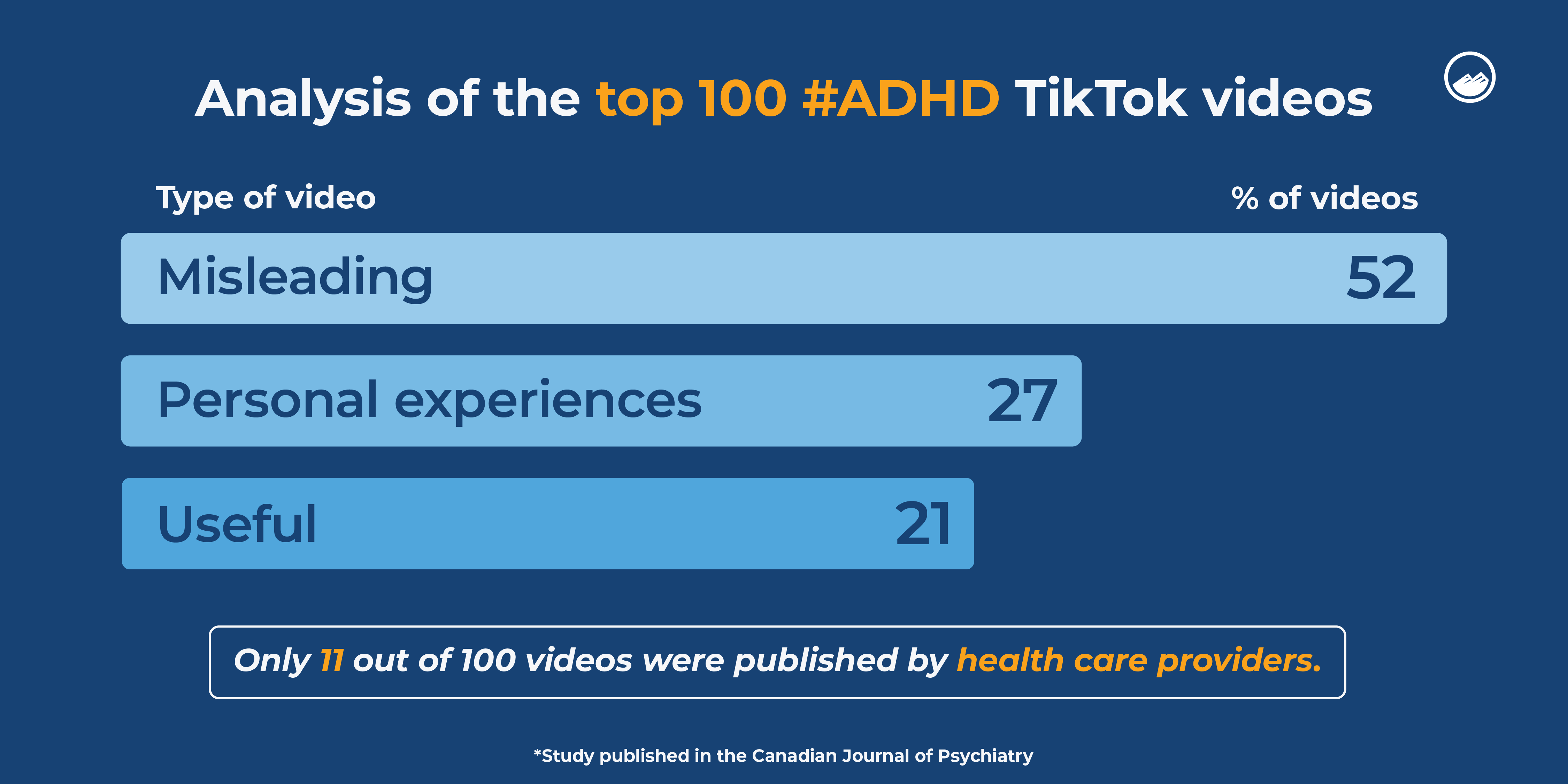
Academic studies suggest that the health advice offered by TikTok users is poor quality at best. One study published in the Canadian Journal of Psychiatry looked at the top 100 videos tagged with #adhd. Of those, only 11 were posted by people who identified as health professionals. The researchers found that 27 videos were based on personal experience, 52 were deemed “misleading,” and only 21 were deemed “helpful.” These videos garnered a combined 280 million views.
The problem isn’t just limited to mental health. Another study by researchers at the University of Chicago found that videos about sinusitis aren’t as good when it comes to scientific accuracy. About half of TikTok videos on the subject were uploaded by influencers with no medical training. Only about 47% of videos posted by these content creators were deemed “factual.” TikTok users with medical backgrounds and members of the public posted more accurate videos about sinusitis, with about 80% of their videos judged to be factual.
TikTok has grown to become one of the world’s largest social media platforms and is especially popular among teenagers. According to the Pew Research Center, roughly two-thirds of American youth ages 13 to 17 use the app, and one in six say they use TikTok “almost always.” By comparison, only one-third of youth use Facebook. TikTok is the second most used platform among teenagers after YouTube.
Most videos on TikTok are for entertainment, not information. But the platform’s broad reach means it can influence behavior. According to an Education Week survey conducted in March, 28% of high school students said they “sometimes” use social media to diagnose their own mental health, and 10% “always” do so. Students were just as likely to use what they learned from social media to diagnose their peers.
Although a clinician’s diagnosis is necessary before medication can be prescribed for a mental disorder, self-diagnosis can still be harmful. Misdiagnosis can increase anxiety and stress, or lead people to label feelings and behaviors that are within the realm of normal functioning as bigger problems than they actually are.
Combating misinformation will be hard
Mental illnesses often go underdiagnosed because not everyone has the same exposure to psychological terminology or access to medical professionals. Providing people with more information through social media can be a good starting point for people to understand their mental condition.
But it can also lead to misinterpretation of medical information and self-diagnosis. Doctors have complained for years that patients are coming in with diagnoses they got from sites like WebMD. But given TikTok’s popularity among young people and the tendency for content on the app to go viral, the platform’s influence could be far greater than other online medical resources.
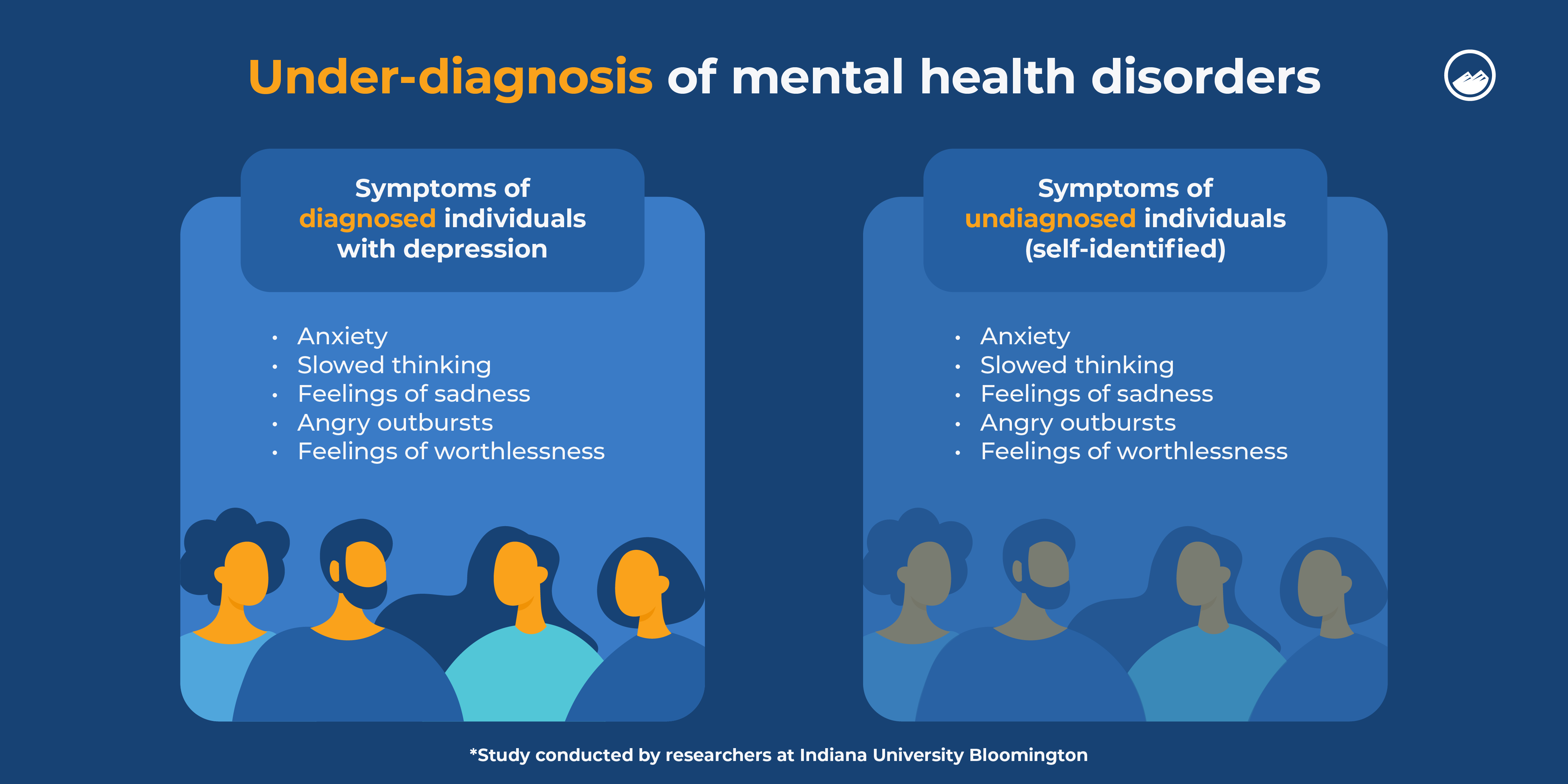
A 2023 study by researchers at Indiana University Bloomington compared the self-reported mental health symptoms of two groups: people who had been diagnosed with a mental illness and those who had not been diagnosed but believed they should be. The researchers found that when it came to certain illnesses, such as depression, generalized anxiety disorder, and insomnia, those who had not yet been diagnosed reported symptoms that were nearly as severe as those who had already been diagnosed. This means that many people who believed they should be diagnosed with certain illnesses are on the right track, even if they have not yet consulted a mental health professional.
Some academics are using social media to spread accurate information through individuals who already have a platform. Researchers at the Harvard School of Public Health recently worked with 42 TikTok influencers, mentoring them in creating fact-based medical videos. The academics found that influencers who received the advice were 3% more likely to publish videos on their own issues, which garnered 800,000 more views. The blending of experts with accurate information and influencers with large platforms may be one way to combat misinformation.
But educators can also help spread accurate medical information, and they may need to turn to TikTok.
Story editor: Alizah Salario; copy editor: Tim Bruns.
This story originally appeared on Sandstone Care, produced and distributed in partnership with Stacker Studio.
