

Mahia is a Moroccan alcoholic drink made from locally grown fruits such as figs, dates and grapes, and flavoured with anise. The tradition of making this drink speaks volumes about the country’s craftsmanship, identity and religion.
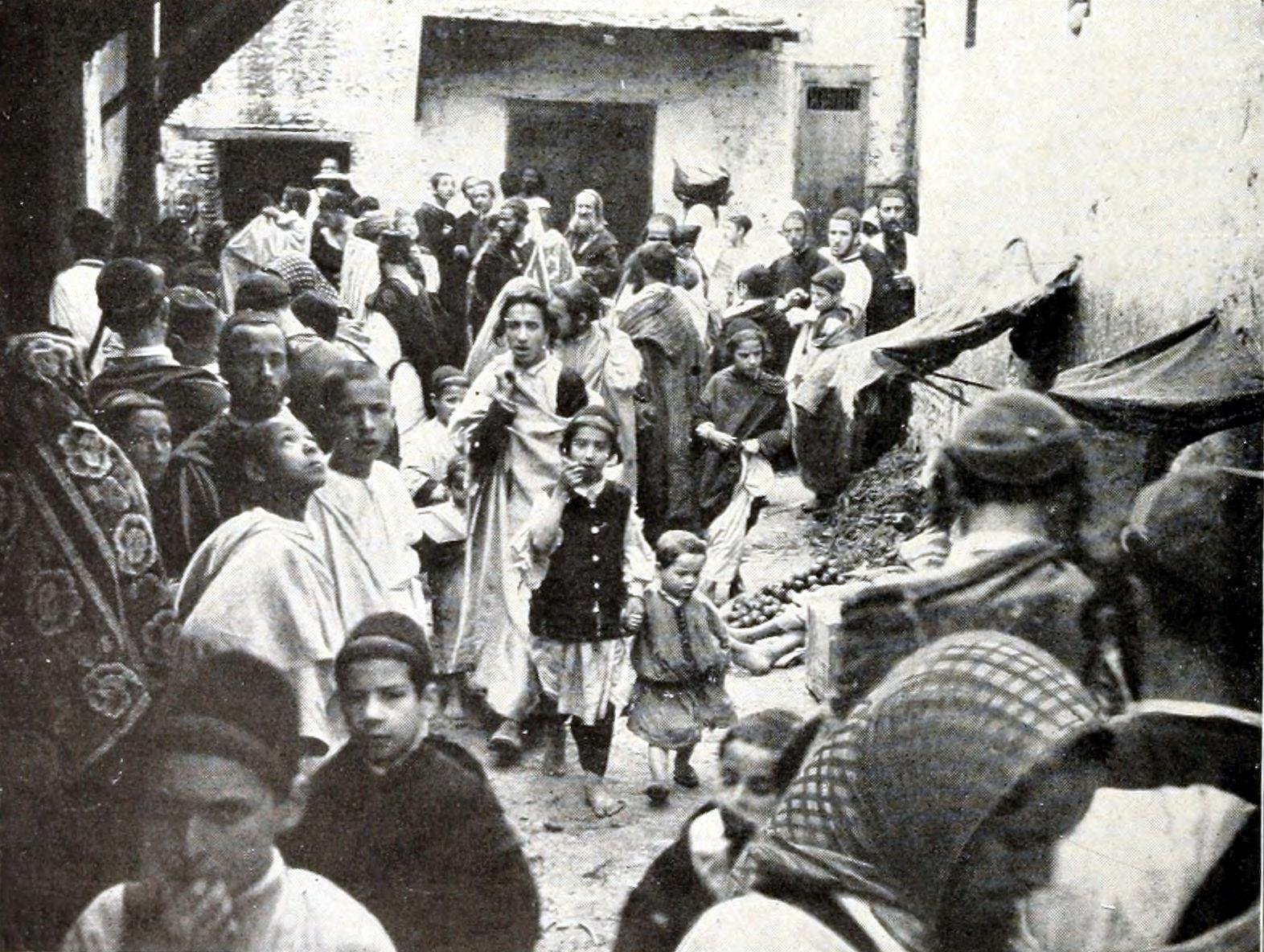
In modern-day Morocco, the drink has been industrialized under several brand names, distilled and bottled in state-licensed factories, but the production of mahiyya has always taken place in homes, behind closed doors, or behind the walls of the Jewish quarters, or “mellahs.”
Moroccan mahiyya is a Jewish drink that has been made for centuries by Jewish artisans, initially for the Jewish community. Meaning “water of life” in Arabic, mahiyya was created to be drunk and enjoyed exclusively by Moroccan Jews, many of whom have mastered the art of making mahiyya in the comfort of their own homes, some of whom continue to protect their secret family recipes.
The equivalent of mahia is buka in Tunisia, arrack in the Middle East, and pastis or eau de vie in France. In Morocco, mahia is more than just a drink.
“Mahia is deeply ingrained in Jewish memory and the records of Jewish life,” said anthropology professor Oren Kosansky. In a May 2019 lecture on mahia and its “History of Jewish Commodities in Morocco,” he explained that the alcoholic drink “was produced by Jewish artisans, distributed through Jewish networks, celebrated in Jewish cultural rituals, documented in colonial ethnographies, featured in Jewish memoirs, and archived in Jewish museums.”
Mahia and Hilla
In Morocco’s Jewish community, the drink is associated with special occasions, religious, spiritual and sometimes ritual, one of which is hirra, a Jewish pilgrimage to visit and celebrate saints venerated throughout the country.
“The mahi’a was and remains closely connected to Jewish ritual observances known as hirulot (hirra), which are centered around deceased Jewish holy persons, typically exemplary rabbis or Kabbalistic scholars called sadikim,” Kosanski writes in his book “The Mahi’a and its Moroccan Jewish Connotations” (Langues et Littératures, 19, 163-178).
Outside of the mellah, which “represents a typical location for mahi’a production,” the ethnologist said, hilouras, or Jewish pilgrimages, “were understood to be one of the important contexts for the consumption of spirits.”
The relationship between mahia and hirla was mentioned and commented on in colonial ethnographies, Kosanski points out, citing accounts which consider mahia as “an aspect of the pilgrimage experience”.
“It is difficult to describe the frenzy which is to be seen in times of great pilgrimage – the Bacchanalian orgies and drunken frenzy. Are these acts proof of a tragic inability to appeal to the gods in any other way than through carnal ecstasy?” reads one colonial record.
However, while Western opinion considered the consumption of mahir during Hirla objectionable, within the Jewish community the practice had a more symbolic meaning: in fact, the Jews did not consider mahir “an intoxicant to be consumed on the spot[during Hirla]but rather as a votive offering useful for the ritual of pilgrimage at the shrine,” he emphasized.
In fact, mahia is brought to the holy place to absorb the power of the saint. Once the pilgrimage is over, the drink is brought home for those who could not make the pilgrimage. “In this case, mahia is not so much a vehicle for intoxicating alcohol, but a vehicle for carrying the power of the saint,” he explained.
The particularity of the mahia has to do not only with its connection to Jewish ritual, but also with the nature and particularity of Jewish life in Morocco. Just as Jews lived in closed areas inside the walls of the medina, so did the mahia live in closed areas. Before it was sold in large quantities, for both Jews and Muslims, it was a product unique to the mellah.
Mahia is “a product that is typically distilled at home using traditional methods,” he noted, listing other “a variety of professions that have long been associated with Moroccan Jews, such as silversmithing, goldsmithing and embroidery.”
A drink made within the walls of the Mela
What makes Mahia unique is that “artisanal production takes place in the private sphere of the domestic space rather than in the public sphere of the market, in the home rather than in a workshop.”
Although mahia is a well-established Jewish product, Moroccan Jews are not the only ones who consume the drink. It was also popular among Muslims, who had long forbidden it. The tradition of mahia production began in the mellahs, but spread outside the mellahs, with clandestine producers preserving the artisanal aspects of the drink and selling it on the black market to Muslims.
While commercially produced mahi’a has become commonplace and is often shunned by Jewish communities, handmade mahi’a retains its importance as a symbol of true “cultural production and social connection.”
Interestingly, the secrecy of artisanal mahi’a production also holds special value within the Jewish community: for example, the identities of individuals who make mahi’a for personal use are rarely shared publicly.
The illegality of Mahia home distilling undoubtedly contributes to its secrecy, but it’s not just about evading law enforcement.
“We should also keep in mind that secrecy represents a value in itself, and not just as a strategy to escape the law. Thus, the clandestine production of inahia should not be considered merely a means of escaping the ever-expanding control of the state, although this dynamic is not entirely absent.”
Oren Kosansky
But making and drinking mahi’a secretly is illegal for good reason: the drink can cause fatal poisoning if not made properly. Over the years, many people have lost their lives to the habit, with eight people recently dying and 81 suffering from severe poisoning after drinking improperly made bootleg mahi’a.
