

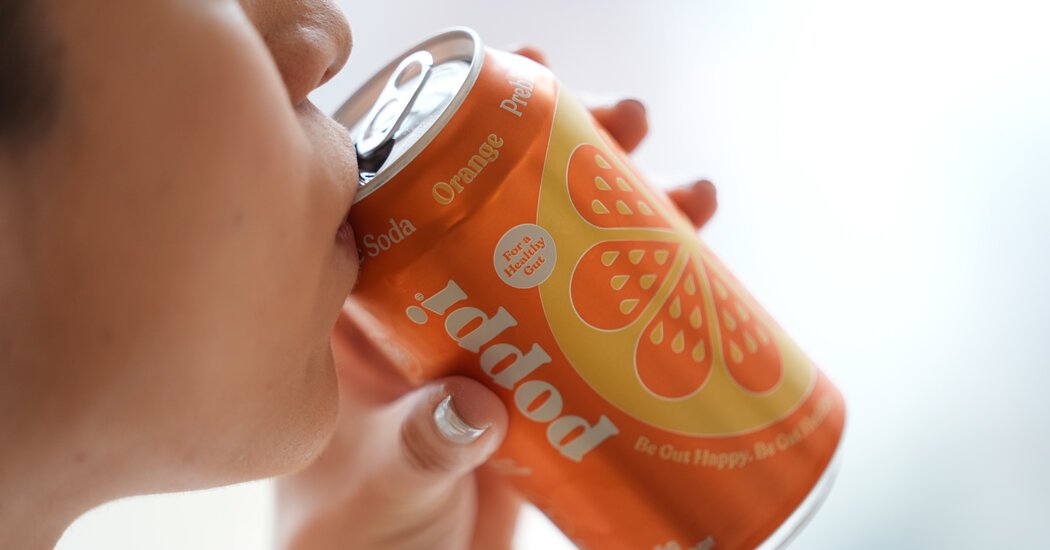
The sodas come in fun flavors like cherry vanilla and orange cream, and come with compelling claims like “good for your gut,” which has helped prebiotic soft drink brands like Poppi and Olipop stand out in the soda aisle.
These drinks contain prebiotics, dietary fiber that humans cannot digest but that feeds the beneficial microbes that live in the gut, says Hannah Holscher, an associate professor of nutrition at the University of Illinois at Urbana-Champaign. (Probiotic products, by contrast, contain live microbes themselves.)
But nutrition experts say you don’t need to drink special soda to get these benefits: Many foods are naturally rich in prebiotic fiber, including garlic, onions, peas, beans, lentils, grains, and some fruits.
“If you eat a diet that’s high in fiber, you’re going to get a pretty good supply of prebiotics,” says Marion Nestle, professor emeritus of nutrition, food studies, and public health at New York University.
Inulin, the main prebiotic fiber used in these sodas, can be isolated from plants such as agave and chicory root, said Dr. Holscher, who has received travel and speaking fees from Veneo, a company that makes prebiotic fiber and other ingredients.
The amount of fiber in prebiotic drinks varies: One can of Orange Creme Poppies contains 2 grams of fiber; one can of Strawberry Vanilla Olipops contains 9 grams. The U.S. Dietary Guidelines recommend 28 grams of fiber for a 2,000-calorie diet per day, but most Americans fall far short of this goal.
Dr. Holscher said it’s best to get fiber from a variety of foods, including fruits, vegetables, whole grains, nuts and legumes, because these foods are also rich in vitamins, minerals and beneficial compounds called phytochemicals that are found only in plants. One medium apple, one cup of cooked broccoli and one cup of cooked steel-cut oatmeal each contain 5 grams of fiber, while half a cup of lentils and one cup of raspberries each contain 8 grams of fiber.
These foods contain multiple types of fiber, not just the one or two you might find in a soda or fiber supplement. “The complex mix of different fibers supports different microbes and overall gut health,” says Dr. Holscher.
However, Dr. Holscher adds that foods and drinks with added fiber can help you meet your fiber goals. Also, some small studies have shown that prebiotics, either as supplements or added to foods, can lead to improved gut wall health, insulin sensitivity, and increased satiety. It has also been suggested that prebiotics may provide some relief from constipation. However, the evidence is mixed, and other studies have not found any benefit from prebiotics.
According to Dr. Holscher, you usually need at least 3 grams of prebiotic fiber to see benefits, and at least 12 grams of inulin to relieve constipation.
But fiber has its downsides, especially if you increase your intake too quickly. The inulin fiber used in prebiotic sodas can cause digestive upset, says Dr. Holscher. Even small amounts, say 1 to 5 grams, can cause mild flatulence, and more can lead to bloating. Some people “may feel gassy and bloated just at the sight of foods that contain inulin,” says Dr. Holscher, while others may experience no symptoms.
People with irritable bowel syndrome may be especially sensitive to these effects. Inulin and other prebiotic fibers are considered FODMAPs, a type of carbohydrate that can worsen IBS symptoms in some people. While these drinks usually have significantly less added sugar than traditional sodas, they still contain sugar, which can also worsen IBS symptoms, said Dr. Sean Paul Spencer, a gastroenterologist and researcher at Stanford University.
The best way to nourish your microbiome is to eat whole foods and limit sugar, processed foods and emulsifiers, which can negatively impact the microbiome, he said.
Poppi soda also contains apple cider vinegar, which small studies suggest may help lower blood sugar when taken before a meal. But it’s unclear whether there’s enough vinegar in one can of Poppi to have that effect, said Carol Johnston, a nutrition professor at Arizona State University. The company did not respond to questions about how much apple cider vinegar the drink contains.
Olipop is advertised as containing “botanical” ingredients, and lists plant extracts such as calendula and nopal cactus as ingredients. When asked if these substances have any effect, Dr Johnston said “no one knows.” These ingredients haven’t been thoroughly studied.
Dr Nestle said prebiotic sodas were unlikely to be harmful to health, but also unlikely to be beneficial.
“Really, anyone who cares about their gut microbiome needs to eat vegetables,” says Dr. Nestle. “Vegetables can do wonders.”
