

Credit: Unsplash/CC0 Public Domain
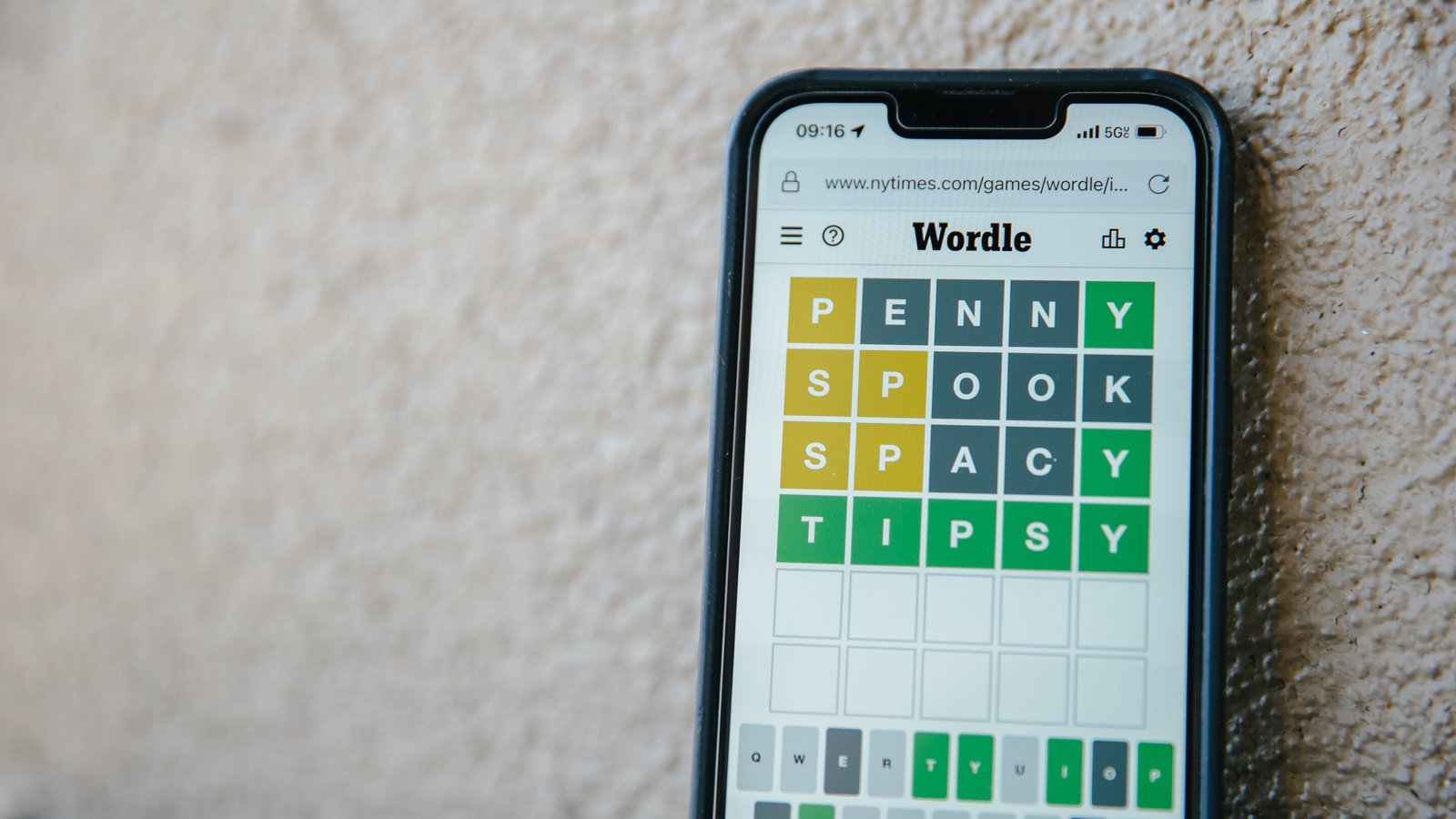
Playing Wordle or Sudoku with your morning coffee isn’t going to improve your brain power, but the mood and confidence boosts these games can bring are reason enough to keep playing, a new study from the University of Oregon suggests.
Researchers at the University of Oregon’s School of Journalism and Communication looked at brain-training games, collections of puzzles and quizzes that are touted as helping people train their brains but aren’t backed by science. There’s no solid evidence that brain-training games improve cognitive performance, said Ulrich Meyer, a University of Oregon psychology professor who signed a consensus statement by a panel of leading neuroscientists in 2014.
But research led by Wasek Rahman, a doctoral student in communications and media studies, suggests that these games — or any games that provide sufficient challenge — may help restore psychological health, even if they don’t help cognitive health.
Lerman and his colleagues, including Maxwell Foxman, an assistant professor of game studies at the University of Oregon, conducted their research by meeting players where they are: on the Google Play Store.
Their findings will be released on March 1st. International Journal of Human-Computer Interaction.
While previous studies have used experiments to test whether such brain-training games can objectively improve cognitive ability, this study focused on players’ subjective impressions, collected through reviews of the most popular brain-training apps.
“This really allowed us to get a raw consumer perspective and see if the people who are actually playing the game are seeing the benefits,” Foxman says. “And it really generated a wide variety of stories, from military veterans who retrained their brains after trauma to older adults who are trying to train their brains as well as their bodies. We could have done interviews, but with this dataset we had access to a huge repository of different stories.”
The researchers sifted through thousands of user reviews of the brain-training apps Lumosity, Elevate, and Peak, and, with the help of collaborator David Markowitz of Michigan State University, used automated text analysis programs and qualitative thematic analysis to evaluate and measure users’ opinions and feelings about the games.
The researchers weren’t surprised to find that users disagreed about the app’s cognitive benefits, but were intrigued by the number of reviews from players who praised the fun, challenging gameplay, and progress tracking aspects of the game. Many reviewers said they felt better and more confident after playing, even if they weren’t sure if they saw any cognitive improvements.
“Our findings suggest that people are not only getting better at these games, but that they enjoy getting better,” Foxman says. “This may explain why people play Wordle or Sudoku every day. Enjoyment is a powerful personal, economic and cultural force that deserves much greater attention.”
Games can appeal to people’s intrinsic psychological needs, Lerman said: regular challenges can inspire and build lasting confidence and independence in one’s self and identity, and games are good at providing that experience, he said.
Rahman cautions that while media entertainment can help restore vitality and happiness, this is not a permanent fix.
“That’s why we play tennis, for example, over and over again,” he says. “It’s not like you play it once, feel good about it, and then you’re good. This kind of interactive entertainment helps us overcome challenges and feel control, independence, and fun. But whether and how this translates into a lasting impression of our sense of self requires extensive research.”
The researchers caution that the study doesn’t prove that brain-training games, or games in general, are effective as a therapeutic intervention. But even if the science doesn’t support that brain-training games help improve cognition, Lerman said, the “exercise kick” and personal sense of accomplishment that game play provides makes it worth further investigation into how such activities can meet individual needs for recovery and wellness.
“When it comes to cognitive and mental health, the only thing we can do is be open to learning new and meaningful things,” Lerman says, “and I think what games do well is provide a framework for how to learn and challenge ourselves while having fun.”
For more information:
Md Waseq Ur Rahman et al. “Gaming as Cognitive Recreation: Users’ Perspectives on Brain Training Apps” International Journal of Human-Computer Interaction (2024). DOI: 10.1080/10447318.2024.2319918
Provided by University of Oregon
Quote: Digital games may be an overlooked ally for mental health (June 6, 2024) Retrieved June 6, 2024 from https://medicalxpress.com/news/2024-06-digital-games-overlooked-ally-mental.html
This document is subject to copyright. It may not be reproduced without written permission, except for fair dealing for the purposes of personal study or research. The content is provided for informational purposes only.
