

Diane Anderson
Issues of mental health and transformative justice have recently brought communities and experts together around staying engaged and staying calm despite the myriad stressors in life.
Ernesta Wright, who has served Black people in the health field for 30 years, said the final virtual town hall meeting was one of several collaborations exploring ways to restore balance to the community. One of the presenters, an attorney with a focus on transformative justice, spoke about polling place parties and different ways to get the community to vote.
Other aspects include encouraging Black communities to get involved even if they can’t vote.
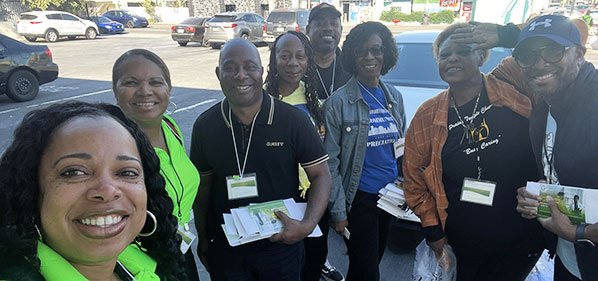
“We encourage people of African descent who may not be citizens to be a part of this push, and we understand that it’s in everyone’s interest to start putting resources in place to help communities with what they need to survive,” said Wright, executive director of the GREEN Foundation.
Thirty people, including past participants, new presenters and city council members, have already signed up for the upcoming advocacy training boot camp, which will be held on July 9th, 10th and 13th.
Young people have played a key role in helping her plan the organization and will also be involved in running the event, with the focus being on teaching the community how to advocate for themselves both personally and professionally.
There is information here to help anyone who wants to understand the importance of City Council meetings and know their rights.
“Take notes and just listen for an hour or two. [to learn] “It’s interesting to know the process,” she said. “It’s interesting to know what’s going on in your city. You don’t have to say anything. You just come with a T-shirt on. Sit there. And you still have power.”
As part of the organization’s social justice arm, they will also take part in the Anti-Hate Network’s “Stop the Hate” activity with Groundswell on June 30 and will meet regularly with other ethnic groups.
“The GREEN Foundation was trying to create a group specifically for African-Americans, and I think it’s worked really well. It’s helped me meet other nonprofits and introduced me to people I would never have known before. [otherwise] “I met him,” she said.
Kelly J. Lewis said a recent town hall event was inspiring and that people in the community asked great questions about how to stay mentally strong and persevere.
“Get away from there. Turn it off. Get away from the TV,” said Lewis, a marriage and family therapist who also has trauma resilience training at Embrace Family Therapy in Carson.


She says that while things like aromatherapy and blowing bubbles may seem simple, they can help in unexpected ways.
“Some people don’t know how to take a deep breath, but you need to take a deep breath to blow bubbles,” she says. “Deep breathing helps shift your thinking.”
More recently, communities have begun to open up to the idea of therapy, but historically stigma has kept communities from accessing services, in part due to persistent discrimination in health and mental health.
“There are so many stories of our parents and great-grandparents having something taken away and never given it back because someone was acting ‘funny,'” she said.
With few or no Black therapists available, the system wasn’t built to support the community, and many learned not to share their work or personal information, she said.
“I didn’t feel safe,” she said, “but now there are so many more Black therapists, so if you go to one that’s not a good fit, there are other Black therapists out there who are a good fit for you.”
Now she hopes to find ways for the Black community to open up and feel comfortable asking about therapy and mental health services, which are widely available in other cultures but are essentially new territory for the Black community.
Some of the cases she takes on involve just directing people to resources and reassuring them that nothing is wrong.
She lets her students know that they are not alone in overcoming challenges in life and that they can be successful.
“I’ve met with several black men with PTSD,” she says, “who were scared in therapy that I would harshly reprimand them for not getting a job or anything like that. I showed them the research, and they were relieved to know they weren’t bad people. Now I can work with them.”
For more information about the GREEN Foundation, please visit https://www.thegreenfoundation.net/.
For more information, visit www.emblazefamilytherapy.com
