

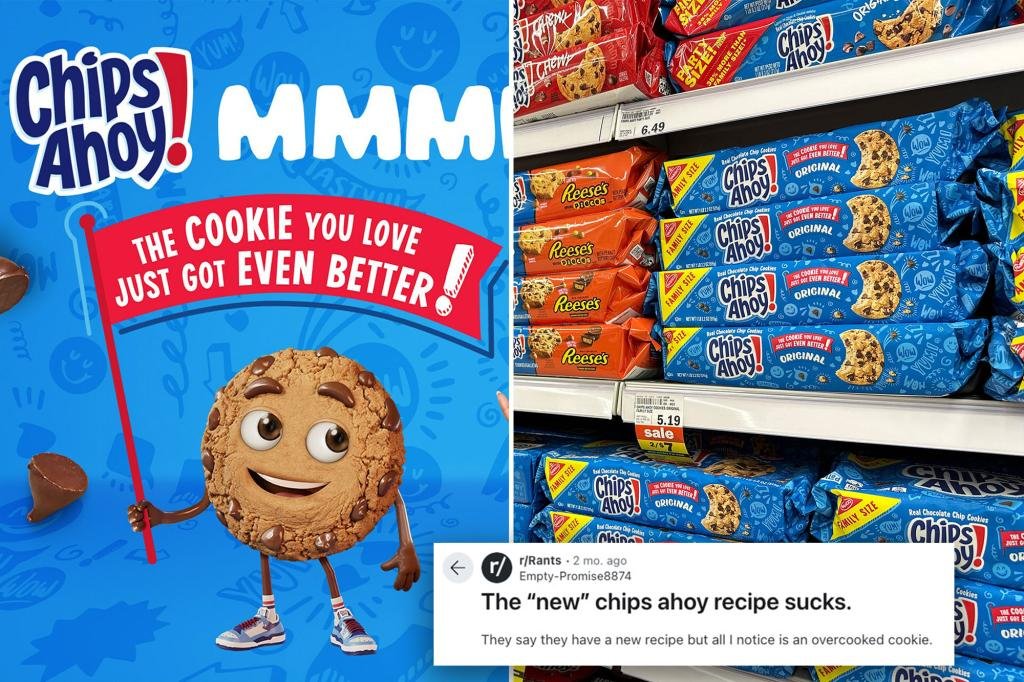
Those Cookie Monsters!
Chips Ahoy fans are dismissing the new recipe as half-baked and demanding that the owners of America’s best-selling chocolate chip cookie brand reverse the less-sweet changes.
In March, Mondelez announced new “MMM Improved” versions of its snack staples, in collaboration with actress and singer Keke Palmer.
According to the Daily Mail, this is the boldest revamp of the iconic sweet in nearly a decade.
The befuddling bakers, who reportedly tested out a whopping 60 different recipes before choosing, proudly announced at the time that the cookies would feature a “specially blended” chocolate chip with increased cocoa content, more Madagascar vanilla extract and “just the right cookie texture.”
The apparently inadequate overhaul reportedly took four years.
Many Americans seem perplexed by the change, and have taken to the social media barricades to hurl reward-seeking missiles in an attempt to force the creators to retract the unwanted updates.
Some outspoken cookie critics taking part in the discussion on Reddit even vowed to boycott the brand forever.
“Absolutely awful. Such a shame that someone approved this. I’ve been eating Chips Ahoy my whole life and this is worse than the even worse budget store brands. I’ll never buy again,” raged one Reddit user.
“I stock up on the original whenever I find it. The new one tastes like dark chocolate with a nasty vanilla aftertaste,” commented one disgruntled reviewer.
“I loved Chips Ahoy. I ate one of the new chips and threw out the whole party-size box,” confessed a disappointed dessert-eater.
“The ‘new’ Chips Ahoy recipe is awful,” lamented another. “They say they have a new recipe but all I’ve noticed is overbaked cookies.”
Chips Ahoy! was first introduced in the early 1960s by Nabisco, a subsidiary of Mondelez, which is also home to the legendary Oreo cookie.
These are sold in Asia, Europe, Latin America and North America, according to the company.
Research firm Euromonitor International ranks the cookie number one in its category, with more than 10% of the global market.
