

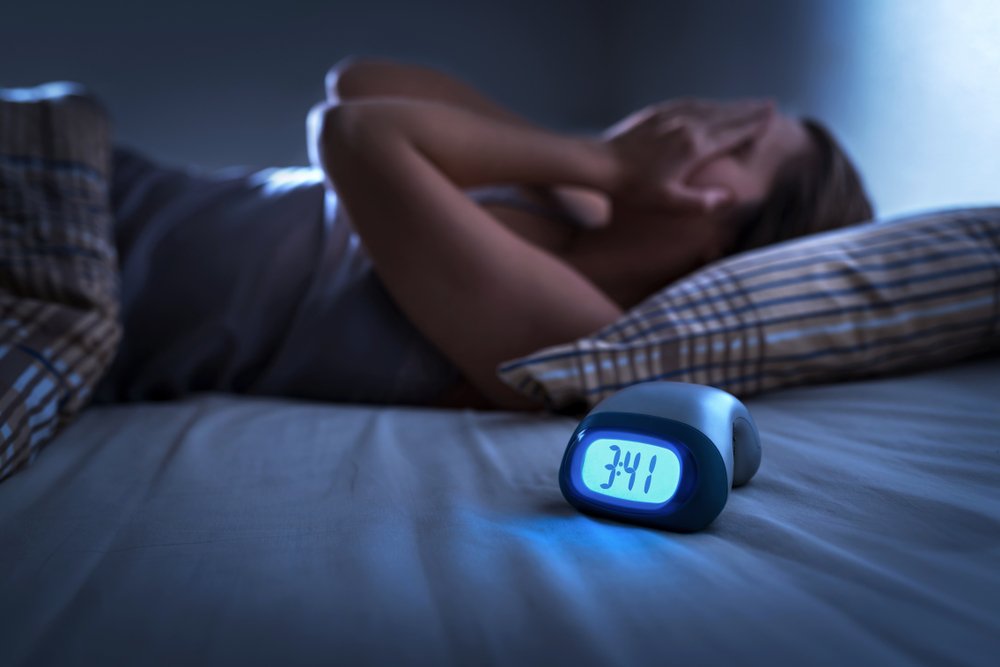
3am — For some people, this is the most anxiety-inducing time of the day. It’s the time when you wake up after a few hours of sleep and can’t get back to sleep.
For others, it’s the dreaded time when they realize they’re not asleep yet, the clock is ticking towards wake-up time, and the dream cycle hasn’t even started.
Lack of sleep can mean more than just feeling sluggish throughout the day: Sleep medicine scientists have established that lack of sleep is linked to poorer health outcomes, and in recent years, sleep medicine researchers have also come to understand how lack of sleep can put your mental health at risk.
Scientists and advocacy groups have warned that it is a growing public health concern and called for more research and attention.
Why we need sleep
Our bodies need sleep, but not everyone gets it well. Sleep medicine researchers say this is like not having clean air, nutritious food, or fresh water.
“Sleep is not something we do simply because we like it or because it’s healthy. Sleep is a biological necessity for human life; it’s non-negotiable,” says Michael A. Granner, M.D., associate professor of psychiatry and director of the Sleep and Health Research Program and Behavioral Sleep Medicine Clinic at the University of Arizona College of Medicine.
Grandner says that since the Industrial Revolution, disorders such as insomnia have been romanticized and seen as part of a work culture in which people who sleep less have been praised for being strong, dedicated and capable of working more. Norms are changing, and people are beginning to realise that lack of sleep affects one’s physical and mental health, he says.
“We’re in a period of change in how our society thinks about sleep health in general,” he says.
read more: The effects of sleep on the body
How sleep impacts mental health
Part of the reason for this change is the way people think about their sleep health. Deepening understanding The relationship between sleep and mental illness: Sleep disorders such as insomnia are a risk factor for mental health problems such as anxiety and depression.
Although researchers are still studying this relationship, it is becoming increasingly clear that sleep disorders can predict the onset of psychiatric disorders.
Sleep and memory
Scientists are still investigating the link between sleep and mental illness, but Grandner says there are a few theories, one of which has to do with memory. The brain processes and stores memoriesSleep disorders such as insomnia can disrupt this process, causing memory consolidation to be missed.
So when a person needs to interpret a social situation, those memories may be missing. Glander gives the example of seeing someone frown at you. With past memories, you might see the frown as part of the other person’s bad day and feel empathy. But without those memories, the frown might seem personal. That could make the person feel anxious or threatened.
“Memory and emotion underlie many common mental health issues,” Granner says.
Sleep and suicide risk
Another theory looks at how the brain works in the middle of the night, when the body is supposed to be asleep. Midnight Heart According to this hypothesis, a tired brain that is deprived of sleep at night does not function optimally, posing a risk factor for more extreme behaviors.
The brain is supposed to be asleep and performing maintenance tasks such as processing and storing memories and regulating emotions, but when “cognitive and mood regulation abilities are impaired,” the brain is forced into action mode.
Self-harm, suicidal thoughts, and violent crimes spike during the night. Unhealthy behaviors like substance abuse and poor dietary choices also become more prevalent. The hypothesis is that during these sleep-deprived hours, the groundwork is laid for future mental illness.
“When your body is telling you it’s time to sleep, it’s not a good choice,” Granner says.
read more: This is what happens to your sleep-deprived brain
5 Sleep Disorders
International Classification of Sleep Disorders (ICSD) Diagnostic Manual It categorizes sleep disorders into seven main groups.
Insomnia is related to the inability to fall asleep or stay asleep. Sleep-disordered breathing includes conditions that cause breathing to stop, such as sleep apnea. The third group, central disorders of hypersomnia, includes narcolepsy and other conditions of excessive sleepiness. Circadian rhythm A sleep-wake disorder is one in which a person’s sleep and wake cycles are out of sync.
The fifth group, sleep disorders, involve abnormal movements such as walking, talking, or eating. This group includes nightmares, night terrors, Sleep paralysisParasomnias are distinct from a sixth group, sleep-related movement disorders, which are characterized by movements that disrupt sleep, such as restless legs syndrome. Finally, the ICSD has an “other” category for disorders that do not fit into the other groups.
read more: What actually happens during sleep paralysis and how to stop it
What are the most common sleep disorders?
Insomnia is probably Very common Sleep disorders, but scientists cannot know for sure how many people suffer from this condition.
“The reality is, we don’t know how prevalent most sleep disorders are in the population,” Granner says.
Part of the problem, Grandner said, is that sleep studies are necessary to diagnose disorders like sleep apnea. For some people, that means spending a night in a sleep clinic or wearing a diagnostic device at home. These barriers keep people from seeking diagnosis and prevent scientists from fully understanding the epidemiology.
read more: Irregular sleep schedules can lead to health risks
Sleep Disorders Research
Scientists who study sleep medicine say more research is needed. Nearly 30 lawmakers will vote in the spring of 2024. Signed the letter Help fund research into sleep health, which could allow agencies like the Centers for Disease Control and Prevention to study sleep disorders in the U.S. population and better understand the epidemiology.
“This is something that we as people in the community are advocating for on the ballot. We’re saying, ‘We need this information,'” Grandner said.
read more: Can animals also suffer from sleep disorders?
Article Source
Our writers Discover Magazine Our articles use peer-reviewed research and high-quality sources, and our editors review them for scientific accuracy and editorial standards. Please check out the following sources used in this article:
Emily Lucchesi has written for some of the nation’s largest newspapers, including The New York Times, The Chicago Tribune, and The Los Angeles Times. She holds a BA in Journalism from the University of Missouri and an MA from DePaul University. She also holds a PhD in Communication from the University of Illinois at Chicago, where she specialized in media framing, message construction, and stigma communication. Emily has written three non-fiction books. Her third, A Light in the Dark: Surviving More Than Ted Bundy, co-written with survivor Cathy Kleiner Rubin, will be published by Chicago Review Press on October 3, 2023.
