

Type 2 diabetes is the fastest growing chronic disease in the world. More than 37 million Americans have type 2 diabetes, but alarmingly, about one in five people don’t even know they have it. Whether you currently have diabetes or prediabetes, or simply want to improve your health and reduce your risk of high blood sugar levels, this meal plan is for you. This 7-day anti-inflammatory meal plan to improve blood sugar levels contains a week’s worth of protein-rich meals and snacks, all with no added sugar. Let’s get started!
Why this meal plan is right for you
This anti-inflammatory eating plan can benefit anyone: With type 2 diabetes on the rise, it’s wise to closely monitor your blood sugar levels even if your current risk is low.
To help maintain healthy blood sugar levels, we recommend taking the following steps:
- Reduce carbohydrates moderately: This eating plan averages 140 grams of carbohydrates per day, which is about 37% of your total daily calories. By comparison, the 2020-2025 Dietary Guidelines for Americans recommends that you get 45-65% of your total calories from carbohydrates. Carbohydrates raise blood sugar levels, but they also contain fiber and other important nutrients. Moderately reducing carbohydrate intake and consuming whole grains and high fiber carbohydrates evenly throughout the day can help prevent blood sugar spikes. To further support stable blood sugar levels, prioritize whole grains and high fiber carbohydrates and limit refined carbohydrates. Refined carbohydrates are grains that have had some or all of the grain removed. Refined carbohydrates include white flour and white rice. Because they are low in fiber, refined carbohydrates can cause blood sugar spikes.
- Get some protein: We focused on high protein meals and snacks, with an average intake of 97 grams per day. Protein is an important nutrient that plays a key role in almost every function in our body. In terms of blood sugar, protein does not raise blood sugar levels. Also, when combined with carbohydrate foods, protein helps to reduce blood sugar spikes by slowing digestion and stabilizing the breakdown of carbohydrates.
- High in fiber: Although this meal plan focuses on protein, it also includes fiber, another important nutrient for healthy blood sugar levels. Fiber is a type of carbohydrate that is indigestible and breaks down slowly, helping to keep you full and stabilizing blood sugar levels. This meal plan averages about 30 grams of fiber per day. Fiber has many health benefits, including weight loss, improved heart health, and improved digestion, yet only 7% of American adults meet their fiber goals.
Because excess weight can increase the risk of developing type 2 diabetes, this plan limits people to 1,500 calories per day, a level at which most people can experience weight loss. For those with other calorie needs, we’ve also provided 1,200 and 2,000 calorie per day adjustments. As with all meal plans, this is meant to serve as a framework for planning nutritious meals. Modify as needed to fit your preferences and habits.
FAQ
-
If there is a meal I don’t like, can I combine it?Absolutely! If you want to make substitutions, do so. If you are watching your total daily calories, it may be helpful to choose replacement meals with a similar calorie profile and adjust snacking as needed. For this plan, I aimed for 1,500 calories and about 140 grams of carbohydrates per day, although some days I will have a little more and some days I will have a little less. I also aimed for at least 28 grams of fiber and 85 grams of protein per day, although most days I will have a little more than that. I tried to avoid consuming more than 2,300 milligrams of sodium per day, as recommended in the 2020-2025 Dietary Guidelines for Americans.
-
Is it okay to eat the same breakfast or lunch every day?It’s understandable if eating the same breakfast or lunch every day makes for an easy routine. In this meal plan, we’ve included some variations to give you different options, but you can still eat the same breakfast or lunch over and over again. Each breakfast option is between 300-400 calories, and lunch is between 334-416 calories. If you have a favorite option that’s not in this meal plan, like Greek yogurt with a strainer or skyr-style yogurt with fruit, you can use that too. Check out more of our high-protein, anti-inflammatory lunches for inspiration.
-
What are added sugars?Added sugars are sugars that are added to foods during processing to make them sweeter. They’re found in some surprising places, like sweetened beverages and desserts, flavored yogurt, dressings, and snack foods. The average American consumes 17 servings of added sugars per day, well above the American Heart Association’s recommended daily limits of nine servings for men and six servings for women. If you’re trying to improve your blood sugar levels, it might be helpful to understand where added sugars are creeping into your daily life. Natural sugars found in fruits, vegetables and unsweetened dairy products aren’t something to worry about as they also contain important nutrients like fiber, protein, vitamins and minerals.
Does an anti-inflammatory diet improve blood sugar levels?
An anti-inflammatory diet includes foods rich in antioxidants such as fruits and vegetables, especially highly pigmented fruits like berries and cherries, dark green leafy vegetables and beets. It emphasizes omega-3 fatty acids found in foods like salmon and other healthy fats like nuts, seeds, olive oil and avocados. This is a nutrient-rich eating pattern that nearly everyone can benefit from following, especially if they have or are at risk for type 2 diabetes. Research shows that following an anti-inflammatory diet can lower the risk of type 2 diabetes and delay or prevent the onset of diabetes in people with prediabetes.
Notable anti-inflammatory foods:
- fruit
- vegetables
- nuts
- seed
- Whole grains
- fish
- Olive oil
- avocado
- beans
- Herbs and spices
- Unsweetened fermented dairy products such as yogurt, kefir, and cottage cheese
How to Meal Prep for a Week
- For lunch on days 2-5, make Slow Cooker Chicken Soup with Zucchini and Hominy.
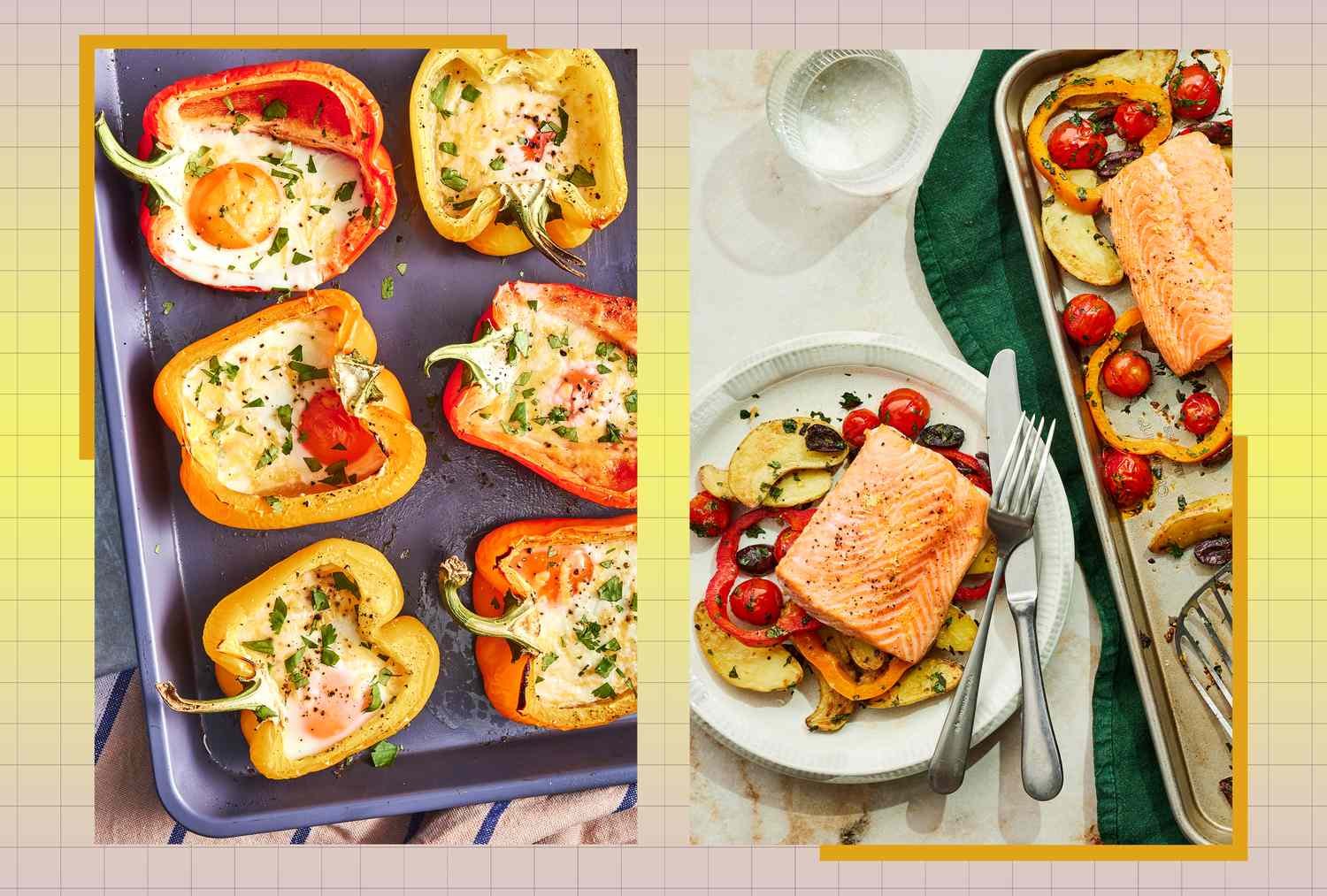
- For breakfast on days 1, 2, 4, and 5, make these 3-ingredient pepper and cheese egg cups.
First day
Photographer: Fred Hardy, Food Stylist: Jennifer Wendorf, Prop Stylist: Lydia Purcell
Breakfast (300 calories)
AM Snack (62 calories)
Lunch (363 calories)
PM Snack (171 calories)
- 1 cup low-fat plain kefir
- 1 medium orange
Dinner (600 calories)
Daily Totals: 1,496 calories, 64g fat, 91g protein, 145g carbohydrates, 30g fiber, 1,667mg sodium
Make it 1,200 calories: Skip the kefir for your afternoon snack and replace dinner with a single serving of sheet-pan roasted salmon and veggies.
Make it 2,000 calories: Add 1 cup of plain low-fat kefir for breakfast, ¼ cup of unsalted dry roasted almonds as a mid-morning snack, and 3 servings of peanut butter oat energy balls as an evening snack.
the 2nd day
Breakfast (300 calories)
AM Snack (219 calories)
Lunch (334 calories)
PM Snack (259 calories)
- 1 cup sliced strawberries
- ¼ cup unsalted dry roasted almonds
Dinner (375 calories)
Daily Totals: 1,488 calories, 69g fat, 99g protein, 124g carbohydrates, 28g fiber, 2,005mg sodium
Make it 1,200 calories: Change your morning snack to 1/2 cup unsalted, low-fat cottage cheese and 1/2 cup blueberries, and omit the almonds from your afternoon snack.
Make it 2,000 calories: For breakfast, add two tablespoons of natural peanut butter to an apple, one serving of Everything Bagel Avocado Toast for dinner, and two servings of peanut butter oat energy balls for an evening snack.
Third day
Breakfast (396 calories)
AM Snack (219 calories)
Lunch (334 calories)
PM Snack (131 calories)
Dinner (402 calories)
Daily Totals: 1,480 calories, 52g fat, 100g protein, 165g carbohydrates, 42g fiber, 1,999mg sodium
Make it 1,200 calories: Change your morning snack to one clementine and your afternoon snack to 1/2 cup of blueberries.
Make it 2,000 calories: Add 1 cup of plain low-fat kefir for breakfast, ¼ cup of unsalted dry roasted almonds for your afternoon snack, and 3 servings of peanut butter oat energy balls for your evening snack.
Day 4
Photographer: Greg Dupree, Prop Stylist: Shell Royster, Food Stylist: Emily Hall
Breakfast (410 calories)
AM Snack (131 calories)
Lunch (334 calories)
PM Snack (145 calories)
- 1/2 cup low-fat plain yogurt (Greek style)
- 1 cup blackberries
Dinner (486 calories)
Daily Totals: 1,506 calories, 53g fat, 108g protein, 156g carbohydrates, 30g fiber, 1,681mg sodium
Make it 1,200 calories: Eliminate kefir for breakfast, replace your mid-morning snack with a single clementine, and eliminate yogurt from your afternoon snack.
Make it 2,000 calories: Add ¼ cup unsalted dry roasted almonds to your morning snack, 3 cups chopped walnuts to your afternoon snack, and ⅔ cup cooked quinoa for dinner.
Day 5
Breakfast (300 calories)
AM Snack (237 calories)
- ¼ cup unsalted dry roasted almonds
- 1/2 cup blackberries
Lunch (334 calories)
PM Snack (219 calories)
Dinner (416 calories)
Meal prep tips: Reserve two servings of high-protein grilled chicken salad for lunch on days 6 and 7.
Daily Totals: 1,506 calories, 70g fat, 107g protein, 120g carbohydrates, 32g fiber, 2,004mg sodium
Make it 1,200 calories: Leave out the almonds in your morning snack and replace your afternoon snack with 1 cup of plain, low-fat kefir.
Make it 2,000 calories: Add two tablespoons of natural peanut butter to an apple at breakfast, one medium-sized banana as an afternoon snack, and one serving of Everything Bagel Avocado Toast for dinner.
Day 6
Breakfast (396 calories)
AM Snack (187 calories)
- 1 cup low-fat plain yogurt (Greek style)
- ¼ cup blueberries
Lunch (416 calories)
PM Snack (62 calories)
Dinner (437 calories)
Daily Totals: 1,496 calories, 74g fat, 87g protein, 129g carbohydrates, 33g fiber, 1,942mg sodium
Make it 1,200 calories: Change your breakfast to three bell pepper and cheese egg cups and one medium-sized peach, and eliminate yogurt as a mid-morning snack.
Make it 2,000 calories: Add one large scrambled egg for breakfast, three cups of chopped walnuts for a mid-morning snack, one medium peach for lunch, and 1/4 cup of unsalted dry-roasted almonds for an afternoon snack.
Day 7
Breakfast (396 calories)
AM Snack (62 calories)
Lunch (416 calories)
PM Snack (95 calories)
Dinner (529 calories)
Daily Totals: 1,496 calories, 71g fat, 86g protein, 143g carbohydrates, 38g fiber, 1,896mg sodium
Make it 1,200 calories: Change your breakfast to one three-ingredient bell pepper and cheese egg cup, your mid-morning snack to one clementine, and your afternoon snack to ⅓ cup blueberries.
Make it 2,000 calories: Have one large scrambled egg for breakfast, 1/4 cup unsalted dry roasted almonds for a mid-morning snack, and an apple with 2 tablespoons of natural peanut butter for an afternoon snack.
