

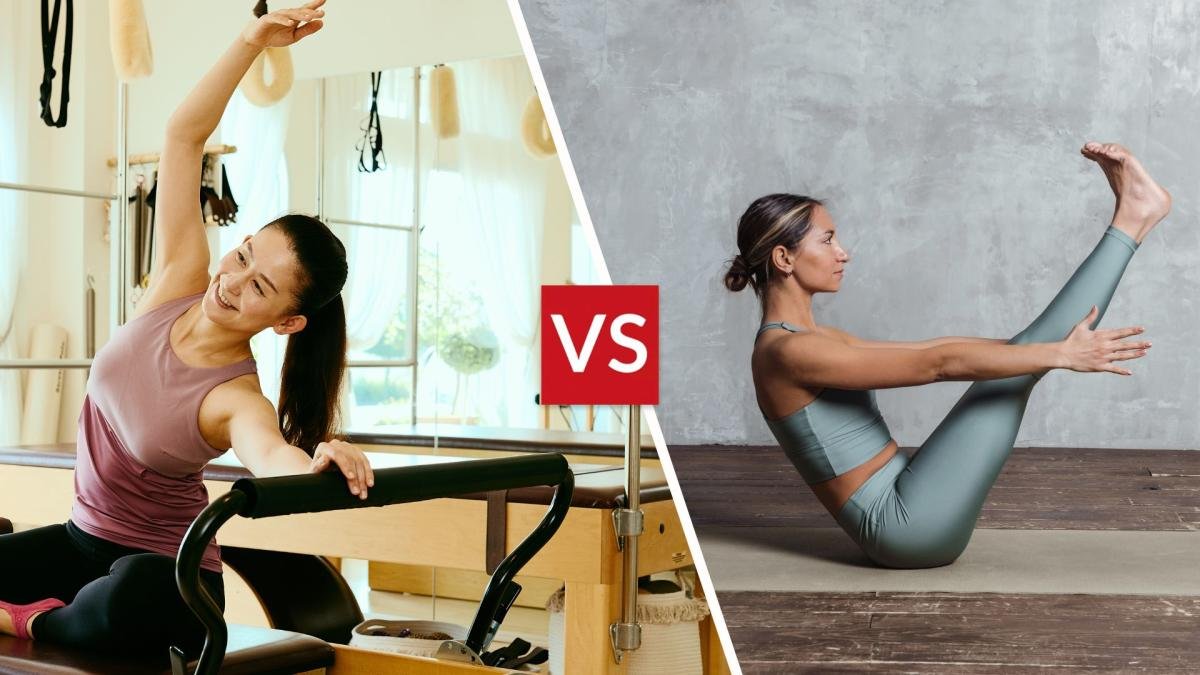
Pilates has always been popular, but these days it seems like everyone’s doing it: just scroll through your social media feeds and you’re sure to see someone striking a pose on the reformer or smiling in their new flared Pilates pants.
But what is it about Pilates that everyone is loving right now? [Lottie’s quote here]
If you’ve ever thought about trying Pilates for yourself, you’ve probably been wondering whether to choose traditional mat Pilates or reformer Pilates. Which is better? Let Lottie’s expertise help you answer that very question.
What is the difference between Reformer Pilates and Mat Pilates?

Pilates uses repetitive movements to increase strength, endurance, flexibility and improve balance and posture. Joseph Pilates Dating back to the 1920s, each exercise is combined with breathing techniques to consciously activate muscles.
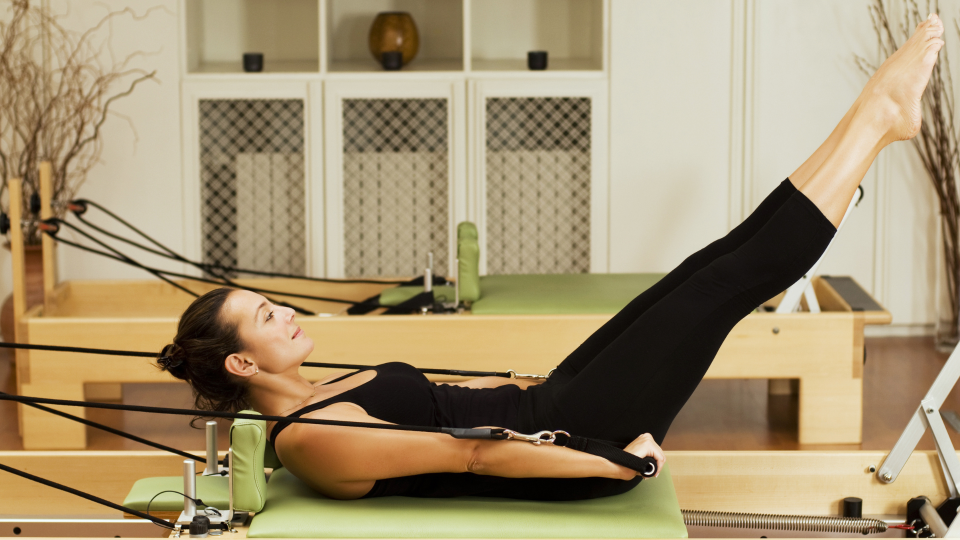
“The main difference between Mat Pilates and Reformer Pilates is that with Mat Pilates you use your own body weight as resistance, and sometimes small pieces of equipment like light hand weights, resistance bands, or small Pilates balls,” explains Lottie, “whereas with Reformer Pilates you use a specialised machine (called a Reformer) with springs and pulleys to provide different levels of resistance and support.”
Mat Pilates is often the most appealing form of exercise for beginners because all you need is yourself and a mat, but don’t be fooled into thinking that mat Pilates is “easy” because it makes you sweat a lot, or that beginners can’t do reformer Pilates.
Reformer Pilates vs. Mat Pilates: The Benefits
Both Reformer Pilates and Mat Pilates offer a low-impact, full-body workout, and at the end of either session you can expect your core, glutes, shoulders, inner thighs and erector spinae to be on fire.
“The increased resistance of the Reformer machine allows you to work specific muscles deeper and more efficiently, improving core stability, flexibility and overall strength,” says Lottie. “Mat Pilates, on the other hand, is a great way to develop core strength, flexibility and overall strength using just your body weight and a mat. Plus, mat Pilates can be done anywhere.”
Because the resistance is greater when you use a reformer, your muscles have to work harder to overcome that resistance (called progressive overload), making them stronger. Also, using a reformer puts you at a much lower risk of injury than using free weights, such as dumbbells or heavy barbells.
I’m not saying mat Pilates is “easy” – it’s far from it – but it does require incorporating the principles of progressive resistance to build strength and muscle, and can be done more effectively by adding resistance (via a reformer) than simply using your own body weight.
Research also supports the positive effects of Pilates overall. Strength and Conditioning Journal Participating in two 60-minute Pilates classes per week has been shown to significantly improve hamstring flexibility, abdominal endurance, and upper body muscle endurance. Muscle, Ligament and Tendon Journal People who attended one hour of mat Pilates classes per week improved their posture.
Reformer Pilates or Mat Pilates: Which is better?
There’s no denying that all forms of Pilates are great, but at the end of the day, it’s all down to you as an individual.
Lottie says mat Pilates is particularly good for people who are new to this type of exercise, as it gives you a better foundation and understanding of Pilates principles, but many people start with reformer Pilates and love it. But if you’re a bit apprehensive and want to ease into it gradually, mat Pilates is probably best. For those looking for something closer to strength training, Lottie says the reformer is a great choice, as it adds resistance and increases muscle stimulation.
However, many people (like Lottie herself) love and practice both and can get roughly the same benefits from both the mat and the reformer.
