

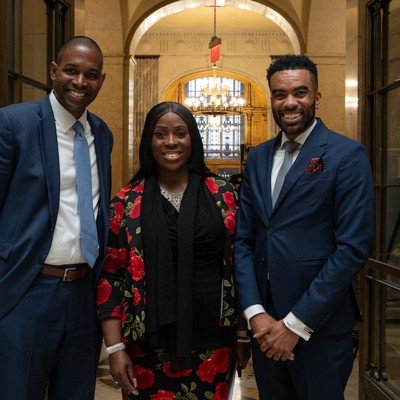
Finding solutions to the mental health challenges facing Bronx youth was the focus of two panels held at Bronx Borough Hall on Thursday. “The State of Bronx Youth Mental Health” was presented by Partnership with Children, a 115-year-old nonprofit organization focused on trauma-informed counseling and healing arts throughout New York City, and Bronx Borough President Vanessa Gibson.
Partnership CEO Wesner Pierre and Chief Program Officer Angela Jefferson joined the panel to discuss the mental health issues facing many Bronx youth and how to address them. A recent report from Montefiore Medical Center found that 20 percent have a mental health disorder and 10 percent have a severe emotional disorder. Pierre also cited another study by the University of Wisconsin Population Health Institute, which found the Bronx is the unhealthiest county in the state.
“Something is going on and these challenges existed before COVID,” Pierre said. “It’s the social determinants of health. It’s the ripple effects of trauma and toxic stress. You see it in chronic absenteeism and low achievement in reading and math. This isn’t a COVID story, this is a health equity story.”
Pierre added that improved mental health care across the borough would lead to better attendance at schools, more engaged students in class and healthier relationships with teachers.
The event was attended by Assemblywoman Shantel Jackson, New York State Department of Mental Health Deputy Director for Prevention and Health Initiatives Audrey Erazo Trivino, New York City Department of Education School Social Worker Superintendent Carmen Villavicencio Hein, and South Bronx Applied Media Academy Principal Roshawn Ault Lee. Lt. Governor Antonio Delgado also noted that Governor Kathy Hockle budgeted $20 million for 137 school-based clinics earlier this year, plus another $1.5 million from the State Department of Mental Health to support mental health first aid programs for teens and young adults. Lt. Governor Delgado also brought up the mental health struggles of young people due to social media and the addictive feeds that keep them glued to their social media feeds. He noted that the coronavirus pandemic has exacerbated the loneliness epidemic by leaving children to deal with the isolation and on their own.
Panel discussions at the event included how the three can work together as a team to support each other by transforming school communities into spaces where young people and their families can strengthen their mental health. Other discussions included how to understand that middle and high school students are not that different from pre-social media in that they are more susceptible to embarrassment.
Pierre praised the importance of these conversations, but said he also feels it’s time to address the Bronx’s youth mental health crisis, and said similar events are being planned for other boroughs in the city.
When asked what he does for schools that don’t have a community support structure, Pierre paused for a moment and then smiled. “That’s part of why we exist,” he said of the partnerships. “We fill the gap. Our staff comes in and helps out.”
