

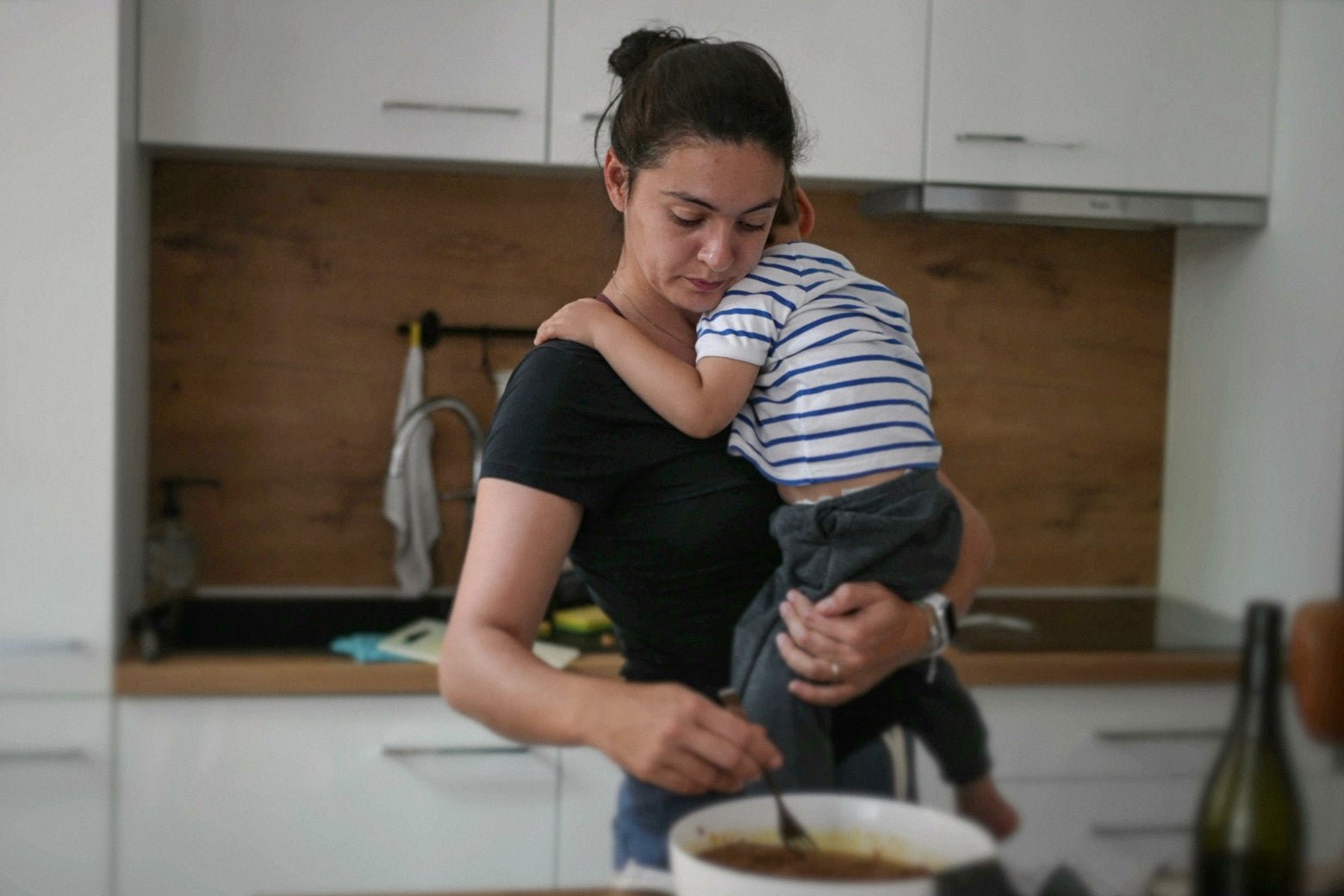
In the small town where I live, take-out options are few and far between. The community has worked around this fact by actively using meal trains, which I participate in all the time, and by shoving foil-wrapped containers into my kids’ hands and knocking on the doors of friends and acquaintances to deliver food. do not have Whether they knock, sit on the doormat, or quietly retreat, I tell them why it’s important to cook and deliver food to people with babies, people who are sick, or people affected by natural disasters. Food is something we all shareI say; It’s your way of letting the person know that you see them.
I don’t tell my kids about my struggles with cooking; it’s a new thing. “I loved cooking before I had kids,” say most parents I know.
I loved to cook, too, but that was probably because of my own mother. She was there, intently, while cooking and eating; paying attention while eating; and persuading me, a quiet teenager, to speak by giving me cooking assignments. I cooked hilariously chaotic, casual dinners every year of my adult life in dorms, apartments, and hostels in various cities. But with small kids, you’re almost always short on time, caught up in manual labor, and cleaning up long before you even get in the kitchen. At the same time, magazines, influencers, and sometimes the parenting section of The New York Times teach us that what and how we feed our kids shapes not only their immune systems, their tastes, and their eating habits for life, but also the environment and eating habits that surround us. As a result, I spend more time than I would like thinking about what my kids eat.
The change was slow. I never stopped cooking. My kids have to eat. But suddenly, I couldn’t remember the last time I felt joy, creativity, or pride while preparing or serving a meal.
At first, like others suffering from post-COVID culinary burnout, I thought that outdated recipes had ruined the fun of cooking. Fine, we live in an age where cookbooks sell well and food blogs are loaded with meta-guides. But none of this helped me. The know-it-all authoritarianism of household goddesses, the inaccessibility of acclaimed chefs, the food-science authors who made things more complicated than I could handle or clean up, all of these things exacerbated my discomfort.
I found the ever-growing “quick and easy” genre particularly tricky. These recipes fell into two main camps: those that, despite their claims, were overly complicated, had hard-to-source ingredients, had 16-step instructions, and definitely took longer than the supposed 15 minutes. Meanwhile, a few easy “quick school-day recipes” turned into bland dishes that, according to mommy blogs, were my destiny now. The optimistically prepped casseroles, meatballs, and one-pot dishes got me more from life with small dependents than they did from three happy, hungry kids.
Could we research ways to bring joy back? I tried. I talked to friends. I got sympathy, but to no avail. People with kids were also disappointed that they couldn’t enjoy cooking. Chefs were vaguely amused.joy? in cooking? Elizabeth Dunn, a food journalist who has a podcast about kids and food issues, told me that having small children has meant she no longer enjoys “the sensory quality of food”.
A political scientist The Politics of Cookbooks Author Kenan Ferguson hinted at why books didn’t help me: “Cookbooks implicate the reader in a collective response, and demand a collective response,” he said. Many reinforce traditional gender roles and family dynamics. And some are about “performance and the pleasures of performance.” I didn’t like either category.
“Modern food culture makes many ethical demands on parents,” Ferguson explains, “and cookbooks, likewise, can feel particularly oppressive in terms of perfection and a sense of performance.”
Finally, I understood my reaction. Raising small children feels theatrical to me when it’s hard: exerting perseverance, adjusting to new schools and playground communities, acting confident in the unstable social and political systems around my family. And food, of course, is not just about eating and nourishment. We speak briefly today of how what we eat encompasses logistics, care, attention, economics, politics, environment, culture, and relationships to the body. As Ferguson put it, food is about the entire “human sensorium.”
But for those raising young children, the proliferation of food culture brings with it nothing but pressure and criticism. Researchers have found that it stems from the instability and stress that dominates many aspects of raising young children in this country, and is felt by economically disadvantaged American parents. The well-intentioned focus on the many ways early exposure to food shapes children often misses out a key element of combating the anxieties that plague many modern parents: meal preparation and sharing: pure joy.
Just as mealtimes can become a chore when a child is forced to clean their plate, the joy parents get from cooking often disappears under pressure, and parental happiness has implications for their children’s physical and mental health, as well as their broader political activism.
Even when I tried to place the importance of my lost joy next to the issue of what my kids would eat, it didn’t bring it back. As Dan told me, “I was still Instead of saying, “I don’t like cooking anymore,” I’ve started to focus on the heartfelt joy I feel in the moments that involve cooking. Watching my 3-year-old chop mushrooms with impressive determination, or noticing that my older child learned how to crack eggs at school. Listening to my kids giggle as they vigorously mix rice, dulse, tomatoes, and yogurt together, appreciating the Indian takeout a few towns down the road, and calling the process “making butter.” My kids already understand that food can feel like alchemy.
But one book helped me convince myself that a sincere love of cooking would return someday. Novelist Laurie Colwin’s collection of cooking essays reminded me that cooking offers all that much more than nourishing my kids: social connection, aesthetic experimentation, political engagement, and pure deliciousness. She doesn’t emphasize performance or perfection, and her recipes are deceptively simple, so I copied them. home cooking Not a single photo is included. Colwin is more suggestive than directive. I made pepper and apple chicken for her.
Chicken (cut into quarters), 2 apples (sliced), a little paprika (sprinkled) butter.
