

Heimdat Soh
In the lush heart of Belbais, Guyana, surrounded by sprawling sugarcane fields and a meandering river, lies Whim Village. The village is a sanctuary of spirituality and a repository of the rich Indo-Madrasa and Tamil culture of the Caribbean. Every year, Whim Mariam Temple hosts a major festival cherished by the community: Whim Mariam Temple Village Puja. The Puja took place from 26th to 29th April. This vibrant festival not only showcases the village’s strong religious beliefs, but also draws people from all over the world to celebrate faith and community ties under the sparkling Corentyne sky. The festival highlights the universal appeal and welcoming nature of this spiritual gathering, making it a significant event that embodies the cultural richness and spiritual depth of the Guyanese Indo-Madrasa diaspora.
The origins of Wim Mariamman Temple puja date back to the early 20th century, when Tamil labourers from Madras were brought to British Guiana as indentured labourers. These settlers brought with them a deep worship of Mariamman, the goddess of rain, fertility and disease, and the tradition became deeply rooted in the heart of Belvais. The original temple, established in the 1930s, has become the centre of annual celebrations, reflecting the strong community spirit and dedication to cultural preservation.

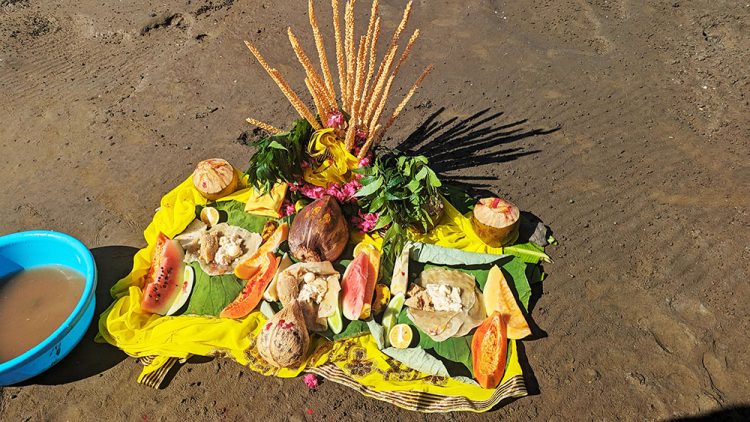
Over the years, the temple has undergone significant developments, including the construction of the main building in 1972, with each stage reflecting the community’s growth and deepening devotion. A week before the puja, the temple comes alive as many men, boys and women from the village prepare the venue – cleaning, repairing, decorating with flags and lights, and carefully adorning the gravestones of Mariamman and other deities. The preparations are not just about physical preparation, but also about spiritual cleansing, ensuring that the atmosphere matches the spiritual importance of the event.
The lineage of pujaris at Whim Village Temple, the heart of Babais, tells a story of unwavering faith and cultural pride deeply rooted in the Madras Indo community in Guyana and across the Caribbean. It began with the legendary Chinappa Veerana, better known as the Tata Headman, who led from 1950 to 1972, followed by Permaul Appiah, or Peter Jogie, until about 1985. He was then succeeded by Rowen Appan and then by Harvey Hardeen, who has been in charge from 1997 to the present.

Others who have given their time to teach include Gunraj, Vernon Parmoll, Ernest Parmoll, Madley Kisthamma and Ramsamy Rengaanaidam, while others, such as Peter Parmoll and Peter Buchanan, have transformed our temple, using their own money to convert the structure from wood to concrete and add new features inspired by places as far away as Mauritius and Fiji, under the watchful eye of Veeramuthu Madley, who oversaw the construction unpaid.
The honour is given to Changana Elia for their sincere and dedicated service in keeping our spiritual haven healthy. This wholehearted dedication by our community not only preserves but also celebrates our rich traditions vividly, making Whim Village Puja a must-see spectacle of ritual, music and communal joy that weaves a living tapestry of history and tradition.
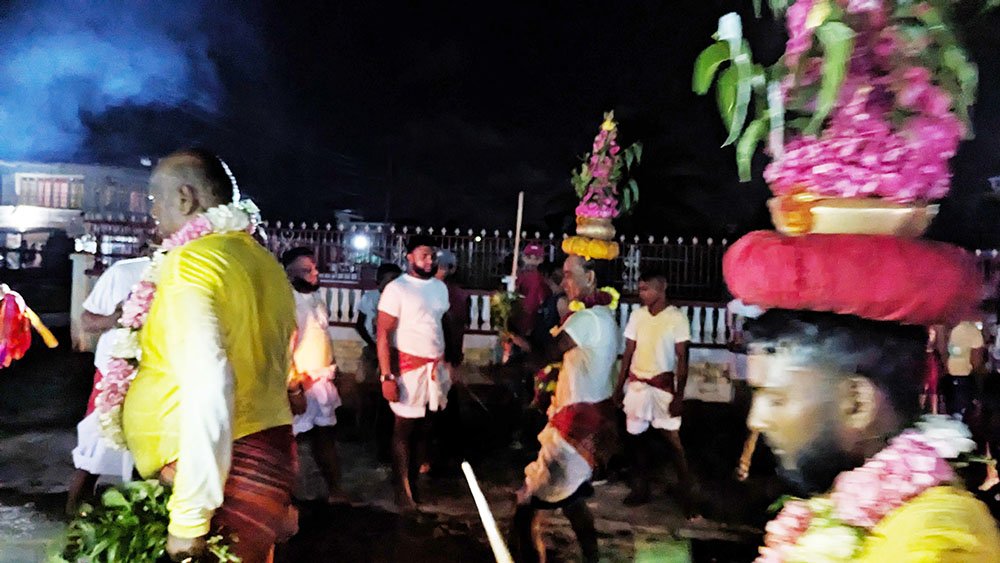
Every April, puja at Guyana’s Whim Mariamman Temple comes to life with vibrant processions and fervent prayers, highlighted by the soul-stirring Mariamman Tuti, sung over three nights of celebration. This Tamil hymn in praise of Goddess Mariamman is at the heart of the festival, when selected devotees carry the karugam through the village, creating a spiritual spectacle.
This year, for the first time, a woman led the prayers with iconic lyrics like “Mayi, Maga mayi, mani manthara sekhariye” and “Narayanaar thangai ammal nalla muthu mariyare,” marking a historic shift towards gender equality. Her presence as a singer not only honoured her own persona, but also symbolised a major step towards gender equality in the village’s spiritual practices, despite mixed feelings on the part of some of the conservative community members. This inclusive approach transformed the atmosphere of the village into a sacred celebration resonating with peace and holiness.
Whim is a vibrant spectacle, where the Indo-Caribbean spirit shines brightly with days filled with prayers, hymns and stunning dance performances blending classical and folk styles, without any of the fire walking seen elsewhere.This year’s festival was extraordinary, with the historic inclusion of beautiful women among the Udakkai singers of Mariyaman Tuti, a deeply revered hymn in praise of Mariamman.
This lively event, held over three nights, marked a major step forward towards gender equality in our sacred practices. Community reactions were mixed, reflecting the tension between tradition and progress. But the addition of female voices to a traditionally male-dominated choir brought new energy to the event and lifted community spirits.
The temple serves as both a spiritual home and a cultural hub, preserving Tamil traditions in a diverse Caribbean context, blending Dravidian folk beliefs with elements of Hinduism, local Obeah, and Christian symbolism. Over the decades, the temple’s architecture has evolved, with new buildings added in the 1960s and 1970s to support the growing number of devotees and the rich rituals performed here. But recent conversations among community members reflect a range of opinions on the direction of the mandir, the role of women, and the need for broader participation from both locals and expatriates.
Our community is at a crossroads, calling for leadership that can bridge divides and foster unity while prioritizing respect and inclusion. This push for inclusivity, echoed by contemporary thinkers, represents progressive change that can redefine this community and others for the better.
Wim Mariantsya will capture the essence of the madrasah tradition in Guyana and the Caribbean in a fascinating event showcasing the strong spiritual and cultural bonds that underpin our communities. Conversations among participants will explore the future of temples, the role of women, and how much local villagers and US immigrants should contribute.
There are serious discussions about leadership and who will be involved, which will be important in determining the future direction of the temple. However, there is a growing movement among the younger generation to advocate for more inclusive participation, signaling a shift to a modern and open atmosphere. This atmosphere is seen in the respectful attitude of the younger generation, indicating a generational shift to a more inclusive approach.
Pujari Harvey’s dedication is evident in his personal investment of time and resources for the perpetuation of the temple and the spiritual well-being of our community. His efforts have not only maintained the temple as a sturdy structure, but also strengthened its role as the spiritual centre of Whim Village and enhanced the sense of continuity and sanctity that is central to our identity.
Participating in the puja and witnessing the unwavering faith and lively discussion highlights the importance of the temple and the power of faith amid modern pressures. This is a story of survival, identity and transformation – a must-see experience for everyone, especially the descendants of madrasas, inspiring us to continue to preserve our rich traditions while embracing progressive change.
More than just a festival, the Wim Mariamman Temple Village puja is the vibrant heartbeat of the Guyanese community and encapsulates the enduring spirit and cultural vitality of the Indian madrasah diaspora. Each year, as the puja ends, we are filled with a renewed sense of culture and faith, connecting the past with the present and blending the sacred with the everyday.
It is a vibrant celebration that highlights our victories and struggles to keep our rich traditions alive amidst the rapid changes of the modern world. The event not only strengthens our cultural identity but also serves as a spiritual sanctuary to harness the power of our traditions to inspire future generations.
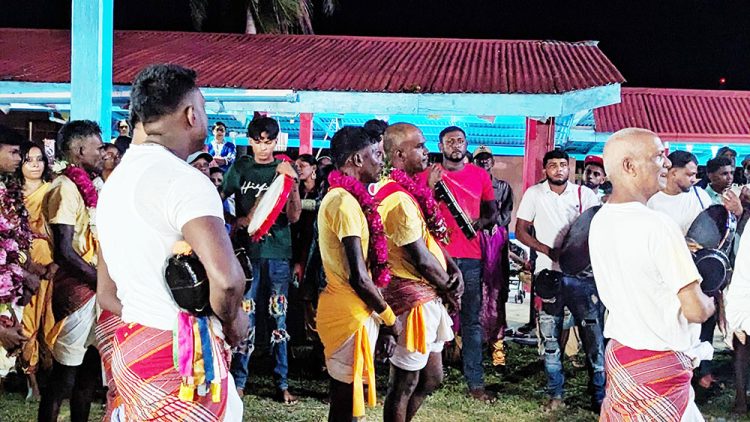
As the drums die down and the vibrant procession comes to an end, we carry the lessons learned and blessings received into the future, remembering the unifying power of our traditions that lie at the heart of Guyana. A particular must-see for those who are descendants of madrasas, the puja at Wim Mariamman Temple Village is a testament to the beauty of cultural preservation and the strength of our community spirit.
