

ASTANA—Kazakhstan and US scientists will cooperate on a project to analyze human and animal bones to shed light on nutritional conditions during the Bronze Age, the press service of Kazakhstan’s Ministry of Science and Higher Education reported on May 20.
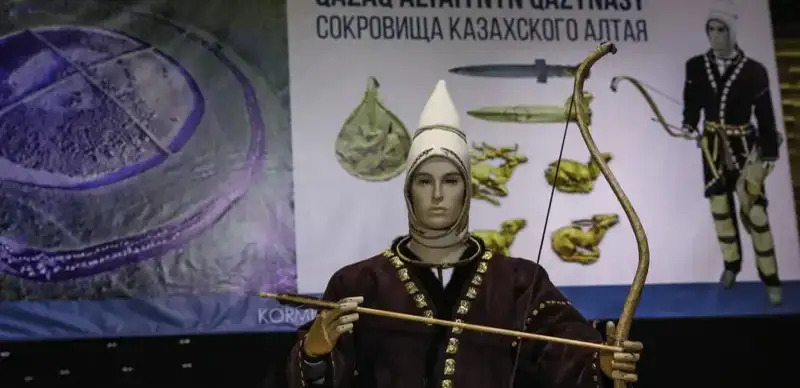
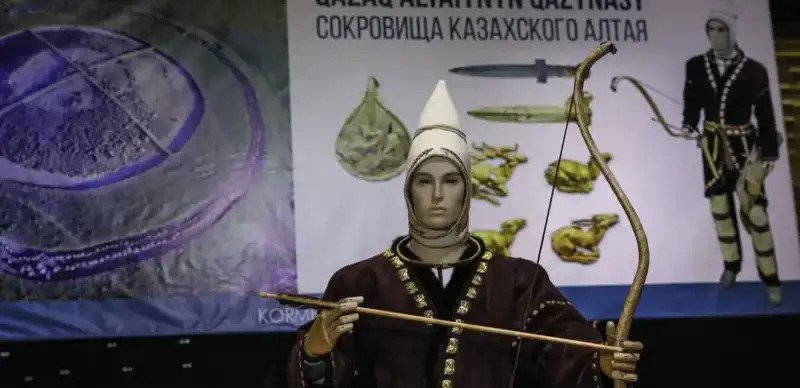
Photo: Viktor Fedunin/Kajinform
Bone remains, including dental plaque, from people who lived during the Bronze Age have been linked to diet and Ancient nutrition.
The Bronze Age on the territory of Kazakhstan is mainly represented by the Andronov culture, which dates back to the 18th-12th centuries BC. Remains of the Andronov culture have been found in central Kazakhstan. They were a mixed nomadic and peasant people, cultivating crops on the floodplains of rivers. Hunting, fishing and gathering no longer played a major role in the Andronov economy.
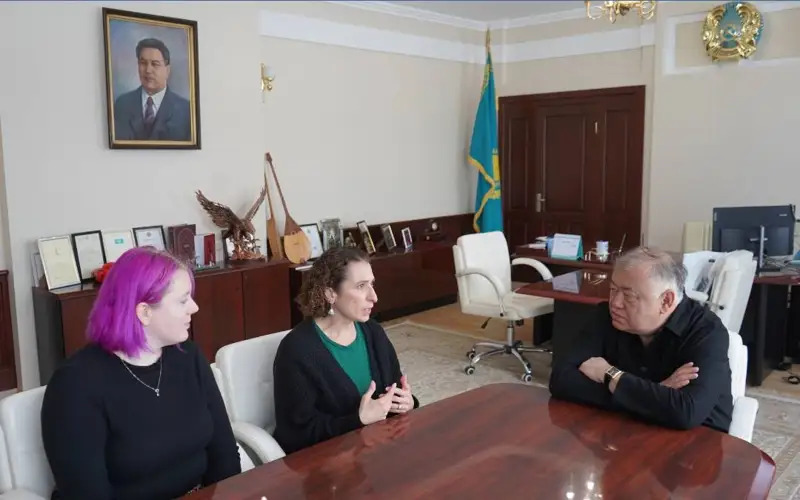
The head of the delegation met with Chairman of the Board of Trustees, Rector NO. Duratbekov. Photo: Ministry of Science and Higher Education of the Republic of Kazakhstan
A delegation from the University of Michigan, consisting of Assistant Professor of Anthropology and paleozoologist Alicia Ventresca Miller and two doctoral students, Kara Larson and Dan Garner, visited the Saryarka Archaeological Institute of Karaganda Buketov University from May 14 to 16. The purpose of the visit was to tour the institute’s osteological collection, which is renowned in archaeological communities beyond Kazakhstan.
To study human and animal skeletal remains, scientists employ a variety of advanced techniques.
“Based on the analysis of dental calculus from human and animal bone remains using modern techniques for isotope analysis, nitrogen, protein and strontium content, a nutritional model for Bronze Age humans has been reconstructed, which is of great importance in the context of the current global food risk for humanity,” the scientists explain.
Alexei Kukushkin, director of the Salyark Archaeological Institute, said his institute is ready to provide materials for research in the U.S. lab. The two sides are expected to formalize their cooperation through a memorandum of understanding and start the project this year.
“Our colleagues from Michigan contacted us about a month ago. Through correspondence, they learned about what our base is like and the possibility of cooperation. In May, we visited to get to know our collection of bone materials in more detail. The meeting was successful. In the coming days, we plan to sign a memorandum of understanding between the universities. The project is in preparation. I think we can start implementing it this year,” Kukushkin said.
This project is the first of its kind to be implemented in Kazakhstan.
