

image:
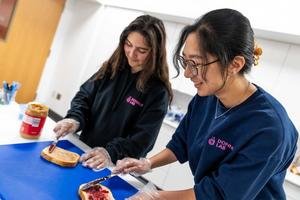
A Fralin Biomedical Institute research study on minimally and overly processed foods, published in the journal Appetite, gives scientists a new tool through curated photographs of foods commonly consumed in the United States.
View more
Credit: Clayton Metz/Virginia Tech
Scientists at Virginia Tech’s Fralin Biomedical Institute, which studies ultra-processed foods, have developed a new tool to assess the rewarding and reinforcing properties of foods that account for 58 percent of calories consumed in the United States and have been linked to a range of adverse health outcomes.
The study was published in the journal Neurology in April. appetiteprovides a collection of curated images of minimally and overly processed foods based on 26 characteristics including macronutrients, sodium, fiber, calories, price, and visual characteristics such as color and portion size.
The study is based on the NOVA classification system (nova means new in Portuguese), which divides foods into four categories based on their level of processing.Nutrition researchers at the University of São Paulo in Brazil developed the classification while studying the country’s soaring obesity rates.
This scale has its critics.
“The main criticism of the NOVA scale is that it’s difficult to use or that different people categorize foods differently,” said corresponding author Alexandra DiFeliciantonio, assistant professor at the Fralin Biomedical Research Institute. “We found that people with nutrition education generally agree with the food categorizations, providing data that suggests that may not be a valid criticism.”
What they did
The NOVA system divides foods into four categories: unprocessed or minimally processed foods (such as fresh fruits, legumes, and plain yogurt), processed cooking ingredients (such as cooking oils, butter, and salt), processed foods (foods that combine the above two in a simple way, such as cheese, canned vegetables, and fresh bread), and ultra-processed foods (such as soft drinks, flavored yogurt, processed meats, and most packaged breads), which are made through industrial processing and additives rarely found in the home pantry.
To develop the image set, a team of psychologists, neuroscientists and registered dietitians selected foods that represented either minimally processed or ultra-processed foods.
The foods were prepared in a lab and visually represented in professional photographs to control for consistency. Researchers also collected the price, weight, and nutritional information (calories, macronutrients, sodium, and dietary fiber) of the foods depicted in each image.
Study participants rated the images for a range of qualities, ultimately generating a set of 28 images matching the 26 characteristics. To objectively measure the NOVA classification, the researchers recruited 67 nutrition experts and asked them to categorize foods as minimally or ultra-processed.
“This set of food photos allows us to infer that the differences between the food photos are due to the degree of processing of the food and not due to all the other factors that we know potentially have an impact,” said Zach Huettelin, lead author of the study and a translational biology, medicine and health doctoral student based at the Fralin Biomedical Research Institute.
Why is this important?
Ultra-processed foods are associated with an increased risk of developing obesity, type 2 diabetes, heart disease and cancer. They account for more than half of the calories consumed in the US, Canada and the UK and are recognised as a global threat to public health.
“Very little experimental research has been done on ultra-processed foods, and research is hampered by a lack of better tools to measure and evaluate their impacts,” said DiFeliciantonio, who is also associate director of the Center for Health Behavior Research at the Fralin Biomedical Research Institute. “The more tools we can give you, the more we can learn.”
The Virginia Tech team is making the photos and related data accessible through the Virginia Tech Data Repository at the Virginia Tech Library, enabling scientists to test hypotheses in behavioral economics and neuroimaging studies.
In the DiFeliciantonio lab, we use these photographs in combination with functional MRI to reveal associated brain activity, allowing us to separate the effects of food processing from other properties.
The research was funded by a National Science Foundation Graduate Research Fellowship, a grant from the National Institute of Diabetes and Digestive and Kidney Diseases of the National Institutes of Health, and the SEAL Innovation Fund, which supports the Fullerin Biomedical Research Institute’s Innovative Pilot Research Project. DiFeliciantonio received the grant from the fund to explore metabolic, neural and behavioral data to better understand how the brain processes nutrient availability and food preferences.
author
- Zach Hueterin, PhD student in Translational Biology, Medicine and Health Graduate Program
- Monica Ahrens, Research Scientist, Center for Biostatistics and Health Data Sciences, Virginia Tech
- Mary Elizabeth Baugh, research scientist at VTC Fralin Biomedical Research Institute
- Mary Oster, VTC Fralin Biomedical Research Institute
- Alexandra Hanlon, Director, Center for Biostatistics and Health Data Sciences, and Co-Director of the iTHRIV Biostatistics, Epidemiology and Study Design Methods Core, Virginia Tech
- Alexandra DiFeliciantonio, assistant professor at Virginia Tech’s Fralin Biomedical Institute, associate director of the Center for Health Behavior Research, and assistant professor in the Department of Human Nutrition, Food and Exercise in the College of Agriculture and Life Sciences
Research theme
people
Article Title
Creation and validation of a NOVA score image set for assessing ultra-processed foods
Article publication date
July 1, 2024
Conflict of interest statement
No conflict of interest
Disclaimer: Neither AAAS nor EurekAlert! are responsible for the accuracy of news releases posted to EurekAlert! by contributing institutions or for any use of information provided through the EurekAlert system.
