

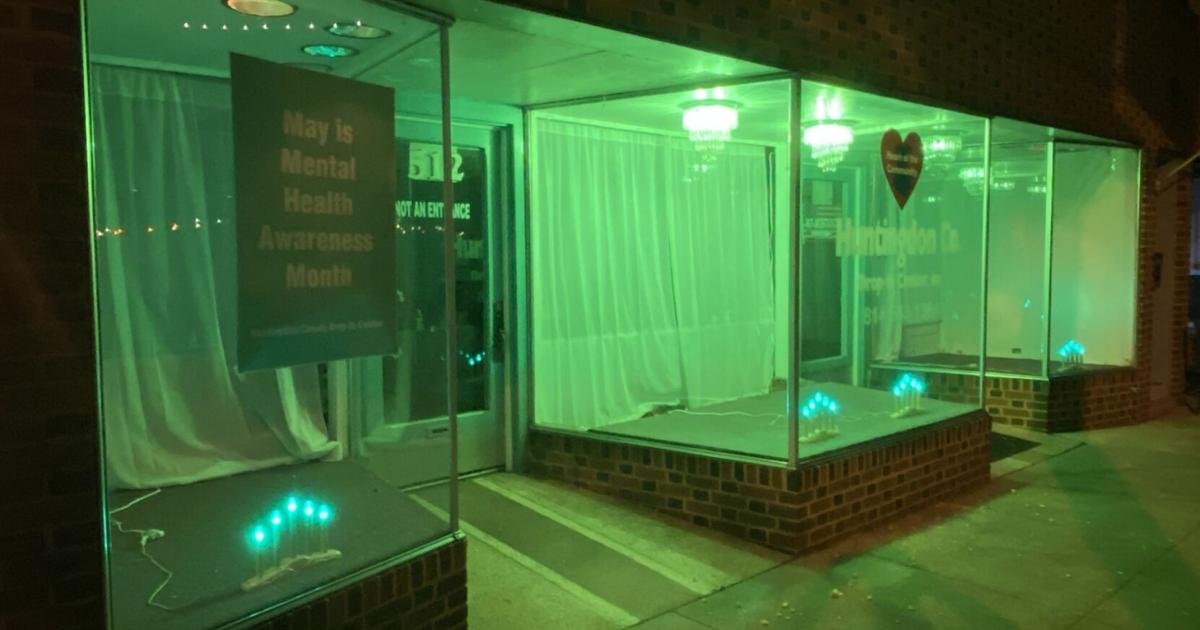
May is Mental Health Awareness Month, focusing on raising awareness about mental health illnesses and promoting mental health-related resources.
The goal of the national observations is to promote awareness, share information on resources and education, and advocate for everyone’s mental health and wellbeing.
But as the month comes to a close this weekend, the stigma associated with mental illness is unfortunately likely to continue.
The Huntingdon County Drop-In Center in downtown Huntingdon, where Jeff Speck is director, is a local nonprofit that provides activities for people with mild mental illnesses.
Speck said he has seen stigma placed on people living with mental illness or even those who seek help for mental distress.
“The pressure on people with mental illness to feel like they’re being singled out or excluded is really unfair,” he said.
Dealing with the effects of being treated differently can increase feelings of isolation and exacerbate mental illness.
That’s where the Drop-In Centre comes in.
“The Drop-In Center is a club-like organization for our members. It’s a place where they can just come and hang out, have a meal, play cards, watch TV, do arts and crafts,” Speck said, explaining the operation. “It’s a safe place where people can interact with others so they don’t feel lonely.”
All services are provided free of charge, and the Drop-In Center does not provide therapy or direct mental health care services.
“We’re one of several agencies that support people with mental illness and we try to find what works best for people,” Speck said. “We generally work with adults who are more active and who usually live alone.”
One of the Drop-In Center’s biggest missions is to help individuals participate in everyday activities that many people take for granted as “normal activities,” and of course that includes work.
“Some of the members at the center have jobs. They are working people who contribute to society, especially their community,” Speck points out.
Center members support local restaurants by dining out as a group or taking field trips to different locations, which may be their only opportunity to participate in the activities other members do every day.
“We’re in close contact with other agencies so if someone needs mental health services, whether that’s a crisis or they just need someone to talk to, we’re able to connect our members to that support,” Speck explained.
Another benefit of the Drop-In Centre is that you get to know the members.
“We can get an early indication if someone is behaving differently than normal,” Speck said. If that happens, he or someone else can offer to help connect the person with an agency or organization that can provide mental health support services.
The center hosts group programs at least twice a month, and these activities range from bingo to arts and crafts to diabetes education and other health and wellness topics.
Again, the aim of the centre is to provide a space and opportunity for people with mental health problems to meet and interact with others in the same situation without feeling shame, embarrassment or isolation.
The message repeated by mental health professionals is that anyone experiencing a mental health problem, from “just feeling down” to more serious symptoms, should seek treatment.
If you feel it’s time to seek further care, you should first discuss this with your doctor.
In that case, local mental health resources include Juniata Valley Behavioral Development Services (JVBDS).
Juniata Valley Behavioral Development Services offers a variety of services to support individuals with behavioral health needs, and funding may be available to help those who are uninsured or underinsured cover the cost of needed care. JVBDS’s phone number is (717) 242-6467.
The 24-hour crisis line number is 1-800-929-9583.
The Drop-In Center is located at 512 Washington St. The phone number is (814) 643-1364.
