

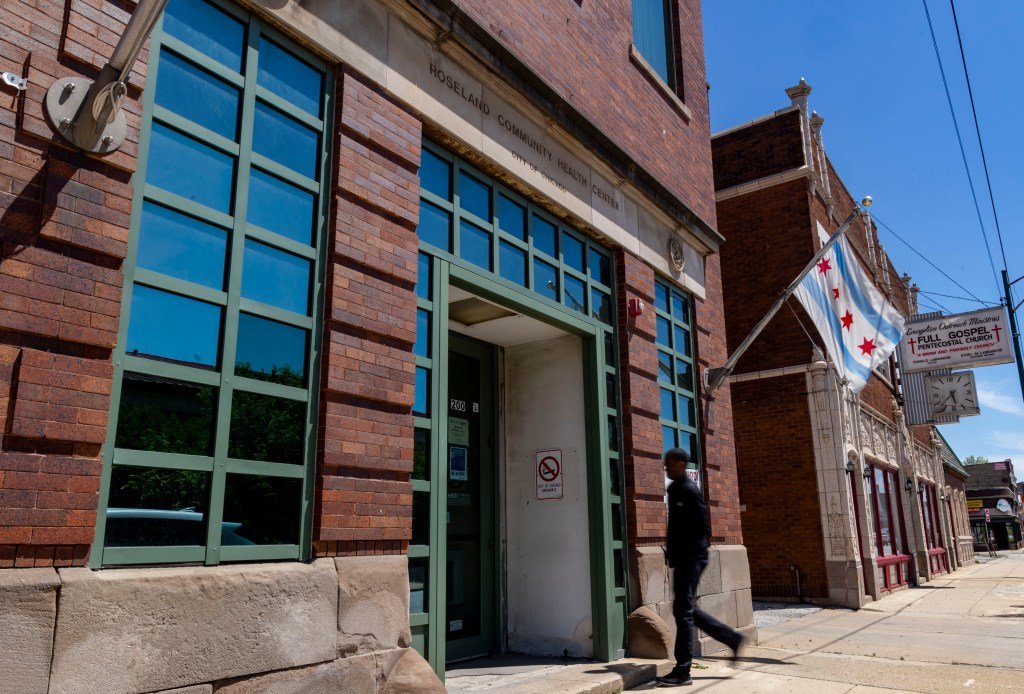
Mayor Brandon Johnson is expanding city-run mental health services at three locations across Chicago, a crucial step toward implementing the so-called “treatment, not trauma” plan he promoted during his mayoral campaign.
Mayor Johnson is expected to announce the measures Thursday morning outside the closed Roseland Clinic on the city’s Far South Side, which is scheduled to reopen by the end of the year. According to plans shared with the Tribune by the Johnson administration, the city also plans to add mental health services to a Chicago Department of Public Health clinic in Pilsen in August and at the Legler Regional Library in West Garfield Park as soon as June.
The move comes more than a decade after former Mayor Rahm Emanuel closed six of the city’s 12 public psychiatric clinics, a decision that sparked outrage from patients and union members who lost their jobs at those clinics, sparking a campaign that has dogged Chicago politicians ever since.
Activists appear to have found a champion in Johnson after former Mayor Lori Lightfoot backed away from a campaign promise to reopen the clinics. Her plan to significantly expand the city’s mental health resources by reopening the clinics offers “a path to reverse decades of underinvestment,” she said in a report announcing the plan.
The mayor spoke of his brother Leon, who died struggling with mental illness, drug addiction and homelessness.
“I believe that if we had committed to mental health and committed to treating people who have experienced trauma rather than criminalizing them, he would have had a much longer life on this earth,” Johnson said. “To me, this work is personal.”
The three expansions are the Johnson administration’s first clear plan to deliver on campaign promises, and they mark a new direction for mental health care in Chicago after past administrations have drastically cut back on the city’s public clinics and instead funded private mental health care, often delivered by nonprofit providers.
A report prepared by a working group Johnson launched through City Council in October lays out the city’s vision for the policy.
In a draft report provided to the Tribune, a working group of government officials, emergency medical personnel, clinicians and community activists shared how the city plans to gradually but dramatically expand mental health care by opening new clinics and expanding non-police behavioral health crisis teams. There are five city-run clinics remaining. It’s unclear how many more clinics the city plans to add beyond the three Johnson will announce Thursday, but the report said there is support for further expansion.
Johnson’s team has offered few details about its treatment-not-trauma plan in recent months, leaving some campaign supporters concerned the administration will water down their comprehensive vision. Their ideas go far beyond reopening some clinics and include calling for the creation of a “community care corps” of workers tasked with proactively preventing mental health crises.

But Thursday’s announcement drew praise from Councilwoman Rossana Rodriguez-Sanchez (33rd), a leading advocate of “non-trauma care” on the City Council. The Johnson ally called the mayor’s plan “a new beginning for mental health care in Chicago.” Rodriguez-Sanchez said she has tried for years to pressure Lightfoot to expand city-run mental health care services without success.
“We faced a lot of opposition and rejection to these ideas, so it’s great to finally see movement and to see us realize a demand we’ve been making for so long,” she said. “This is just the beginning.”
Rodriguez-Sanchez said the city’s past shifts toward funding private mental health providers led to worse working conditions and a reliance on precarious subsidies that were less sustainable than the public system.
“This model misses out on a lot of the pieces that are needed to provide the care people actually need,” she said.
Some nonprofit mental health care providers have criticized the plan, fearing it would take away city funding and that the costs of Johnson’s proposed expansion of city-run clinics would make it difficult to provide the care everyone in the city needs.
Reopening the clinics has been a long-time goal of Johnson’s powerful union, the American Federation of State, County and Municipal Employees, whose members lost their jobs when Emanuel closed six city-run clinics in 2011.
The AFSCME International Union PAC donated $100,000 to Johnson’s mayoral campaign last year, and the AFSCME Illinois Council 31 PAC donated $56,750 to Johnson’s successful 2018 run for Cook County commissioner, according to state campaign finance records.

The city has already changed CDPH’s slow hiring process, adding about 20 clinical workers since January to staff the three expansions, according to the report.
Rodriguez-Sanchez said the Johnson administration has more work to do to fully realize the hopes community groups have for “treatment, not trauma.” It took the city decades to make such decisive cuts to its public mental health care system, she said.
“It’s going to take a while to reverse that, but we’ve started,” she said. “They’ve made it very clear to us that they’re willing to expand public services and expand public care.”
Prime Minister Johnson included $5.2 million in his first budget in November to open new clinics, and the report said his government plans to increase spending on alternative response and clinical services from $21.4 million in 2024 to $36.5 million in 2026.
The report did not say where the additional funding would come from, but cited possibilities including improved Medicaid reimbursements, new grants or money from the city’s general fund. The report focused on ways to reduce costs as more clinics reopen, such as integrating mental health services into other city-run facilities like schools and libraries.
While pushes by community groups to reopen are often tied to specific locations closed by past administrations, the city may ultimately choose future locations based on where there is the greatest current need, the report said.
“The solution to this harm is not as simple as simply reopening the centers,” the report states. “Simply put, what worked in 2012 may not be effective today.”
The report also outlines plans to expand the city’s Crisis Assistance, Response and Engagement (CARE) program. Piloted by Lightfoot and expanded by Johnson, the program leverages a new division of emergency response teams to respond to nonviolent emergencies, like drug overdoses and mental health crises, without involving police. CARE teams should be able to take more emergency calls, operate in more neighborhoods, and respond to more types of emergencies, the report says.
The report said the city should also consider creating 24-hour mental health clinics, establishing new training academies and expanding the workforce for its expanding public mental health care system.
jsheridan@chicagotribune.com
