

What does it mean to practice “wellness”?
Wellness can sometimes feel difficult to implement because it represents an ongoing, active process rather than a clear health outcome. Some people find managing clear indicators like GPA, cholesterol levels, or credit scores more concrete than evaluating everyday habits that help or hinder their health. Campus Wellness Centers offer specialized wellness coaching to help students cultivate their wellness practices using a balanced, nonjudgmental, holistic approach.
Hear how coaches work with their clients to understand the nuances of health and how the program helps University of Utah students thrive.
A holistic approach to student success
“Wellness coaches take a holistic approach to student success,” says Katie Atkinson, wellness navigator at the Campus Wellness Center. She says her team places a high value on cultivating balance and intention with their clients.
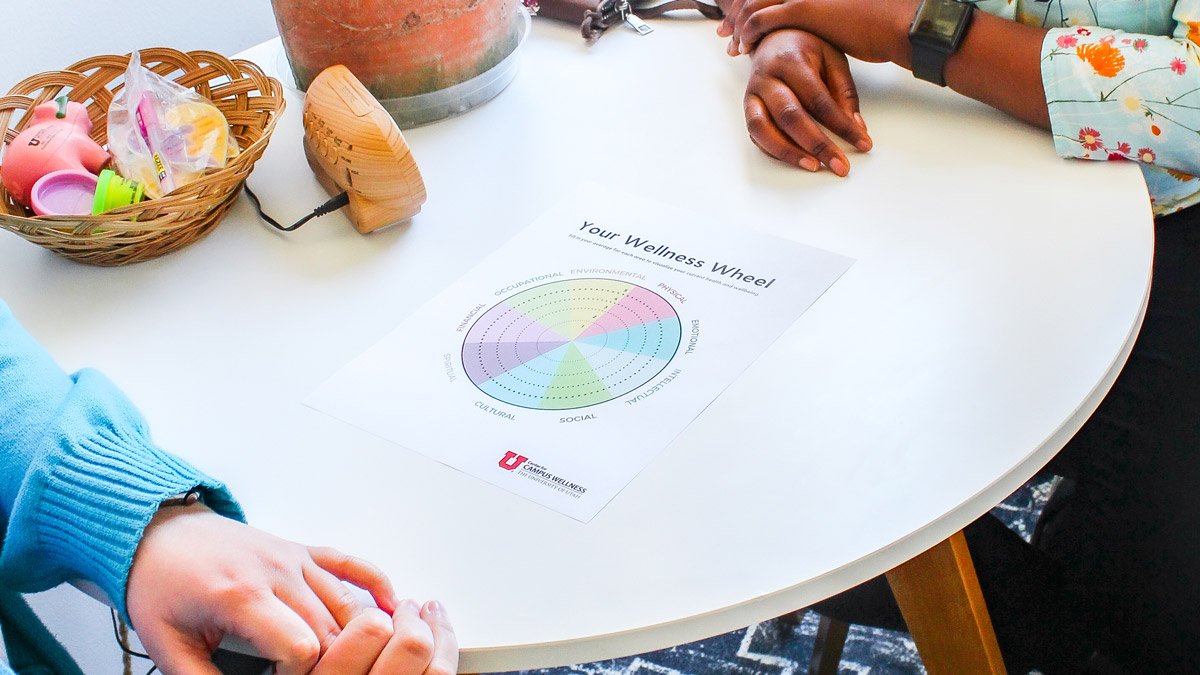
Many sessions begin with the use of the Wellness Wheel, a multi-dimensional, interconnected tool that highlights nine key dimensions of well-being as recognized by .
“The wheel helps students recognize and understand the interconnectedness of health habits,” Atkinson said. “Each dimension has many tools to help us stay present as we make incremental progress toward changing a habit in one area of our lives.”
She offers this example of how the Wellness Wheel can be put into practice: “Let’s say a student comes to us for advice about an emotional wellness issue, such as stress management. Working with a coach, the student can identify the root of the problem and identify skills from across the Wellness Wheel to improve their situation. The student could allocate five minutes for an enjoyable exercise session, a physical wellness practice that will also improve their stress management skills.”
The wellness coaching program is professionally run by Atkinson and two graduate student assistants from the University of Utah Health’s Master’s of Health and Kinesiology program.
This two-year assistantship offers budding professionals the opportunity to hone their skills while pursuing a specialization in health education and wellness coaching.
Wellness coaching is a judgement-free space
According to alumni wellness coach Mikey Powell, a typical day as a wellness coach is filled with “positivity, motivating challenges and rewarding experiences.”
Wellness coaches will spend the majority of their time with students face-to-face, meeting online and in person at the Student Services building.
Coaching sessions are free to students and available to undergraduate and graduate students. During the initial session, which typically lasts 45 minutes to an hour, you’ll talk with your wellness coach to outline your goals, identify obstacles, and create a customized plan with specific resources and peer support in mind.
Many students may not realize that these sessions are also confidential, which is perceived as an added layer of protection for students who are concerned about how others will react to the changes they are making in their lives.As an ally and resource, the wellness coach is here to motivate, envision, and hold the student seeking change accountable.
Wellness coaches do not provide diagnostic services or medical procedures but can provide referrals to students seeking health-related services.
Program coordinator Atkinson noted that the most common request this year was help with time management. Coaches can help students find balance in different areas of their lives, such as creating healthy meal prep habits, dealing with stress and finding friends.
“A wellness coach is there to help you make the changes you want to make, not to force changes you’re not interested in. The focus is on building skills and confidence with certified peer support, without judgement.”
“It was a great experience,” Powell said of his memorable coaching experience earlier this spring.
“One of my students wanted help managing their anxiety before a class presentation. Although they appeared knowledgeable about the content, they often found themselves succumbing to the pressure of public speaking, stuttering, freezing up, and experiencing low self-esteem. In our session, we implemented two mindfulness exercises to help them stay calm before their presentation. They reported that adopting this strategy to manage their stress and anxiety was highly effective, and made them feel most confident during their school presentations.”
The power of personalized support
Based on continued demand, the program will expand to offer wellness coaching sessions during the summer for enrolled students.
Current wellness coach Blessing Otesanya said she takes pride in supporting students in pursuing their long-term goals.
“I will be working with my client in the fall of 2023 and have been on this journey with her for many months now. I can see how much progress she has made over the past year. We recently had a session where we celebrated her reaching her goal. It was so exciting and made me realise just how much coaching can support people.”
In addition to promoting student success, wellness coaches also support universities’ response to the loneliness crisis that is affecting young people across the country. In response to ongoing findings about isolation and loneliness from the Healthy Minds Survey, several campus resources are exploring ways to foster deeper connections among students.
Wellness coaching offers emerging professionals the opportunity to support young people in their transition to adulthood. Coaches who identify themselves as “accountability buddies” pride themselves on being supportive peers who can be trusted guides as students find their path and peers in college life.
Wellness coaches say the program their A sense of belonging on campus over the past two years.
Reflecting on his experience in the program, Powell said, “I remember fondly the many positive interactions and successful coaching sessions I had the opportunity to participate in. [during the past two years]During my time at CCW, I have led over 120 sessions. Through these sessions, I have witnessed the growth, perspectives, and positive lifestyle changes of a diverse range of students and am proud to have been a key pillar of peer support for them.”
Students can use this booking link to book a session directly with a Wellness Coach.
