

Design shouldn’t do harm, says Darien Labeach of Mas. In fact, good experiential design can promote healing and foster racial health.
Imagine stepping into a space that not only stimulates your senses but actively promotes your well-being: that’s the promise of experience design, the practice of creating immersive experiences that resonate on an emotional and intellectual level.
For Black communities, reality often falls short of this promise. Experience design, a field historically dominated by white narratives, has perpetuated racial harm through both conscious and unconscious bias. However, there is a growing movement to harness the power of experience design to promote racial health and create spaces that are not only inclusive but actively healing.
Legacy of Exclusion
Experiential design is about storytelling. It shapes environments that evoke certain emotions and guides how people interact with a space. Unfortunately, the stories traditionally told through experiential design are often homogenous and reflect the limited perspectives of a predominantly white design community. This lack of diversity creates what Jacquelyn Iyama, author of Racial Wellness, calls “environmental racial microaggressions.” These are subtle yet harmful design choices that marginalize Black people. Imagine walking into a store where security measures disproportionately target Black customers, encountering displays that don’t take Black aesthetics into consideration, or navigating a space where touch-sensitive technology doesn’t recognize Black skin color. These details create a cumulative experience that reinforces feelings of invisibility and exclusion.
The harm doesn’t just end with the physical. The historical absence of Black voices in the design world contributes to a larger narrative that erases Black contributions and reinforces a sense of disenfranchisement. Digging deep into the history of experiential design reveals a string of White, male pioneers. Landscape architect Sarah Zewde highlights the need to break down this narrative by acknowledging the contributions of groundbreaking Black designers like Sylvia Harris, a pioneer of social impact design. By including these voices, the design world can begin to dismantle the power structures that have historically excluded Black perspectives.
Design brings healing
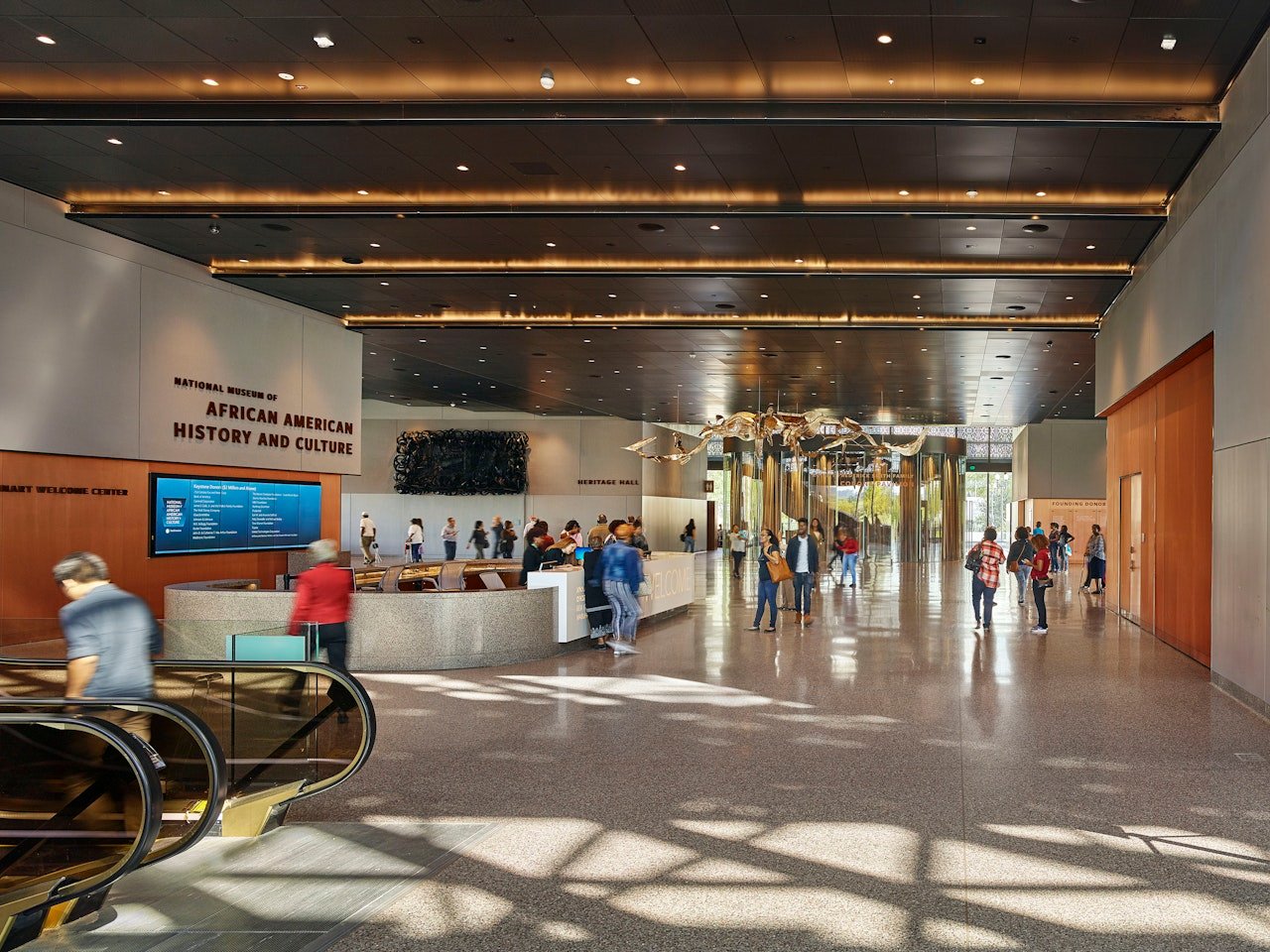
Thankfully, some spaces demonstrate the great potential of experiential design to promote racial health. The National Museum of African American History and Culture (NMAAHC), colloquially known as the Black Smithsonian, is a powerful example. From the moment visitors step inside, the museum’s design creates a space for dialogue, reflection, and healing.
Open floor plans with natural light foster a sense of spaciousness and inclusion. Culturally relevant soundscapes, perhaps evoking familiar church music or the buzz of community gatherings, create a sense of belonging. Even seemingly small details, like an audio guide narrated by a warm, friendly voice reminiscent of a “church lady,” contribute to a sense of cultural affirmation. The NMAAHC indicates that design is not just about aesthetics, but about creating experiences that resonate with the specific needs and cultural norms of your target audience.
Practical steps toward racial inclusion
The path to a more equitable future requires a multifaceted approach. One important step is to develop clear standards for racial inclusivity in experience design. Similar to accessibility guidelines that ensure physical spaces are available to all, these standards provide designers with the tools to create experiences that consider the needs and cultural context of Black communities. These standards could include considerations around space utilization, lighting design, sensory experiences, and the incorporation of culturally relevant narratives.
Beyond establishing design standards, it’s important to foster true collaboration with Black communities throughout the design process. This requires a mindset shift from designing “for” Black people to designing “with” Black people. As Iyama suggests, community design jams, consultations with Black creators, and incorporating diversely representative user testing panels are essential steps. These collaborations not only ensure that the final designs are culturally appropriate and avoid unintentional bias, but also ensure that Black communities have a say in shaping their experiences.
Decolonizing the Design Process
True racial inclusion requires a deeper understanding of experiential design’s historical foundations. As Maria Nicanor, director of the Cooper Hewitt Smithsonian Design Museum, suggests, design doesn’t exist in a vacuum. It’s a practice deeply intertwined with social, economic, and environmental realities. The historical exclusion of Black voices is only one facet of a larger issue.
Experiential design needs to do more than mimic the power structures that have historically marginalized Black communities. This requires critically examining design education, incorporating diverse perspectives in curricula, and celebrating the contributions of Black designers. Additionally, design firms need to actively recruit and nurture Black talent and foster a more inclusive design environment.
