

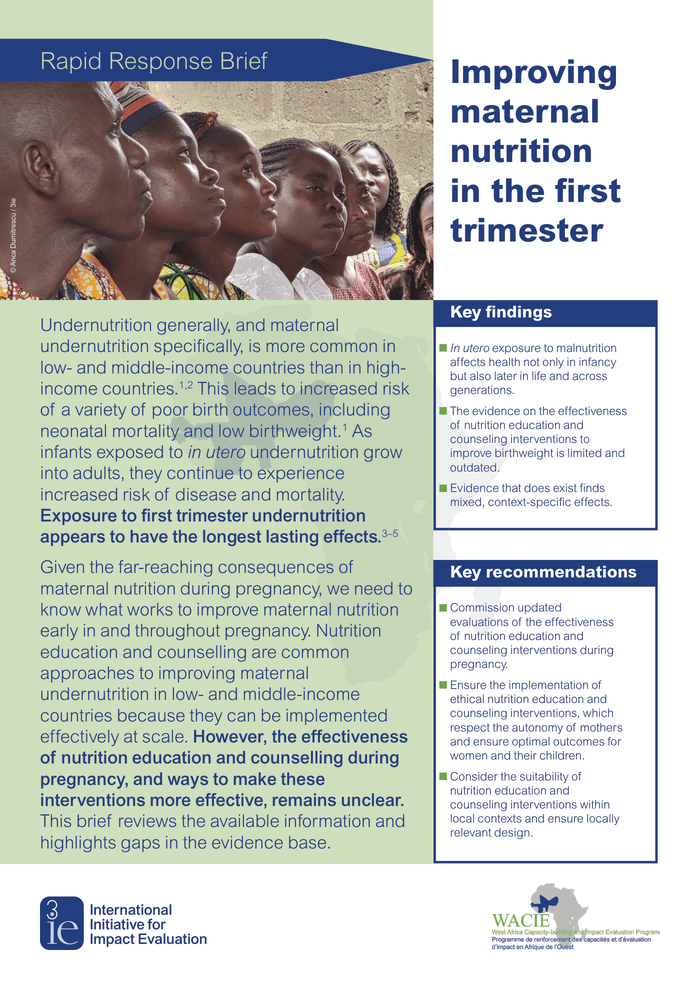
Undernutrition in general, and maternal undernutrition in particular, is more prevalent in low- and middle-income countries than in high-income countries. It increases the risk of a range of birth problems, including neonatal mortality and low birth weight. Infants exposed to undernutrition in the womb continue to be at increased risk of disease and death as they grow into adults. Undernutrition during early pregnancy appears to have the longest-lasting effects.
The impact of maternal nutrition during pregnancy is far-reaching, so there is a need to know what is effective to improve maternal nutrition from early on and throughout pregnancy. Nutrition education and counselling is a popular approach to improve maternal nutritional deficiencies in low- and middle-income countries because it can be delivered at large scale and effectively. However, the effectiveness of nutrition education and counselling during pregnancy, and how to make these interventions more effective, remain unclear. This overview reviews the available information and identifies gaps in the evidence base.
Key findings
- Exposure to malnutrition during prenatal life has health implications not only for infancy but for later life and across generations.
- Evidence regarding the effectiveness of nutrition education and counselling interventions to improve birth weight is limited and outdated.
- The evidence that does exist suggests a mix of effects that vary across contexts.
Key Recommendations
- The committee updated its evaluation of the effectiveness of nutrition education and counseling interventions during pregnancy.
- Ensure the implementation of ethical nutrition education and counselling interventions that respect maternal autonomy and ensure optimal outcomes for women and their children.
- Consider the appropriateness of nutrition education and counselling interventions to local conditions and ensure locally appropriate design.
