

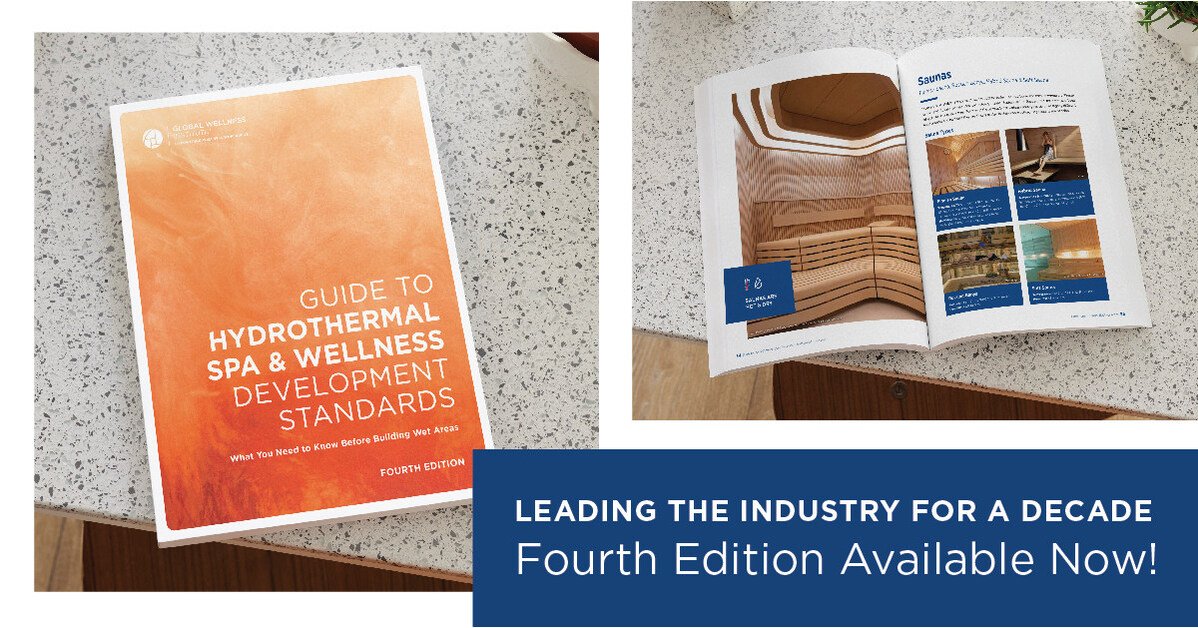
“I have long believed that hydrothermal experiences, when implemented correctly, can play an important role in wellness programs and provide proven wellness benefits that are difficult to achieve in other ways. .” susie ellisCEO and co-founder of GWI. “GWI is proud to celebrate 10 years of providing this valuable resource to the industry.The fourth edition is updated and expanded to provide It contains important information for anyone embarking on construction. This information is available for free download.
Download our latest guide to thermal spa and wellness development standards.
Properly building these facilities requires precise technical knowledge, from material selection to complex drainage and electrical issues. The knowledge required goes far beyond understanding which type of tile can withstand high temperatures or which wood will best withstand a sauna. Yet hydronic experts are often consulted too late in the process, incurring unnecessary costs and delays in correcting problems that could have been mitigated much earlier in construction. To solve this problem, the “Standard Guide for Hydronic Spa and Wellness Development” was created.
Key considerations for the 4th edition of the Thermal Spa and Wellness Development Standards Guide:
- Please seek professional advice early. These are specialized fields and require plumbing experts.
- Be clear about your budget. The wet area is a place where you should not cut corners. Understanding this from the beginning will minimize frustration.
- Understand your audience: Tastes vary widely around the world, so make sure your hydrothermal feature targets your audience.
- Balance is key. Achieve the right balance between water (pools) and spa experiences (steam rooms, saunas, etc.).
- Don’t underestimate your space requirements. Wet spa areas often require double the space to accommodate behind-the-scenes equipment and maintenance.
- Bathers and staff require different flows. Understand who will be using and working in different spaces and plan accordingly.
- Don’t forget the plant rooms and facilities: Detailed plant and technical facility requirements (such as plant rooms) are often not documented in the early planning stages. This omission often means going back to square one midway through the build, resulting in time delays and extra costs.
- Noise is the enemy. If noise emissions are not minimized, the relaxation of the guests will be non-existent and the atmosphere of the spa will be seriously spoiled (for example, the relaxation space should not be adjacent to the vitality pool; noisy, conversational (occurs frequently).
- Water runoff is also your enemy. A lack of detailed planning regarding the materials used, construction techniques, and drainage can result in water leaks and damage throughout the facility, leading to health problems due to the growth of mold and bacteria such as Legionella. may cause.
“Our primary goal with this resource is to provide readers with information they can’t find anywhere else,” he said. don genders, Chair of the GWI Hydrothermal Initiative and CEO of Design for Leisure. “This book is the result of a unique collaboration between experts, and was written so that readers can read on with a clear understanding of how hydrothermal areas should be designed and constructed. while also providing historical references, health benefits, practical tips, and even general architecture. All to improve industry standards and encourage high-quality, sustainable builds. This is an initiative for
In addition to support from members of the Hydrothermal Initiative, sponsorship was also provided by Accor and Hilton, two major hospitality brands with a strong interest in hydrothermal areas.
“Accor is a proud sponsor of the fourth edition of the Hydrothermal Spa & Wellness Development Standards Guide, which I endorse as an essential tool for anyone venturing into hydrothermal development.” said. emlyn brown“From my vast experience, I know the importance of getting the design and construction approach right,” said , Accor’s global SVP of Wellbeing. “With renewed interest in bathing, sauna experiences and self-guided spa trips, this resource is more important than ever.”
“Thermal baths have long been important to Hilton’s wellness offering and I know first-hand how difficult it is to get these areas right.As a sponsor partner, we are committed to design and functionality. “I am pleased to contribute to GWI’s efforts to support excellence in this space.” Amanda Al Masrivice president of wellness at Hilton.
About the GWI Hydrothermal Initiative
The GWI Thermal Water Initiative aims to increase transparency and awareness in the design and implementation of spa and wellness facilities involving thermal and wet treatments. The initiative is supported by member companies such as Barr & Wray, Design for Leisure, Dornbracht, Gharieni Group, HygroMatik, Kemitron, KLAFS, Lux Elements, SnowBox, Sommerhuber, TechnoAlpin Indoor, Unbescheiden and WDT.
About Global Wellness Institute
Global Wellness Institute (GWI), a non-profit 501(c)(3), is regarded as the world’s leading research and education resource for the global wellness industry, known for introducing major industry initiatives and local events that convene leaders to write the future. GWI positively impacts global health and wellness by educating public organizations, businesses and individuals on how to prevent disease, reduce stress and improve overall quality of life. Its mission is to enhance wellness around the world.
media contact
cassandra cabanaGlobal Wellness Institute, 8183974630, [email protected]http://www.globalwellnessinstitute.com/
Source: Global Wellness Institute

