

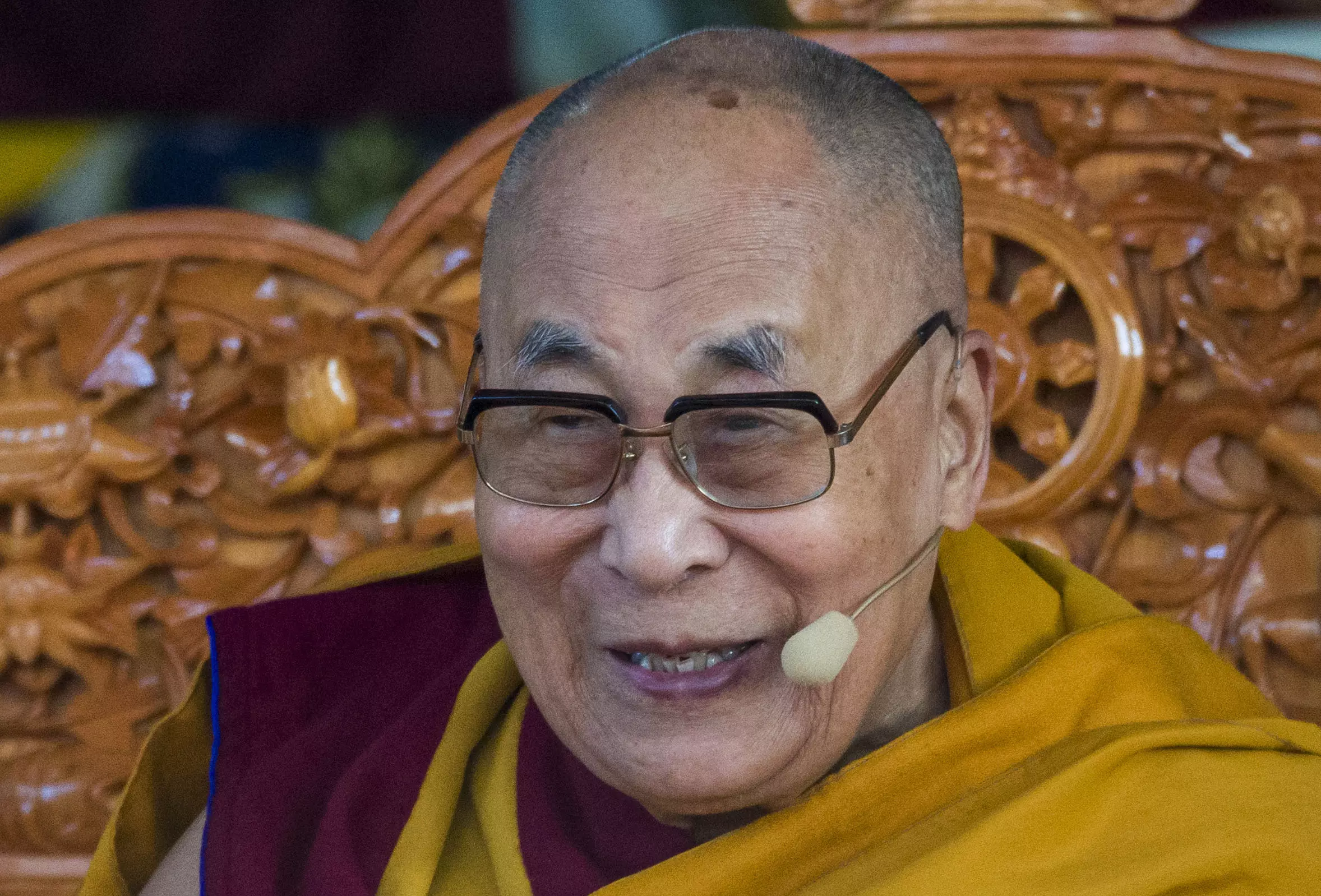


Tibetan spiritual leader Dalai Lama. (AP Photo/Ashwini Bhatia)
Written by Mohan Guruswamy, Deccan Chronicle
please read here
The 14th Dalai Lama (spiritual name: Jetsun Janfer Ngawang Lobsang Yeshe Tenzin Gyatso) was born on July 6, 1935, has lived in India since 1959, and is the highest spiritual leader of Tibetan Buddhism. He is a leader and a most respected leader. When I visited Tibet, I often saw ordinary Tibetans wearing his medallions discreetly. It was also very common to see his photo in most Tibetan-run shops in Tibet, Yunnan and Qinghai. The Dalai Lama’s ecclesiastical influence extends to India’s border regions, including Arunachal Pradesh, Sikkim, and Ladakh.
Despite its historical intertwined political identity with China, Tibet has traditionally looked to India for moral and spiritual support. Tibet has a long history of conflict with China, and the current Dalai Lama is not the first to seek asylum in India. Britain had taken an active policy of building a buffer against China in the form of Tibetan independence. The Chinese Amban (Plenipotentiary) in Lhasa passively observed the Younghusband Expedition’s activities in Tibet, and one of the immediate consequences of this was the assertion of Tibetan independence. The Republic of China was established on January 1, 1912, with Sun Yat-sen as president, and in April of the same year, the 13th Dalai Lama declared the end of relations between Tibet and China and expelled the Amban and all Chinese troops. Almost immediately after its civil war victory in 1949, the Chinese Communist Party reasserted control over Tibet, which had previously enjoyed more than 40 years of independence.
Since then, India has tried to avoid the Tibet issue by accepting annexation to the People’s Republic of China. Since then, the Chinese Communist Party has tried to solve the Tibetan issue by trying to wipe out Tibetan nationalism and Buddhism with Mao Zedong’s communism. It was not successful. This policy has now been replaced by creeping “Hanification” and massive economic development. These also worked only partially for the Chinese, but they seemed to work better than the iron hand of the Maoists.
Although Tibet is currently relatively passive, it remains a dry crater and the Chinese fear the possibility of a spark that could start a fire. This policy is partially working for India as well. More than 150,000 Tibetan refugees currently live in India, which has inadvertently become a hub for the global struggle to reclaim Tibetan homeland. In other words, the Tibet issue, although now subdued, is still alive and well, playing out in India’s front lawn whether India likes it or not.
Central to this sustained struggle is the international status of the Dalai Lama, who has become a symbol of many ideals and images. The Dalai Lama’s fusion of new-age spiritualism, ethics, environmental values, and politics has won him many influential and wealthy Western followers of Tibetan Buddhism and supporters of the Tibetan cause. Today, the small enclave of McLeodganj on the outskirts of Dharamsala in Himachal Pradesh has become a magnet for many young Westerners seeking new meaning and purpose in life. Top political figures such as former US Speaker Nancy Pelosi and top Hollywood actors such as Richard Gere and Uma Thurman will be in attendance. Both China and India have to worry about the post-Dalai Lama era. Tibetans believe that the Dalai Lama is a living god. But he is also a human being and must die like any other human being. He is now 88 years old, but time is never on his side. As long as he lives, he will prevent the embers of Tibetan nationalism from kindling out with the blanket of new-age Buddhism he has woven. If this Dalai Lama is gone, the embers may just flare up. The chosen leadership of the exiles is not unchallenged. The Chinese Communists will almost certainly try to impose their own incarnation and use all available power to justify it. They are unlikely to succeed, but they are sure to obscure the situation and prevent future compromise on the issue of Tibetan Buddhist spiritual leadership. While spiritual leadership may be debated, it is almost inevitable that a new generation of Tibetans in exile will claim material leadership of the Tibetan nationalist movement. If this were to be contested by an incarnate regent based in India, we would almost certainly see competition for the hearts and minds of young Tibetans, and this would inevitably occur as various factions vie for power. This will lead to a more proactive attitude. Such domestic struggles often lead to more intense fighting because of India’s home base. On the other hand, we may see a dual leadership emerging among Tibetan exiles: a spiritual leadership that cares for the soul, and a militant leadership that guides the struggle to achieve political goals. unknown. Thanks to the Dalai Lama’s foresight and wisdom, the dual leadership of Ugyen Thinli, the second tallest person in the Buddhist church, the Karmapa (now in Germany), and the Sikyong (president) of the government is now being defined. It’s emerging. -Tenpa Tsering in exile. Both now enjoy significant positions among Tibetan exile groups and within Tibet. From India’s perspective, the emergence of an alternative religious leader in the interim would be enough to prevent the Tibetan Buddhist movement from splitting. The young Karmapa may provide that. Geographically and ethnically, most of Ladakh is an extension of Tibet’s Changthang language, and the predominant language spoken is a Tibetan dialect. The opposite Tawang district was briefly under the control of the Dalai Lama of Lhasa until it was annexed by India in the early 1950s. We must not forget that the border dispute with China is actually a border dispute with Tibet. Another issue is that if Tibet were truly independent, it would not have been able to assert its claims in the way China has. China’s claim to Tawang and its surrounding areas is largely based on claims made by the current Dalai Lama in a letter to the newly independent Indian government in the late 1940s asserting formal territorial claims. He feels that 20 years from now, China will be an aging nation, so we need to make the most of the opportunities we have now. More than land parcels, this involves regular aggression against India. The evolution of Tibetan leadership is an important consideration.
