

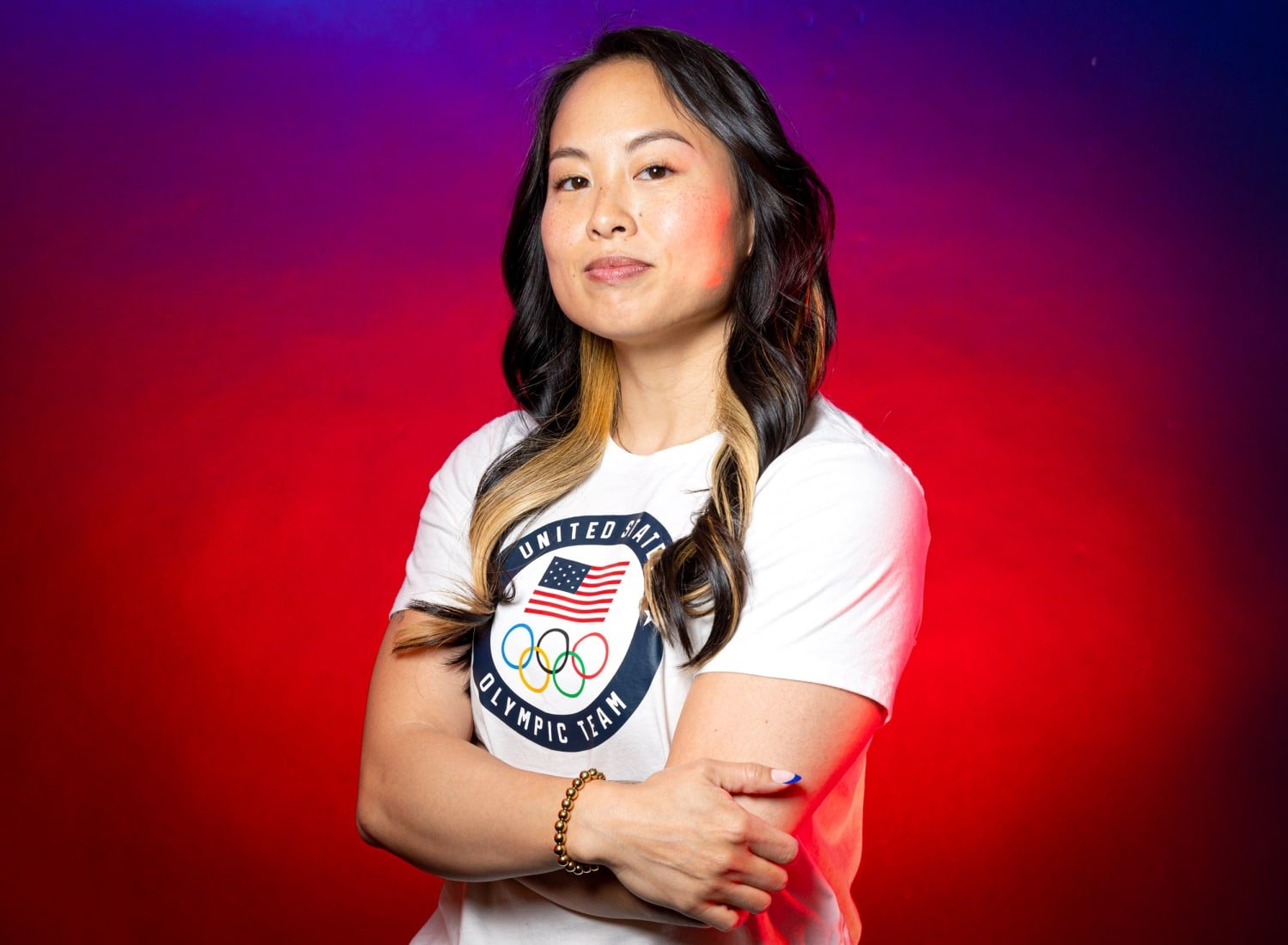
Sunny Choi is on a grueling training schedule in order to become the first female breakdancer to represent the United States at the Olympics. She works with a strength coach and does hot yoga. She diligently practices gravity-defying flips and dizzying head turns on the dance floor. But the real “game changer” has nothing to do with her physical conditioning, she says, but the emotional progress she’s made through her talk therapy.
“I knew I would have to overcome my mental health concerns in order to perform,” Choi said in a phone interview. “I was able to take the time to finally address the problem instead of numbing it and moving on.”
Choi, 35, has long had Olympic aspirations, although she hasn’t broken out, as her sport is now officially called. Born Grace San Choi in Cookeville, Tennessee, she was a serious gymnast until she suffered a knee injury as a teenager. It was also during her teenage years that she first experienced severe depression.
“I was a straight-A student, still in high school, and doing gymnastics 25 hours a week, so I had no other social life,” she said. “Combined with setting extremely high standards for myself, I went from a state of burnout to an even more extreme state.”
But she didn’t feel like she could talk to anyone about it. Choi, the daughter of Asian immigrants, said mental health issues were considered taboo in her family.
“Seeking a therapist was not considered normal,” she says.
Choi discovered breaking while attending the University of Pennsylvania. Breaking is a sport created by black and Latino youth at dance parties in New York City more than 50 years ago. After graduating, Choi continued to work side jobs and high-pressure jobs, which caused his cycle of depression to keep recurring.
“I was a robot every day. I didn’t feel anything. I just showed up and did what I had to do,” Choi said of her work at the company. “What makes dancing so difficult is because you can’t be a robot when you’re dancing. It’s all about expression and presence.”
When it was announced in December 2020 that breaking would make its debut at the 2024 Paris Games, Choi had a choice. Should I continue working at the American company where I had such a miserable experience, or should I just focus on dancing?
As the pandemic unfolded, Choi decided to focus on self-care as collective trauma prompted more open discussions about mental health. She found a therapist who she sees regularly. And last year, she quit her job as director of Estée Lauder Skincare’s global creative operations. It’s a move that prioritizes both rest and mental health, she says.
Choi considers her therapy sessions an important part of her Olympic preparation. Her therapists are provided free of charge by the United States Olympic and Paralympic Committee, and she is trained in both sports psychology and mental health, but their sessions focus more on mental health than mental performance. Mr. Choi said that he kept a .
By working together, Choi was able to better structure her daily life. She learned to take her 10-second “micro-breaks” while breathing deeply. That way, she doesn’t have to stop and move on to the next task for hours on end. It also allowed her to be more connected. She is with her feelings. Choi rarely cried, she said. Now she allows herself to shed her tears, which opens up new parts of her personality when she dances.
“Rather than showing a single face, I can now work with a wider range of emotions,” she said.
Therapy also helped her confront her fear of failure and the unattainable expectations she set for herself.
“Having to learn to be kind, kind and considerate towards myself was one of the hardest things I’ve ever learned, but also one of the best lessons,” she said. said.
‘Tremendous growth’ in mental health awareness
Choi is one of a growing number of elite athletes speaking out about mental health.
In 2021, tennis player Naomi Osaka withdrew from the French Open, citing anxiety about media interviews and a “long period of depression.” That same year, Simone Biles withdrew from the women’s gymnastics team finals at the Tokyo Olympics, saying she felt “she was carrying the weight of the world on her shoulders.” Former Olympic swimmer Michael Phelps also spoke about his own depression.
“We’ve seen tremendous growth over the last few years,” said Jessica Bartley, senior director of psychological services for the U.S. Olympic and Paralympic Committee. She said: “The more people talk about their mental health, the more it becomes normalized and the stigma continues to be reduced, which is hugely beneficial.”
Other Americans competing in the Paris Olympics also emphasized the importance of mental health in interviews with NBC News. Artistic swimmer Megumi Field says synchronized swimming teams work together with coaches on the mental side of the sport, which not only helps the team stay focused, but also helps support each other mentally. He said it was also helpful. Sports climber Brooke Lovetou said she has “recently focused on mental training over the last few years,” including meditation and visualization, and said she would like to go into the mental health field one day to help other athletes.
Since the end of 2020, the United States Olympic and Paralympic Committee has increased its commitment to athletes’ mental health, increasing the number of therapists who accompany athletes to competitions and competitions from a 24/7 helpline. Bartley said they offer a variety of resources. He said. The helpline receives an average of eight to 10 calls a week from athletes around the world, and by 2023, the 15 mental health professionals employed by the commission will be communicating with athletes and approximately 6,000 people. She added that she had several individual therapy sessions. The committee also has a mental health register for additional therapists with experience working with elite athletes.
Choi, who is one of the world’s highest-ranked B-girls and is known as a female breaker, said she has no shortage of emotions as the Olympics approach.
“I’m very nervous and anxious,” she said. “There are moments of pride and moments of gratitude.”
She said she not only wants to be remembered for making history in her sport, but also to serve as an example for others who want to improve their mental health.
“We all judge ourselves,” she said. “I think things really started to change for me when I learned that it was okay not to be OK.”
If you or someone you know is in crisis, contact the Suicide and Crisis Lifeline by calling or texting 988 or chat with us on Live Chat. 988lifeline.org.You can also visit SpeakerOfSuicide.com/Resources for additional support.
