

It is a worldview that affirms the importance of harmonious coexistence between diverse cultural and religious traditions and promotes an environment of mutual respect and understanding. It is a worldview that advocates the pursuit of truth, purpose, meaning, and fulfillment beyond the rigid boundaries of cultural and religious orthodoxy. At its core, it celebrates a life based on empathy, charity, and compassion, along with an unwavering belief in the transformative power of love as the essence of God.
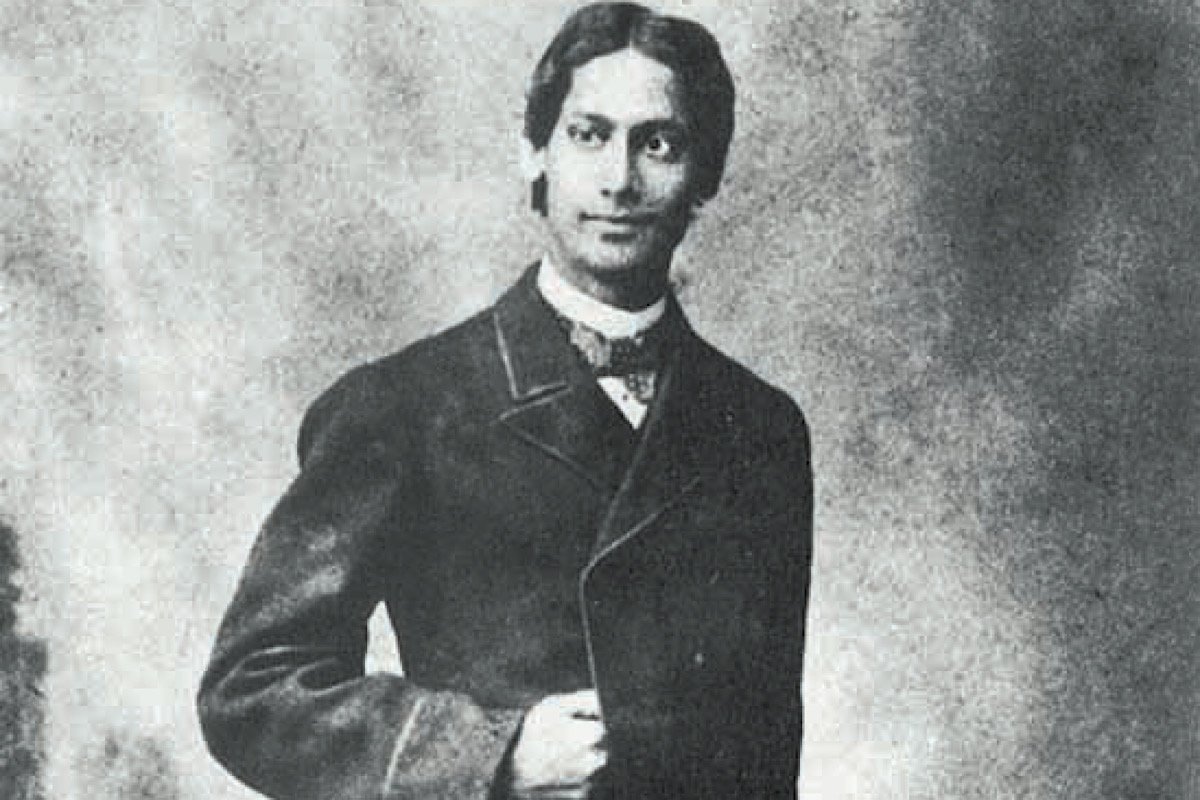
Indeed, this is deep spirituality. Transcendental spirituality, universal spirituality, visva dharma, universal religion, whatever you want to call it, is what Rabindranath Tagore professed and advocated through his writings and lectures. It is the spirituality of Its universal applicability allows it to resonate with various theological and spiritual traditions, with the Christian tradition being no exception.
Spirituality is nothing more than a search for truth, purpose, meaning, fulfillment, enlightenment, love, harmony, and union with God that unfolds deep within human consciousness, against the backdrop of an innate awareness and longing for God. Is there one? The source and basis of all existence? This inquiry transcends racial, cultural, and religious affiliations, geographic boundaries, conformist institutions, and ritual practices.
Tagore’s writings are replete with echoes of such explorations. For example, in Gitanjali’s Poem 11, the poet-speaker addresses the demands of organized religion and devotees who feel obsessed with institutionalized ritual practices and acts of devotion. It’s speaking to me. He urges them to free themselves from the limitations of chant, song, and ritual, and to ask who they are really worshiping in the secluded corners of the dimly lit temple. Tagore’s critique of formulaic and empty pious practices echoed the ancient Judeo-Christian prophet Isaiah’s criticism of similar practices at the time in spirituality. Isaiah senses God’s voice and asks the people. “Is this the kind of fasting I have chosen, a day when people just humble themselves? Is it just bowing down like a reed and lying in sackcloth and ashes? Is it you? Is that what you call a fast, a day acceptable to the Lord?”
The claims and questions that God presents before believers through his prophets are: “Heaven is my throne, and the earth is my footstool. Where is the house that you will build for me? Where will my rest be? All these things are my Was it not created by hands and thus existed?” It emphasizes not only the incomprehensible magnitude of God, but also the stupidity of man.
It is truly foolish to try to confine the transcendent God, the creator of heaven and earth, within an earthly structure constructed by humans.
Extending this divine declaration, St. Paul clearly states that “The Most High does not dwell in houses made with human hands,” and that the essence of God transcends being confined within physical structures. It reinforces the concept of being there. Moreover, in his poems, Tagore appeals to his followers to go beyond traditional notions of worship and embrace a broader understanding of God.
It invites them to go beyond the constraints of sacred spaces and rituals and into a deeper union with a God for whom traditional forms of devotion, prayer, and worship have had little interest. Tagore taught his followers that God transcends conventional space and inheres himself in the very fabric of creation by manifesting himself in the struggling masses. I’ll tell you. The concept is that the incarnate Son of God is born among the working masses, lives among them, experiences their joys, sorrows, and sufferings intimately, and is ultimately destined to die for the cause of salvation. It resonates with the Christian belief that we choose to be together.
Tagore asserts that salvation is achieved by the believer’s immersion in the world rather than his separation from it, and exhorts him to seek God through unity and service to his industrious brethren. Tagore’s argument gains more weight as he draws parallels with the teachings of Jesus, especially the Parable of the Sheep and the Goats. Jesus insisted that true love for God should be expressed through compassionate assistance to the marginalized and vulnerable.
Based on the teachings of Jesus, Christian theology and spirituality maintain that one cannot love God without loving one’s fellow man. Yahweh clearly condemns religious practices that lack an altruistic dimension. He asks his people in the book of Isaiah: “Is this not the fast that I have chosen, to loosen the bonds of evil, to loosen burdens, to set the oppressed free, to break every yoke? Isn’t it about distributing bread and bringing into your homes the poor who have been cast out?” Love and care for those in need is therefore not just a moral obligation, but a commitment to God. It is also a means of authenticating a genuine relationship. Tagore’s affirmation of this concept in his poetry can be considered a similar insight from Bengal that resonates with Christian theological and spiritual perspectives.
In his essay Infinite Realization, Tagore writes, “Man’s lasting happiness lies not in the acquisition of something, but in something greater than himself, an idea larger than his individual life: his country. , humanity, and God,” he seems to be referring to the concept of these infinite possibilities. Tagore’s insights emphasize that true spirituality is found in a selfless commitment to principles and causes that transcend personal boundaries, leading to a deep sense of connection, purpose, and ultimate fulfillment. Masu. This theme is further reflected in Gitanjali’s Poem 36, where he prays to God for the strength to bear fruit in love in service, and prays that the worldly world will never abandon the poor or succumb to oppressive powers. I pray that you will be able to rise above your concerns and be willing to take action. He lovingly submits his powers to the will of God.
It seems that the essence of life lies in this profound exploration, but life must also prepare people for this exploration. In his essay “The School of Poets,” Tagore argues that “the best education is one that not only informs but also brings our lives into harmony with all beings.” This harmony is not just a philosophical concept, but a practical approach to life, rooted in the recognition of the essential sacredness found in all forms of life. In his essay “The Problem of Evil”, Tagore gives a profound insight: I believe it embodies the essence of spirituality. ”
The author is a professor of English at St. Xavier’s University, Kolkata.
