


In case you missed it, it’s never too late to talk about autism and ASD (Autism Spectrum Disorder). April is Autism Awareness Month, and I always mention autism in a sermon sometime in April.
Autism is especially close to my heart as one of my adult children is autistic. She is functionally on the lower end of the spectrum. Although she can speak words, she cannot string them into sentences, so she cannot carry on a conversation.
I often wondered about her spirituality. What did she feel in her heart when she went to church with us? Does she have no concept of God at all? Should she associate with other members of her family? At the time, there wasn’t much literature on the subject, and if there was, it was aimed at people at the higher end of the spectrum.
Seeking more information, I attended a conference on disability theology in Toronto about ten years ago. There was one speaker in particular that caught my attention.
I will never forget her. She was a woman, about 50 years old, in a very special wheelchair, and she came up on stage to give a talk. She had no arms or legs. She stressed that throughout her life so far, she had relied on others to take care of her daily activities, such as bathing and dressing her.
She did not feel sorry for herself, nor did she feel that she was inferior to others. She didn’t think of herself as “broken.” This woman saw herself as a deeply spiritual, faithful, and practicing Christian.
Someone asked her how she could believe in the God who made her “that way.” She commented that she believes we are all created in the image of God, and she said, “Who can say that God is not like me?” Maybe God has no hands or feet?
oh. It’s something I’ve never really thought about before. I left the meeting thinking, “Who’s to say she’s not right?”
It reminded me that we are all created in the image of God and that we cannot set boundaries or know everything about God. We may be tempted to anthropomorphize God as an old man with a white beard, but that limits our broader understanding of God beyond our understanding.
What happens when we open our hearts and minds to the image of God who stretches us? What would happen if we let go of our images and embraced God’s love for us and all people? If we lived in God’s love, loved others, worked for justice and peace, What would the world be like if we chose mercy and forgiveness?
It must be different from now!
As we all know, life is complicated. What we do and say matters, and how we do and say it. If we wonder whether our lives and our reactions to the world’s turmoil come from God, all we have to do is look for love.
The presiding bishop of the Episcopal Church said: “If it’s not about love, it’s not about God.” May God’s love guide our lives together.
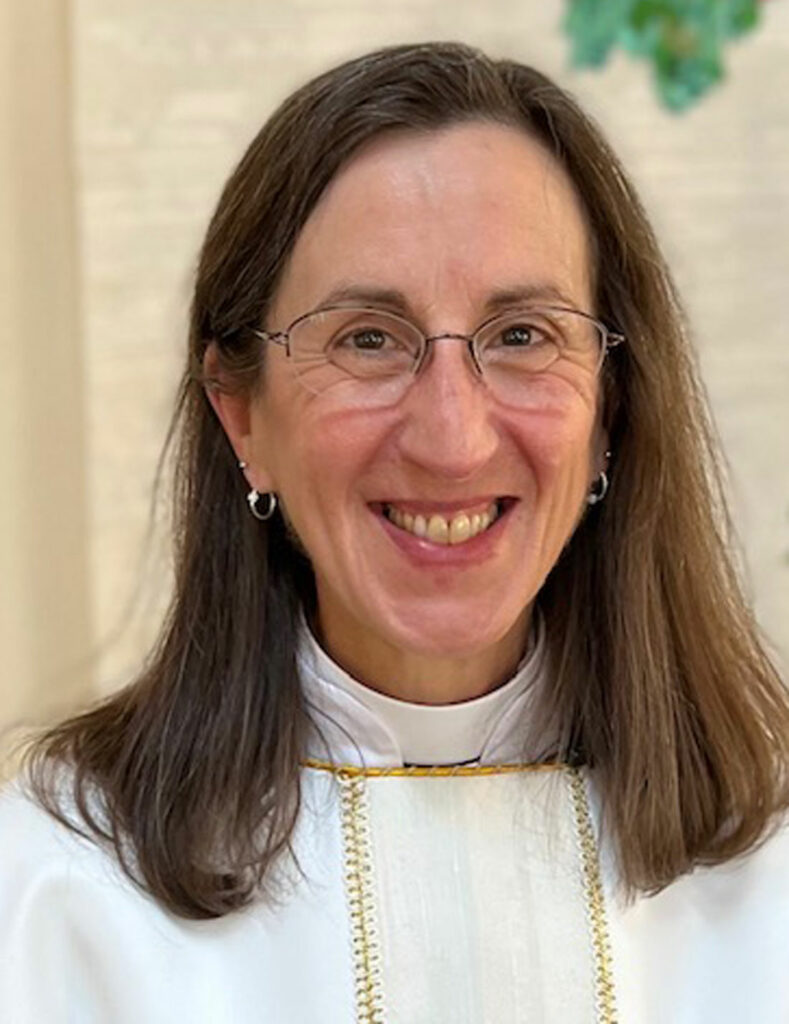
The Rev. Karen Cuffee is pastor of St. John’s Episcopal Church in Morgan Hill and is an active participant in the Interfaith Clergy Alliance of South County. You can contact her at: [email protected].
