

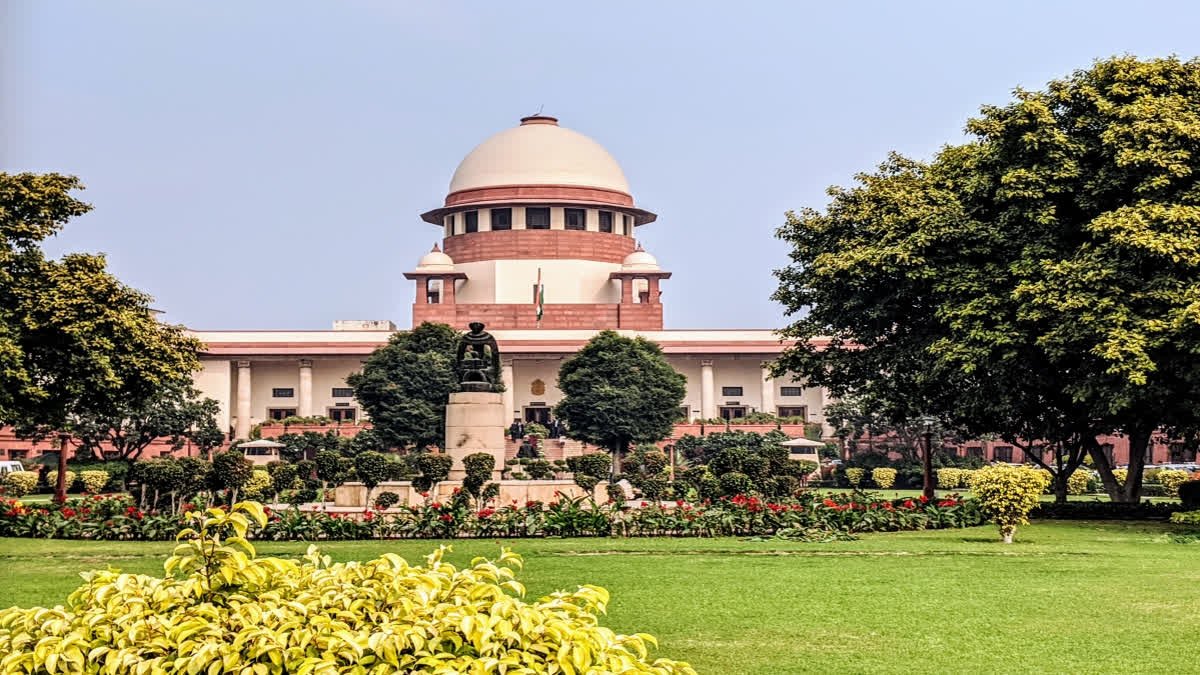
New Delhi:The Supreme Court on Friday agreed to consider whether allopathic doctors, Ayurveda practitioners and others working in government hospitals and clinics can have different retirement ages.
In February this year, the Rajasthan High Court accepted the appeal of Ayurvedic doctors and ruled that if their retirement date is after March 31, 2016, they will be considered active until the age of 62.
At the outset of the hearing, a bench headed by Chief Justice of India DY Chandrachud said the Supreme Court was not keen on interfering with the High Court’s judgment. Solicitor General Tushar Mehta, representing the Rajasthan government, stressed that this is an important issue that requires the attention of the Supreme Court.
The bench observed that there is no difference in the quality or effort of Ayurvedic doctors and allopathic doctors, and that Ayurvedic doctors also perform valuable services and are located in the same state.
“Today, as we value Ayurvedic doctors, why shouldn’t Ayurvedic doctors retire at the same age as allopathic doctors?” the CJI said. As a result of the High Court’s ruling, about 1,000 such doctors will be reinstated, Mehta said, adding: “We hope that the verdict will be overturned in the future.”
Mehta stressed that there are over 1,000 doctors and they will come back and this applies to Unani, Ayush, Sidha, homeopathy and everyone. After hearing Mr. Mehta’s submission, the Supreme Court issued notice on the state government’s petition.
Taking note of the shortage of allopathic doctors, the Government of Rajasthan has raised the retirement age from 60 to 62 years from March 31, 2016, and the government’s AYUSH (Ayurveda, Yoga, Naturopathy, Unani , siddhas, and homeopathy). doctors.
AYUSH doctors argued in the High Court that they performed the same function of treating and curing patients and that the classification was therefore discriminatory and unreasonable.
