

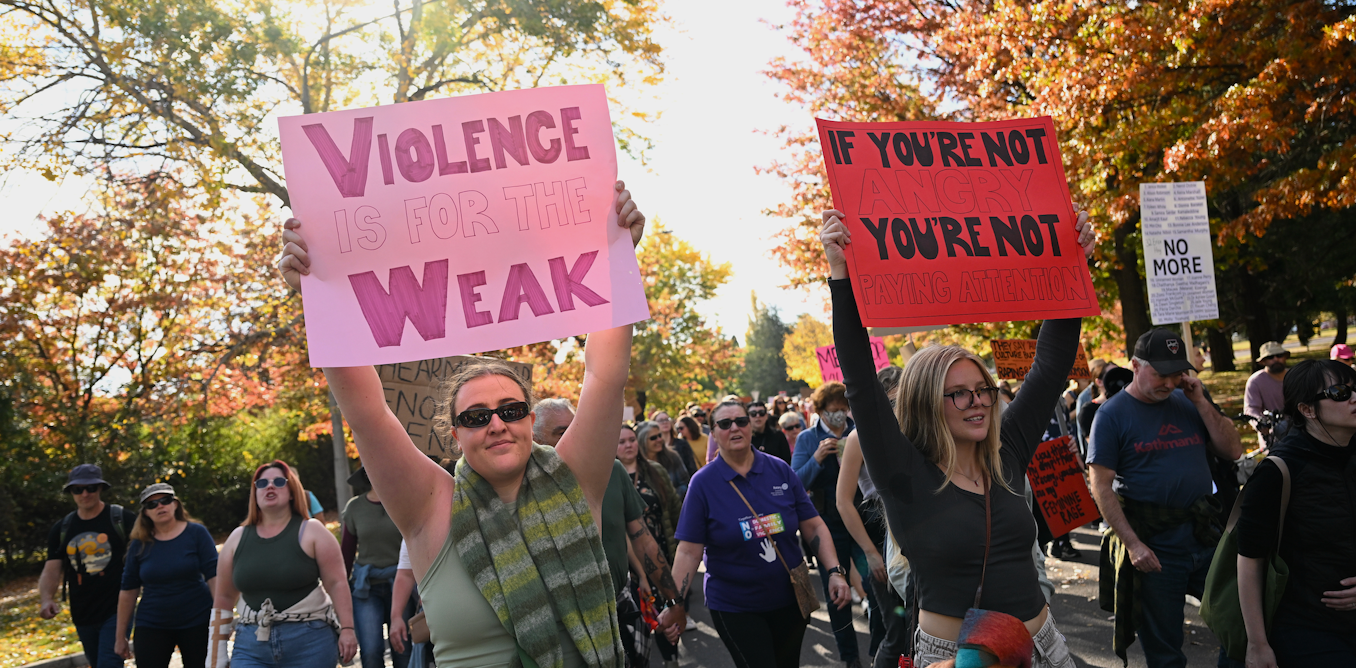
The Albanon government this week pledged more than A$925 million over five years to tackle men’s violence against women, following the high-profile murders of several women in Australia. This includes up to $5,000 to help people fleeing violent relationships.
However, reducing and preventing gender-based violence and intimate partner violence also requires addressing its root causes and causes. These include alcohol and other drugs, trauma, and mental health issues.
Why is this important?
The World Health Organization estimates that 30% of women worldwide experience intimate partner violence, gender-based violence, or both. In Australia, 27% of women experience intimate partner violence by a cohabiting partner. Almost 40% of Australian children are exposed to domestic violence.
Gender-based violence refers to violence or intentionally harmful acts directed at someone because of their gender. However, intimate partner violence specifically refers to violence and abuse that occurs between current (or former) romantic partners. Domestic violence can affect not only intimate partners but also other family members.
These statistics highlight the urgent need to address not only the aftermath of such violence, but also its roots, including the experiences and actions of perpetrators.
What is the connection between mental health, trauma, and drugs?
The relationship between mental illness, substance use, traumatic experiences, and violence is complex.
Looking specifically at the relationship between mental illness and violence, most people with mental illness do not become violent. However, there is evidence that people with severe mental illness are more likely to become violent.
Alcohol and other drug use also increases the risk of domestic violence, including intimate partner violence.
Approximately one in three intimate partner violence incidents involves alcohol. These are more likely to cause physical injury and hospitalization. The risk of violence is even higher for people who have a mental illness and also use alcohol or other drugs.
It is also important to consider traumatic experiences. Although most people who experience trauma do not engage in violent behavior, those who become violent have high rates of trauma.
For example, traumatic experiences in childhood (such as witnessing physical abuse) can increase a person’s risk of domestic violence as an adult.

Roman Januszewski/Shutterstock
Early traumatic experiences can affect the brain and body’s stress response, leading to heightened fear and threat perceptions and difficulty regulating emotions. This can lead to aggressive reactions when faced with conflict or stress.
This response to stress increases the risk of developing alcohol and drug problems, post-traumatic stress disorder (PTSD), and increases the risk of violence against an intimate partner.
How can these overlapping issues be addressed?
Intimate partner violence can be reduced by addressing these overlapping issues and addressing the root causes and causes.
Early intervention and treatment for mental illness, trauma (including PTSD), and alcohol and other drug use can help reduce violence. Therefore, additional investment in these will be required. Further investment is also needed to prevent mental health problems and prevent alcohol and drug use disorders from developing in the first place.

Okrasiuk/Shutterstock
Preventing trauma from occurring and supporting those exposed to trauma is critical to ending the often intergenerational cycle of trauma and violence. Safe and supportive environments and relationships can protect children from mental health problems and further violence as they grow and develop close relationships.
We also need to recognize the widespread impact of trauma and its impact on mental health, substance use, and violence. This needs to be built into policy and practice to reduce people retraumatizing themselves.
What about programs for perpetrators?
Most existing standard intervention programs for perpetrators do not consider the relationship between trauma, mental health, and intimate partner violence. Such programs tend to have little or mixed impact on perpetrator behavior.
However, it is possible to improve these programs through coordinated approaches, such as treating mental illness, substance use, and trauma simultaneously.
Such “multicomponent” programs hold promise for meaningfully reducing violent behavior. However, more rigorous and large-scale evaluations of how well they work are needed.
What needs to happen next?
We need both support for victims and survivors and improved interventions for perpetrators. But it is certainly too late to intervene once violence has occurred.
We need to focus our efforts on a broader, more holistic approach to preventing and reducing intimate partner violence, including addressing the root causes of violence outlined above.
We also need to look more broadly at preventing intimate partner violence and gender-based violence.
Developmentally appropriate education and skills-based programs for youth are needed to prevent the emergence of unhealthy relationship patterns before they become established.
We also need to address the social determinants of health that contribute to violence. This includes improving access to affordable housing, employment opportunities, and available medical support and treatment options.
All of this is critical to breaking the cycle of intimate partner violence and improving outcomes for victims and survivors.
The National Sexual Assault, Family and Domestic Violence Counseling Line – 1800 RESPECT (1800 737 732) – is for Australians who have experienced or are at risk of family and domestic violence. , available 24/7. or sexual assault.
If you have a problem with this article or are concerned about someone you know, please call Lifeline on 13 11 14. In case of emergency, please call 000.
