

On April 4, Governor Kathy Hochul announced the New York City Center for First Responders, a collaboration between the state Department of Homeland Security and Emergency Services (DHSES), the State University of New York New Paltz Institute for Disaster Mental Health (IDMH), and the Benjamin Center. Published the first mental health needs assessment. New Paltz Institute Center.
Firefighters, police, EMTs, 911 dispatchers, and emergency managers across the state were welcomed to participate in this voluntary, anonymous survey about mental health struggles in their fields. In addition to these struggles, the survey prompted participants about the barriers and stigmas that can prevent workers from seeking help.
This study is not the first collaboration between the two groups. DHSES frequently sponsors annual conferences in collaboration with IDMH. This year, the Institute, with support from DHSES and the New York State Department of Mental Health (OMH), will hold its 19th annual conference on May 14 and 15 at the Culinary Institute of America. The event, titled “Beyond the Call: Sustaining Resilience in the Responder Community,” will feature mental health expert and first responder speakers who will provide insight into the hurdles first responders face when it comes to mental health. can do. At the conference, DHSES, IDMH, and the Benjamin Center will present results of mental health assessments.
The survey received 6,003 responses, and Robin Jacobowitz, director of education projects at the Benjamin Center, has enlisted the help of Jesse Hazard, a fourth-year political science major at the State University of New York at New Paltz. We are currently analyzing the data.
“We found that first responders overall felt they needed better services,” Jacobowitz said. “They worry about how they are seen and how management and leadership perceive them. They are concerned about being able to find a mental health provider who actually understands what that means and can provide care that aligns with their experience.”
This evaluation is just one of a series of moves the nation is taking to understand and support the mental struggles of public safety professionals on a deeper level. DHSES, IDMH, and OMH are currently working together to develop a statewide disaster mental health team. Responders trained for this effort serve as psychological support for overwhelmed people affected by the disaster. Through federal funding, OMH plans to support local and regional teams.
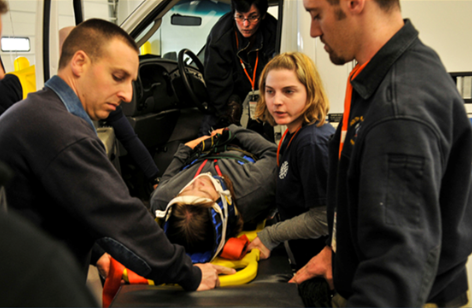
Additionally, these same collaborators provide mental health-related training opportunities for first responders. Peer-to-peer courses offered at the State Preparedness Training Center have been particularly successful, with two recent peer support team training sessions entitled “Supporting Individuals in Crisis” and “Group Crisis Intervention” both reaching capacity. Reached. More training is planned for this year.
Despite more open conversations about mental health, issues of stigma still prevent some workers from seeing colleagues who are struggling.
“We are thrilled to be working with IDMH,” said IDMH Executive Director Amy Nitza. What we need is a wide range of options, from competent and truly excellent professional mental health services to comparable services. ”
As a result of the results of this evaluation, both IDMH and the Benjamin Center anticipate that various support programs and changes will be made to better meet the needs of first responders.
“The goal is for this data to inform policy development and practice regarding better services for mental health first responders,” Jacobowitz said.
Post views: 38
