

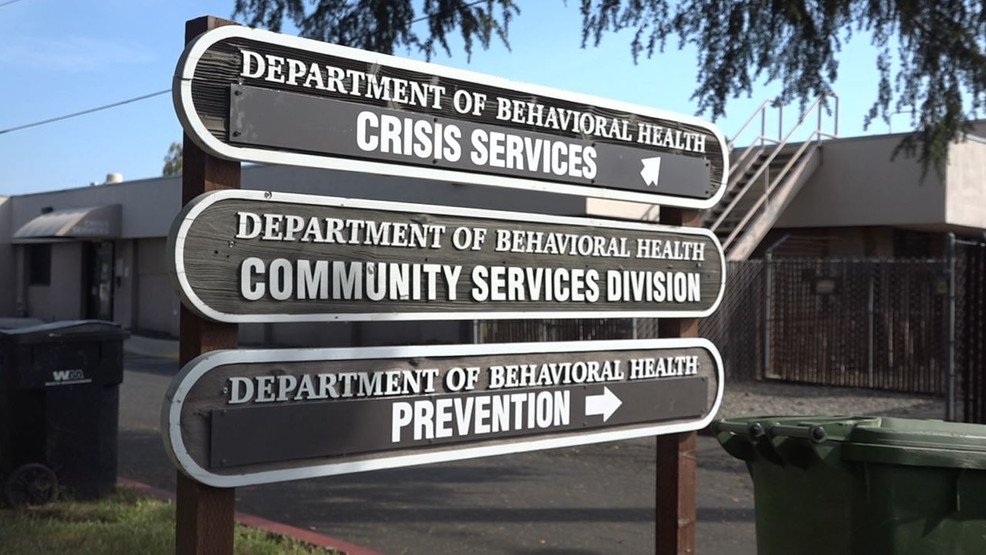
Butte County, California — Butte County mental health advocates said they are working to increase public awareness of local resources ahead of Mental Health Awareness Month in May.
This comes amid uncertainty about the future impact of Proposition 1. Voters narrowly approved his measure in March after local behavioral health officials warned that its passage would result in significant cuts to mental health programs. Proposition 1, supported by Gov. Gavin Newsom and other Democratic leaders, would redirect funding from the State Mental Health Services Act to housing.
Butte County Behavioral Health Director Scott Kennelly says they must now decide how to cut $6 million in local prevention and early intervention programs.
“I thought maybe more people would say no,” Kennelly said. “There are a number of providers, both outside programs and county-run programs, and we’ll have to look at them over the next few years and ask, ‘Which providers are we cutting to meet this need?'”
The challenge comes at a time when the North State is struggling to attract qualified mental health providers. Dr. Ifeanyi Ezeani owns her Compassion Pathway Behavioral Health, which operates executive and care facilities in Butte County. The company recently signed a contract for a new 40-bed treatment facility on Cohasset Road, which is expected to be operational within the next three to four months.
Ezeani says she still faces NIMBYism when she tries to open larger sober living facilities.
“We all tend to forget that it could happen to someone in our family. One of the biggest challenges we have to overcome is how to live in a place where there is so much opposition. It’s about securing the facilities,” he said.
Kennelly said the county is currently preparing to launch a psychiatric training program in July to attract more qualified professionals.
“There aren’t enough students coming out of schools with qualifications. We’re looking at creative ways to partner with universities,” Kennelly said, adding that the challenge is simply attracting providers. But it’s also about attracting communities to use county services, he added. Advocates say there is a long history of mistrust among disadvantaged communities and people of color.
“These groups need to make more efforts to raise awareness and reduce mistrust of the government and treatment facilities,” Ezeani said.
Ezeani added that the focus is on dispelling the ongoing stigma surrounding mental health.
“That’s not a bad thing. It’s like having diabetes,” he said.
He also said he plans to conduct outreach within various homeless communities in Butte County, with a large event planned for Chico in the coming weeks.
—
To report an error or issue with this article, please email the editorial team.
