

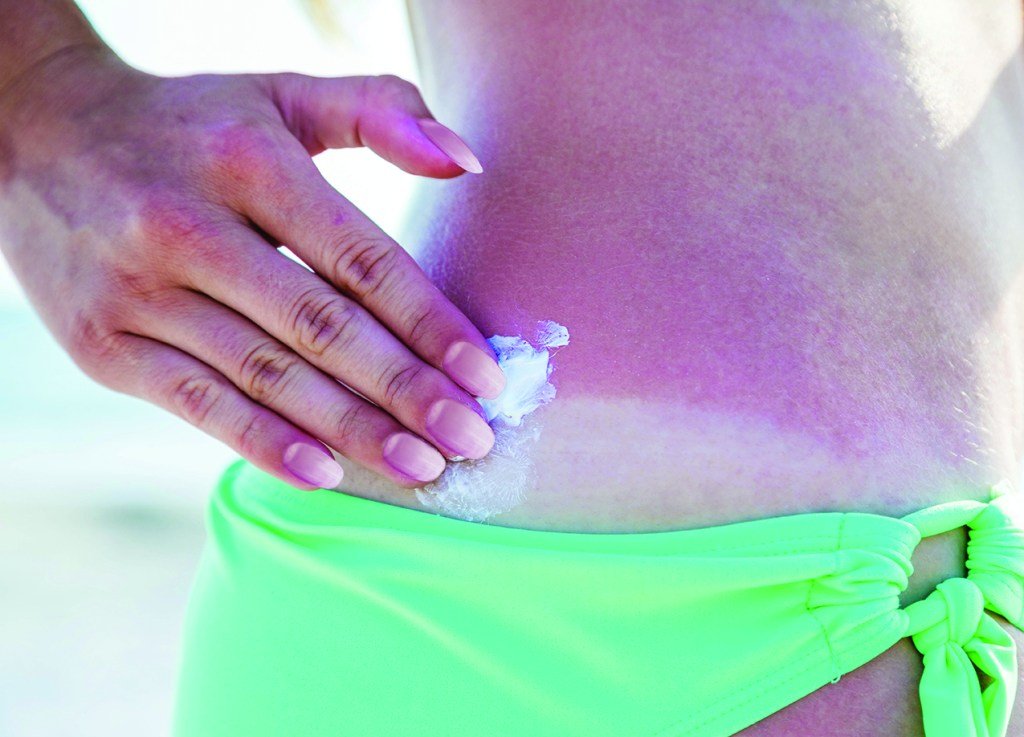
Apply sunscreen immediately after brief periods of unprotected sun exposure of 30 minutes or less. Also, depending on your activity, reapply as directed on the package. (Metro Creative)
Spring and summer are times when Mother Nature beckons more strongly than autumn and winter. The temperate climate and abundant sunshine allow people to leave their homes and bask in the warm rays of the sun.
Spending time outdoors is good for mental health and is a natural way for people to get enough vitamin D, also known as the sunshine vitamin. The National Institutes of Health says that 5 to 30 minutes of sunlight per day, most days of the week, is optimal for producing vitamin D.
A large portion of the population is vitamin D deficient. The NIH says there are numerous studies correlating vitamin D deficiency with an increased risk of many chronic diseases, including high blood pressure, diabetes, myocardial infarction, and brittle bones. However, for maximum benefit, you need to be exposed to the sun to produce vitamin D without using sunscreen.
So the question arises: how safe is it to spend time outdoors without sunscreen, and what risks are there in doing so? Also, do the risks of vitamin D deficiency outweigh the risks associated with sun exposure and cancer causes? Certainly, that’s a difficult question.
The good news is that most people can safely get vitamin D by sunbathing. Here are some tips and safety precautions.
• Remember that the sun’s rays are strongest between 10 a.m. and 4 p.m. So if you must spend time in the sun, do it outside of these hours.
• Apply sunscreen immediately. Apply sunscreen immediately after brief, unprotected sun exposure of 30 minutes or less. Also, depending on the activity, reapply as directed on the package. According to Harvard Health, sunscreens cannot block all UV rays, and using sunscreens does not prevent all vitamin D production.
• The National Cancer Institute recommends using an SPF of at least 15, but some doctors recommend SPF 30.
• Ultraviolet light is the number one cause of skin cancer. Use wide-brimmed hats, sunscreen, and protective clothing to prevent cumulative sun exposure, which can cause basal cell and squamous cell carcinomas.
• Be aware that experiencing severe sunburn, usually before age 18, may increase your risk of developing melanoma. Children, like adults, need to be careful about sun exposure.
• The European Cancer Control Code states that it is difficult to define what ‘too much sun exposure’ actually means. The intensity of the sun (UV index), your skin type, and the strength of your sunscreen are all worth considering. People with very fair skin can get sunburned in as little as 10 to 15 minutes when exposed to UV index 6, which can easily reach midday in the summer.
There’s a fine line between balancing healthy sun exposure to get vitamin D and avoiding sun damage to your skin. But it’s best for people to walk that tightrope with solar safety in mind.
