

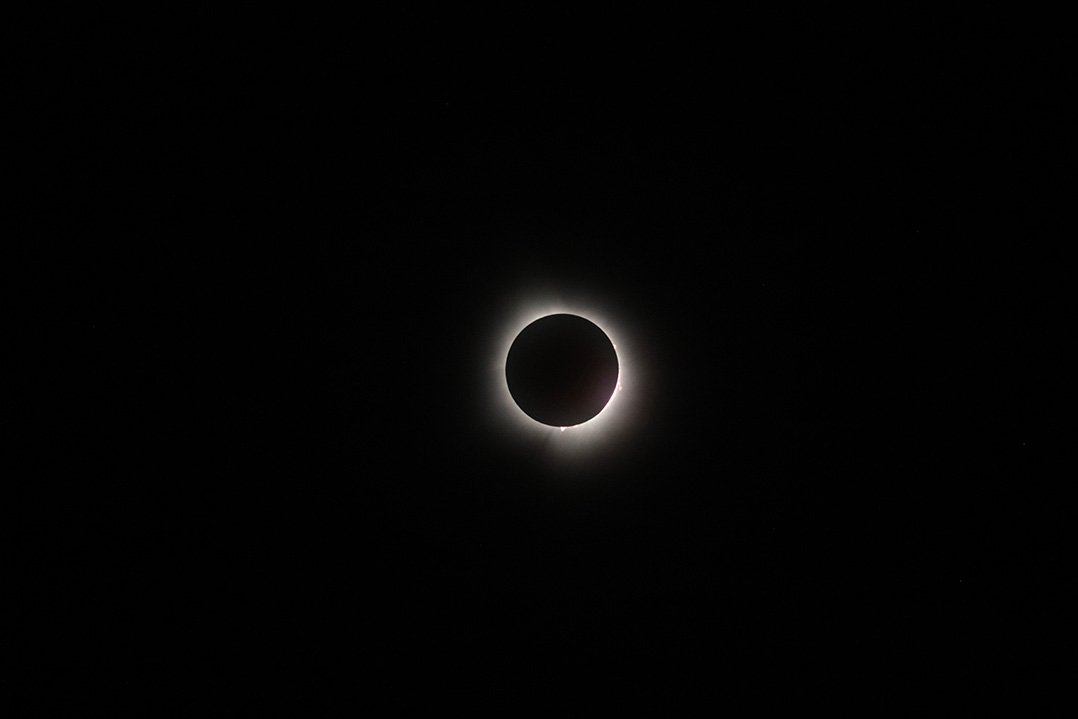

During a total solar eclipse, the sun’s corona is visible. (Photo provided by JR Sandadi)


Commentary by JR Sandadi
In the vastness of the universe, certain events stand out as once-in-a-lifetime experiences, captivating our hearts and souls with their heavenly splendor. Among these cosmic phenomena, total solar eclipses reign supreme, providing a breathtaking display of nature’s grandeur and leaving observers in awe of the majesty of the universe.
When the recent solar eclipse graced the skies on April 8th, we were blessed with perfect weather and clear views and eagerly gathered in our backyards. As the heavenly dance began, the anticipation was palpable. The partial solar eclipse, which began around 1:56 p.m., peaked our excitement as a mesmerizing scene unfolded as the moon gradually obscured the sun’s bright face. In that moment, we felt a connection to ancient wisdom and deep symbolism, and were reminded of our eternal interactions. The complex interrelationship of cosmic forces and all life.
As the 3:06 p.m. water time approached, anticipation rose in Carmel. As a group observing the sky, we observed the moon slowly covering the sun’s brightness. The atmosphere was crackling with excitement as the daylight turned into an eerie darkness, casting shadows across the landscape in a surreal scene. When the moment came, it was unforgettable. Although it was only 3 minutes and 36 seconds long, it felt like it transcended time.
And as quickly as it came, totality ended and the sun reappeared, bathing the world in golden light. We were mesmerized and our hearts were filled with awe and awe at the cosmic forces that worked together to create such a breathtaking sight.
In the realm of Hindu dharma, solar eclipses are not just celestial phenomena. They are profound moments that pulsate with spiritual depth. They symbolize the cosmic array of heavenly forces and invite us to pause, reflect, and explore the mysteries of existence. For Hindus, such eclipses are sacred moments laced with spiritual teachings. A solar eclipse, known in Sanskrit as Surya Grahan, symbolizes the divine cosmic dance in which the shining sun momentarily veils and invites the shadows of the earthly realm to dance on its surface.
The significance of solar eclipses is intertwined with karma, the law of cause and effect. It is a cosmic reminder of the impermanent nature of existence and the cyclical nature of karma. Just as the sun momentarily hides its brilliance, our actions can obscure our true light. Eclipses therefore call us to reflect on our intentions, purify ourselves, and seek spiritual illumination.
In essence, the recent solar eclipse from a Hindu perspective invites us to reflect on the interconnectedness of the microcosm and the macrocosm, the individual soul and the universal soul. It invites us to join in the sacred dance of creation, embrace the rhythms of change, and strive for spiritual realization as the mysteries of the universe are revealed.
Even when the heavenly spectacle disappears, its spiritual teachings remain, reminding us of our place in the cosmic symphony and the timeless wisdom embedded in the celestial dance.
JR Sandadi lives in Carmel.
