

Cell membrane integrity must be intact to control the flow of sodium and calcium ions across the muscle cell membrane and initiate muscle contraction. Other antioxidants, such as selenium, also help protect membranes from free radical damage.
“Several important medical conditions can occur due to insufficient antioxidant status,” says Dr. Carrie Fino, DVM, Dipl. ACVIM Associate Professor, Gregory L. Ferraro Endowed Director of the Center for Equine Health, School of Veterinary Medicine, University of California, Davis. “Although similar in some respects, these conditions vary widely in clinical presentation and age of onset.”
Examples include:
- Vitamin E deficiency myopathy A reversible vitamin E deficiency that causes muscle weakness and atrophy (wasting). Supplementation with a water-dispersible formulation of natural vitamin E can improve symptoms.
- equine motor neuron disease This is a lower motor neuron disease (similar to Lou Gehrig’s disease, also known as ALS in humans) that affects the spinal cord, peripheral nerves, and muscles. Affected horses often tremble and are reluctant to stand still. Vitamin E supplementation can improve up to 40% of cases, but some horses may not see improvement if the disease is too advanced.
- Equine neuroaxonal dystrophy/degenerative myeloencephalopathy (eNAD/EDM) It is an inherited neurological disease that requires both a genetic predisposition and insufficient intake of vitamin E early in life. Affected foals usually show signs of incoordination by 6 to 12 months of age. Treatment with vitamin E cannot reverse clinical symptoms, but supplementing genetically susceptible dams with vitamin E can help prevent disease in foals. Although it is hereditary, there is currently no genetic test available for eNAD/EDM.
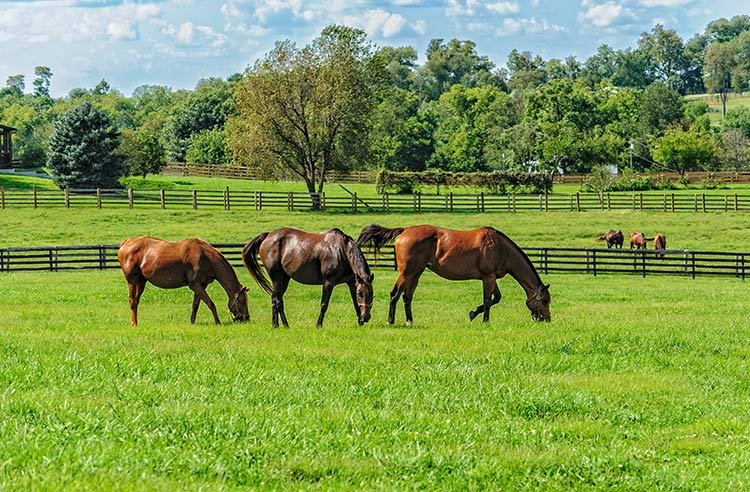
“Green grass serves as the most important natural dietary source of vitamin E for horses,” says Fino. “As soon as the grass dries out, the efficacy of vitamin E in the forage decreases dramatically. It is imperative that we prevent these symptoms from developing in the first place.”
If your horse does not have access to fresh pasture (or pasture with adequate levels of vitamin E), his diet should be supplemented with vitamin E.
The National Research Council (NRC), the horse’s “nutrition bible,” recommends that horses receive 1 to 2 international units (IU) of vitamin E per kilogram of body weight. This means that the average 1,000 pound horse requires 450 to 900 IU of vitamin E daily.
“Blood vitamin E levels in healthy pastured horses are between 3 and 5 μg/mL, and this is the level that horses supplementing with vitamin E should strive to achieve and maintain,” Fino said.
Some horses require more or less vitamin E than others, so the only way to provide individualized supplementation is to measure blood vitamin E levels. Additionally, blood vitamin E levels may vary depending on the type of supplement provided by the owner.
First generation vitamin E supplements were labeled “synthetic” because they contained vitamin E’s main antioxidant component, alpha-tocopherol (as alpha-tocopherol acetate), in all of its various chemical structures, Fino said. He explains that he was called. Subsequent research has demonstrated that only the “natural” form of vitamin E effectively increases vitamin E levels in a horse’s bloodstream. More recently, alcohol-based vitamin E supplements called “water-dispersible” have been developed for horses. These are the most effective supplements because the water-dispersible formulation is easily absorbed and the natural vitamin E rapidly increases blood and tissue levels in most horses.
Considering the long list of benefits of vitamin E in multiple species, it is no surprise that the equine industry has enthusiastically embraced the offer of vitamin E supplements.
“Historically, there has been little concern about overdosing on vitamin E,” Fino says. “This was primarily due to the fact that most vitamin E supplements were not absorbed very well by horses and the NRC levels were based on these synthetic vitamin E supplements. However, with newer formulations, excessive supplementation It can easily happen.
“Fortunately, research shows that harmful effects may not occur until supplements reach 10 to 20 times the recommended amount,” she added. “However, that study used a synthetic vitamin E product. With water-dispersible natural formulas, excess levels can occur very easily. This reiterates the importance of checking concentrations frequently.”
Because vitamin E supplementation is complex, Finno recommends horse owners consult their veterinarian or equine nutritionist before adding supplements to their horse’s diet. She also emphasized the importance of regularly checking blood vitamin E levels in horses taking supplements to ensure they remain within normal limits.
