

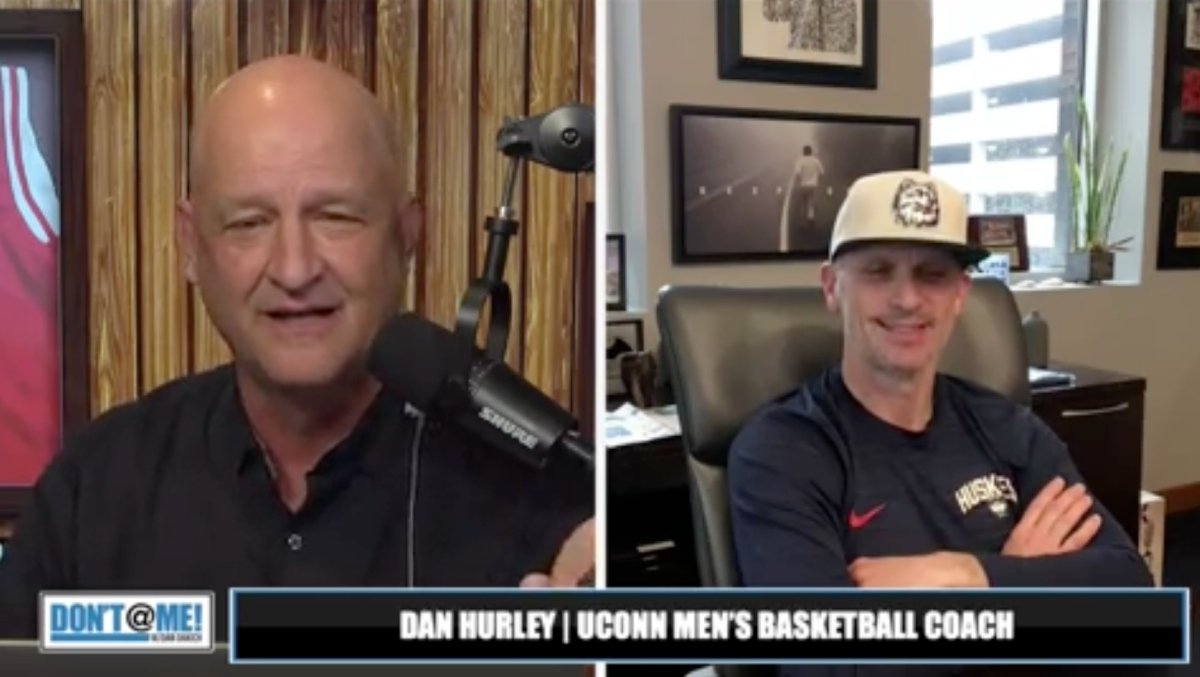
Less than one week removed from winning a second straight National Championship, UConn Huskies head coach Dan Hurley joined OutKick’s Dan Dakich on the Friday edition of Don’t @ Me with Dan Dakich.
During the interview, Dakich commended Dan Hurley for his willingness to discuss mental health.
Dan Hurley On The Importance Of Speaking Up About Mental Health
“You have not been shy — and I admire this because it took me a long time to talk about this kind of thing because I thought it was a sign of weakness — you’ve not been shy about talking about mental health and your need for a psychologist or psychiatrist,” Dakich said, before adding that sometimes people don’t want to talk about a coach or a player needing someone to talk to and help them on the mental health front.
“Y’know being vulnerable about things, it shows true strength,” Hurley said.
He added that as someone who pushes himself and understands more about himself than he did in his youth, he has learned ways to take better care of himself.
“Just how you need to continually work on yourself and take care of yourself whether that’s by what you read or what you listen to in terms of podcasts and books, mindfulness practices, by spirituality as a Christian and my faith in god,” Hurley said.
He also said that there are times when you need to talk to someone if you need help.
“There are things that you need to talk to a therapist about; a counselor, a psychologist, a psychiatrist,” he said. “Things that maybe you’re not comfortable talking to your friends or your wife or your brother or your parents (about). Things that either weigh (on) you or things that happened in your childhood or your adult life that you need a third party that you trust.
“I don’t think it shows any weakness; it shows tremendous strength.”
The UConn head coach also talked about how men are typically reluctant to open up and discuss their mental health.
“It’s a crisis with men,” he said. “Men are afraid to talk about their emotions and their feelings. I think what allows me peace of mind is that I’m authentic — I’m not a phony — I am who I am, and if people don’t like it, I don’t care.”
