

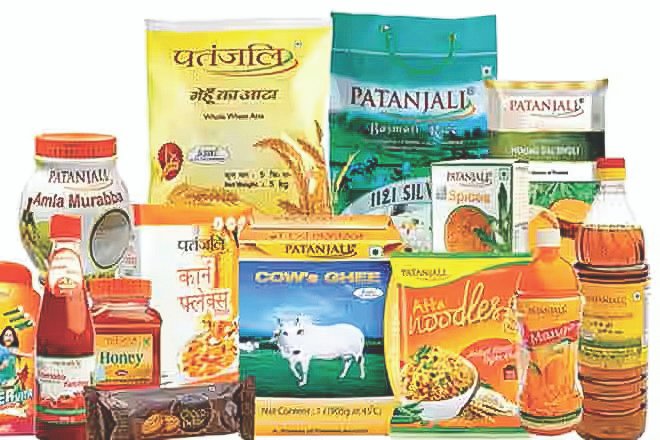
“The Ayurveda industry and the entire community of practitioners may have to face the impact of the SC’s criticism of Patanjali’s advertisement.”
The Supreme Court’s recent rebuke of the misleading manner in which Patanjali Ayurveda, co-owned by yoga guru Ramdev, advertised its products was a judgment call by the Supreme Court on the misleading manner in which the company “promoted” its products. This has caused a certain amount of reaction among Ayurveda practitioners and industry insiders who advocate for this. It has had a negative impact on the entire Ayurvedic field.
A former Ayurvedic consultant at a Delhi government hospital said the Supreme Court’s criticism of Patanjali’s advertisement could have a negative impact on the minds of patients who had hitherto believed in this traditional system of medicine.
“The Supreme Court has not said anything negative about Ayurveda, but I don’t think it has said anything about the way Patanjali is promoting its products. But the whole episode has had a negative impact on the minds of patients. “The Ayurvedic industry and the entire community of practitioners may have to face the consequences of this,” he said.
Earlier, the Supreme Court had referred to Patanjali’s “misleading” advertisements and asked, “How can Patanjali claim to be able to completely cure blood pressure, diabetes, arthritis, asthma and obesity?” Ta.
Ayurvedic doctor Parmeshwar Arora says: Baba Ramdev’s company received a court warning, had to comply, and should not have advertised. He cannot be held in contempt of court. ”
At the same time, Dr. Arora said that there are some diseases that are considered incurable by Western science and allopathy, but according to the great Ayurvedic expert, Mr. Charak, these diseases can be treated by traditional Indian medicine. said. “Ramdev should have argued in favor of proposing measures to examine the positive power of Ayurveda, instead of continuing with the advertisements that the court had opposed,” he said.
Another Ayurveda expert, who heads the Ayurveda department at a private hospital in New Delhi, says it is the highly commercialized “promotional fad” of Patanjali’s products that has cast a cloud over the entire community. He said he was bringing it. “I personally feel that there was no need to disrespect modern medicine or medical professionals in an ad that the Supreme Court deemed ‘misleading,'” he said.
Baba Ramdev’s company should show some restraint and not put allopathic doctors and Ayurvedic practitioners at odds, he said, adding that yoga gurus should not clash with allopathic or IMA practitioners. He added that it should also be avoided.
Some Ayurvedic practitioners have cited provisions related to Ayush in the Drugs and Magical Remedies (Offensive Advertisements) Act, 1954 as a measure to check misleading or magical results from the use of Ayurvedic medicine. suggested that it might be introduced.
Currently, the following are the subject of laws that regulate the advertising of drugs in certain cases, prohibit the advertising of therapeutic drugs with allegedly magical properties for certain purposes, and provide for related matters. , only allopathy.
“Just as a separate section dealing with the Ayush drug system was added to the Drugs and Cosmetics Act, 1940, to avoid fallacies in the way Ayurvedic medicine is promoted, the DMR Act should also do the same. “You can add a clause. Lane,” he said, adding that there are some diseases for which Ayurveda has beneficial effects even though allopathy is said to be incurable (this is not a magical claim). ) added.
Concerned about the impact of the Supreme Court’s negative opinion on Patanjali Ayurveda, the government may also consider modern verification systems for Ayurvedic ingredients and formulations, retired Ayurvedraj said. Treatment.
Patanjali Ayurveda has been restrained by the Supreme Court from advertising and branding the products it manufactures and sells, which are designated as diseases under laws and regulations.
Weeks before a court hearing on a petition filed by the Indian Medical Association against misleading advertising, Ramdev defended his company’s position in an address to reporters.
“For the past few days, propaganda targeting Swami Ramdev and Patanjali has been going on.
It only denigrates the centuries-old practice of yoga by claiming that there is nothing in Ayurveda and that organs such as the kidneys and liver will be damaged. This is clear propaganda. We have research evidence, preclinical and post-clinical evidence. “The propaganda defaming Patanjali continues,” he said.
Alleging that several doctors have formed a group and are continuously carrying out propaganda against yoga and Ayurveda, Ramdev said, “If we are liars, we will fine you Rs 100 crore and we will face the death penalty.” I’m doing it,” he said. But if we are not liars, please punish those who are really spreading false propaganda. ”
