

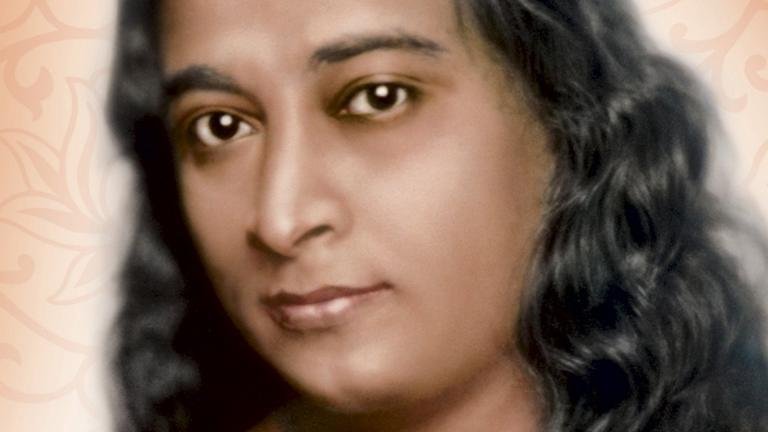
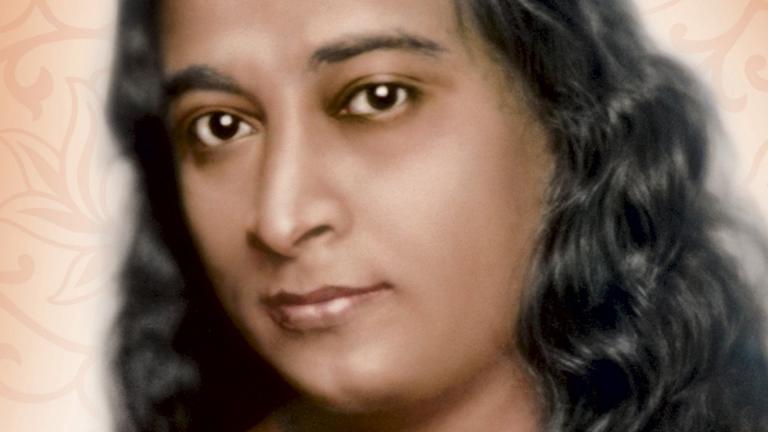
There is a 78-year-old book that has had a profound influence on many modern spiritual seekers. Steve Jobs made sure to hand out copies of his book at his own funeral. George Harrison was a follower of his and gave the book to then US President Gerald Ford. His wife Priscilla also said that this book was Elvis Presley’s favorite book.
The book is Autobiography of a Yogi Written by Paramahansa Yogananda, its spiritual lessons are as timeless and compelling today as they were in the last century. The first edition was published in 1946, Autobiography of a Yogi It details the true adventures of a young boy who receives valuable lessons from unconventional teachers in India.
This boy later became known as Yogananda and became a monk and expert in Kriya Yoga meditation techniques. But more than yoga and meditation, Yogananda was an expert on how to live. He taught that yoga is more than just physical exercise; it actually activates the mind.
In 1920, at the age of 27, Yogananda felt called to the United States and took a two-month journey there by ship. He quickly became a phenomenon, and his first lecture in Los Angeles drew over 6,000 people. For the next 32 years, he traveled the country lecturing and traveling until his death at the age of 59 (at which time he is said to have left his physical body and moved into a more enlightened state). .
What Yogananda can teach us today.
in the book yogi’s wisdom, Rizwan Kirk summarizes Yogananda’s teachings into 14 core messages. Essentially, yogi’s wisdom ‘ is a book about Yogananda’s more famous book. But in that Kirk applies the lessons he learned there to his own modern life (he is a successful technology entrepreneur) and encourages us to apply these teachings to our own lives. , this book is very helpful.
Kirk explains that Yoganada provides us with a gateway to spirituality and a way to seek God “regardless of religion or lineage.” Yogananda himself explained that “God” is not an external entity. God is self-realization, “something that happens within us when we lift the veil between the material and spiritual worlds.”
Here are five important spiritual lessons I learned from this book. However, they do not exactly match Kirk’s list of 14. And of course, this book explores these ideas much more deeply than I can explain here.
- We can find our spiritual path as we work and live in the world.
This struck a chord with me as I had expressed similar thoughts in a recent book. morning Call. I felt a spiritual calling in my late twenties, but instead of running away from the world, I chose to remain a part of it. As Kirk says, “you don’t have to go to the Himalayas” to find your way. Some tend to look “outside” in search of spiritual success, even quitting their jobs to pursue bliss in India or other remote places. Yogananda reminds us, “What is not found within oneself cannot be found by carrying one’s body from place to place.” Often what we’re looking for is right next to us, right under our noses, or around the corner.
- The universe will send you an important mission.
Virk points out that Yogananda often had visions while meditating, which would give him important hints about what steps he needed to take next in life. Ta. The same thing happens to you and me. These clues often come in the form of dreams, synchronicities, and deep-seated intuitive feelings, and one clue often follows another. Virk says:
- It’s important when you get a hint unexpectedly.
- If the clue repeats, take it more seriously.
- You will know that the time has come when obstacles appear but disappear after you have made a decision.
Virk reminds us to use both our heads and our hearts when making important decisions. The heart is the “source of intuition” and the brain is responsible for reaffirming whether your decisions are rational.
- Find time for spiritual practice every day.
No matter how much or how little time you have, find time to practice. And do whatever exercises work for you. He approaches yoga in the same way as Yogananda Kirk, but points out that the ultimate goal is to “stop the swirl of thoughts and emotions in the river of consciousness.” We want to leave behind something in our bodies that helps us relieve stress, be happy, and be healthy. But yoga isn’t the only way to achieve this.
You can also use meditation techniques such as “observing your breathing, being (fully) present, or focusing on a single thing,” like a candle or a tree in your backyard. Any exercise that “helps smooth out the vortex” in our heads is effective.
- The physical world is not the highest reality.
There is a world beyond us that we cannot see. As Virk says, “Everything we see around us in everyday life is the result of our inability to see beyond the veil of illusion.” It’s easy to get caught up in the role you’re in, but it’s like being in a vast movie. The real world is on the other side of the screen. Don’t get too attached to the outcome, be it success or failure, victory or tragedy. If things go according to plan, great. If not, that’s okay. It’s all part of movie life.
- Get the guidance you need.
Yogananda tells us that one way to get the help we need is through prayer, and Virk gives us a general idea of what this means. In his words, “It hardly matters to whom or what you pray, as long as it is connected to a sense of divinity.” He continues:
Praying to beings that we perceive as divine usually puts us in a better spiritual state to be able to solve problems and find solutions. You have now transferred the pressure that was on you to something (or someone) bigger and more capable than you.
It was Yogananda’s belief that God helps those who help themselves. When your heart becomes calm and you believe that your prayers will work, you will find many different answers to your problems. Having the same calm mind will help you focus on the solutions that work best for you and find the success you seek.
