

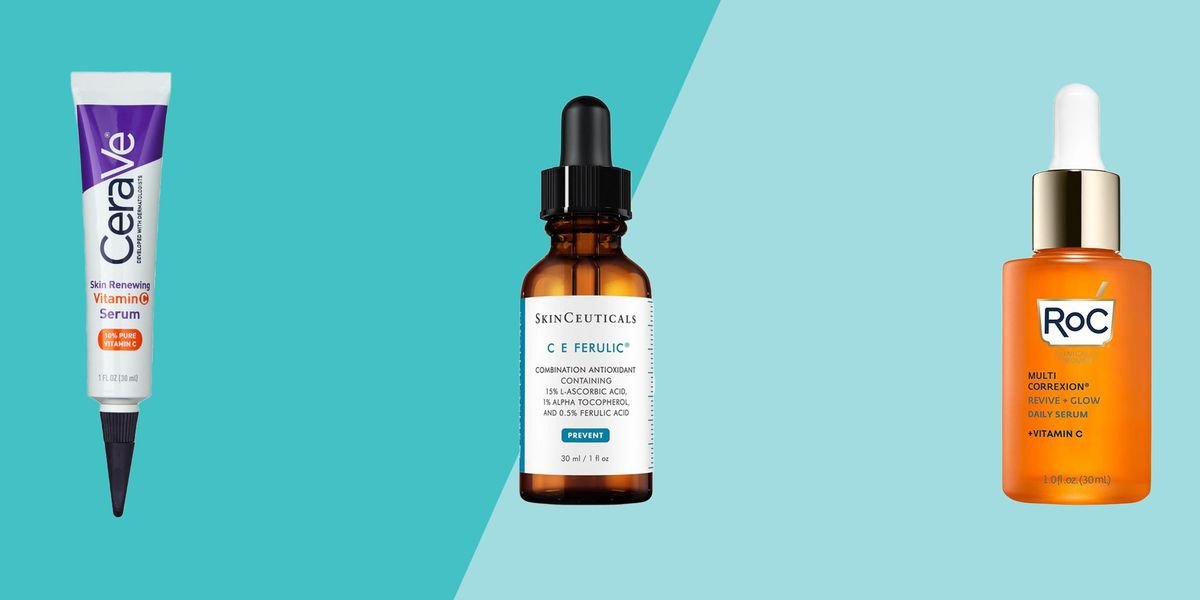
Dr Jeffey says there are several factors to consider when shopping for a vitamin C serum, including the form, concentration and packaging of the vitamin C. “Vitamin C can also be an irritant, so your skin sensitivity is also an important factor in choosing the right product for you,” she says.
According to our experts, here are some things to keep in mind:
✔️ Forms of Vitamin C: Aza Halim, MD, a board-certified anesthesiologist and physician specializing in aesthetic medicine, explains that there are many different sources of vitamin C. “L-ascorbic acid is the most powerful and effective form, but it can be a bit too strong for sensitive skin,” says Dr. Halim. “Sodium ascorbyl phosphate is a gentler form, so it’s a good choice for sensitive skin. Additionally, magnesium ascorbyl phosphate is the gentlest and is used in moisturizing formulations,” adds Dr. Halim.
✔️ Vitamin C Concentration: According to Dr. Halim, the ideal concentration of vitamin C is between 10% and 20%. “If the concentration is too low, you may not get the benefits of vitamin C. If it’s too high, it may be too irritating,” she explains.
✔️ package: Dr. Jeffee says that pure vitamin C, aka L-ascorbic acid, is the most effective, but also the most unstable: “If not formulated or packaged correctly, pure vitamin C will break down and do no good for your skin,” she says.
For pure vitamin C, Dr. Jeffee recommends looking for a low-pH product in a dark container to block light. But when it comes to vitamin C derivatives (such as ethyl ascorbic acid, tetrahexyldecyl ascorbic acid, and ascorbyl glucoside), Dr. Jeffee explains that these are more stable, so you don’t need to worry as much about the formulation or packaging. Some vitamin C serums come in clear bottles when the vitamin is encapsulated, which is fine too.
✔️ Main Ingredients: Vitamin C works best when combined with other ingredients. Dr. Halim says: Other beneficial ingredients that work well with Vitamin C include ferulic acid, Vitamin E, hyaluronic acid, and antioxidants.
