

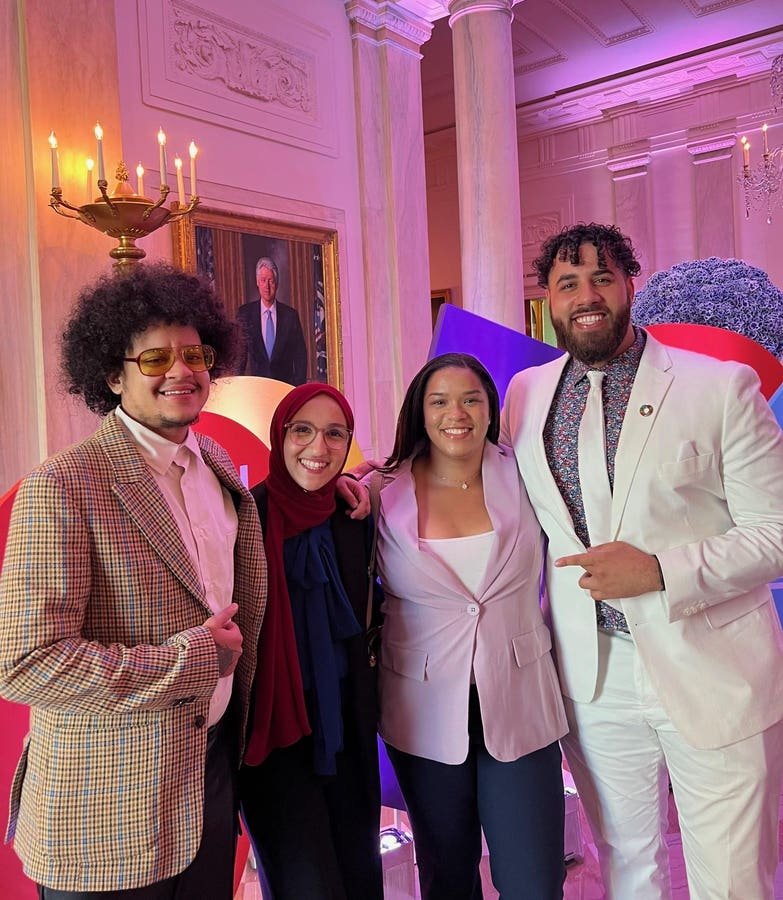
Hidden Healers (LR): Maddox Guerrilla, Kayla Beccajah, Ayanna Kelly, Mahmoud Khedr.
According to a 2022 study from AAKOMA (African American Knowledge Optimized for Healthy Youth), youth of color are disproportionately affected by the growing mental health crisis. Depression, anxiety, and self-harm are on the rise, with 53% of Black youth experiencing moderate to severe depressive symptoms and 42% of youth and young adults of color exposed to at least one racial trauma. As the reality of the mental health epidemic comes into the spotlight on a global scale, youth-led organizations, celebrities, and brands are taking action.
Led by Pinterest and supported by SHOWTIME/MTV Entertainment Studios, the Hidden Healing Fund launched a pilot program this week to invest $1 million in BIPOC communities to support the mental health of young people, particularly those who are marginalized.
The Hidden Healing Fund steps away from traditional clinical approaches that heal mental health through therapy alone, focusing instead on alternative, holistic practices that center on community and individual healing. “You’re not broken, you’re growing up in a broken system. Help is available, and we can do it together,” said Mahmoud Khedr, 28, co-founder of Hidden Healers.
Born out of a 2022 initiative supported by MTV’s Mental Health Youth Action Forum at the White House, “Hidden Healers” began as an authentic video series born from culturally rooted healing practices and has reached more than 10 million people. The “Hidden Healers” project, conceived by four young and diverse leaders — Mahmoud Khedr, Ayanna Kelly, Maddox Guerrilla and Kayla Beccajah — will launch through the fund. “The big idea behind the Hidden Healers campaign was to tell all young people that you are a healer and that you have the power to heal yourself,” says Khedr, an Egyptian-American with a history of mental health struggles who is deeply connected to the Hidden Healers mission.
The disparities are stark in numbers: according to AAKOMA, less than 11% of psychiatrists are Black, Latino, or Native American, further complicating the representation of underrepresented communities and the inclusion of critical perspectives. In 2022, Surgeon General Vivek Murthy addressed growing concerns about youth mental health: “As a parent and a physician, I am deeply concerned that the obstacles this generation of young people face are particularly difficult to overcome, and the impact it is having on their mental health is devastating.” Young people continue to face a massive mental health crisis, driven by the economic, political, and social impacts of the post-COVID recession, combined with the reality of witnessing a live-streamed, graphic attack in Palestine.
“When we think about these funds, we have to think about equity and who has access,” said Maddox Guerrilla, a social impact consultant, youth homeless advocate and co-founder of Hidden Healers. “As a young trans person who grew up with few mental health resources in my community, this fund will have a catalytic impact on marginalized communities and the world at large by centering communities that have historically been left out of the discussion,” Guerrilla said.
The ideas of intergenerational collaboration, “honoring lived experience” and bringing diverse perspectives to the table are central to Hidden Healers’ work, especially as generational gaps become apparent during election years.
“Investing in youth mental health is a topic that is not up for debate,” Khedle said. “This is the best thing we can do because young people are not only the leaders of the future, but they are the leaders now.”
